How to Become a Project Manager

Are you looking to take your career to the next level by becoming a project manager? As a highly sought-after professional, you will be responsible for overseeing projects from start to finish, ensuring they are completed on time, within budget, and to the required quality standards. To achieve th...
Introduction to Project Management
Project management is the process of planning, organizing, and controlling resources to achieve specific goals and objectives. It involves identifying the project scope, schedule, and budget, as well as allocating resources and managing risk. A project manager is responsible for ensuring that the project is completed on time, within budget, and to the required quality standards. To achieve this, they must have a thorough understanding of the project management framework, which includes the five process groups: initiating, planning, executing, monitoring and controlling, and closing. A project management framework provides a structured approach to managing projects, ensuring that all aspects are considered and that the project is delivered successfully. For example, the Project Management Body of Knowledge (PMBOK) provides a widely accepted framework for managing projects. It includes guidelines, best practices, and techniques for managing projects, as well as a set of tools and techniques for planning, executing, and controlling projects. By following a project management framework, you can ensure that your projects are well-planned, well-executed, and delivered to the required quality standards. For instance, a project manager working on a construction project would use the project management framework to identify the project scope, schedule, and budget. They would then allocate resources, manage risk, and monitor progress to ensure that the project is completed on time and within budget. By following the framework, the project manager can ensure that the project is delivered successfully and that all stakeholders are satisfied with the outcome.Key Skills for a Project Manager
Communication Skills
Effective communication is critical to the success of any project. As a project manager, you will need to communicate with stakeholders, team members, and sponsors to ensure that everyone is informed and aligned with the project goals and objectives. This includes verbal and written communication, as well as active listening and conflict resolution. For example, a project manager working on an IT project would need to communicate with the development team, stakeholders, and sponsors to ensure that everyone is aware of the project status and any issues that may arise.Leadership Skills
A project manager must be a strong leader, able to motivate and direct the project team to achieve the project goals and objectives. This includes setting clear expectations, providing feedback and coaching, and making tough decisions when necessary. A project manager with strong leadership skills can inspire and motivate the team to deliver high-quality results and achieve the project objectives. For instance, a project manager working on a marketing project would need to lead a team of creatives, developers, and stakeholders to deliver a successful marketing campaign. Problem-solving skills are also essential for a project manager. They must be able to analyze problems, identify solutions, and implement changes to ensure that the project is delivered successfully. This includes being able to think critically and outside the box, as well as being able to manage risk and uncertainty. By possessing these skills, a project manager can ensure that the project is delivered on time, within budget, and to the required quality standards.Project Management Certifications
There are several project management certifications available, each with its own set of requirements and benefits. The most widely recognized certification is the Project Management Professional (PMP) certification, offered by the Project Management Institute (PMI). To become a PMP, you must have a certain amount of project management experience, as well as complete a set of education requirements. The PMP certification is highly respected and can open up career opportunities for project managers. In addition to the PMP certification, there are also certifications available for Agile and Scrum project management. These certifications are designed for project managers who work in Agile or Scrum environments and want to demonstrate their knowledge and skills in these areas. For example, the Certified Scrum Master (CSM) certification is designed for project managers who want to demonstrate their knowledge of Scrum principles and practices. Having a project management certification can be beneficial for several reasons. It demonstrates to employers and clients that you have the knowledge and skills required to manage projects effectively. It also shows that you are committed to your profession and are willing to invest time and effort into your professional development. By obtaining a project management certification, you can increase your career opportunities and earning potential, as well as improve your skills and knowledge as a project manager.Project Management Tools and Techniques
There are many project management tools and techniques available to help project managers plan, execute, and control projects. One of the most widely used tools is project management software, such as Asana, Trello, or Microsoft Project. These tools allow project managers to create and assign tasks, track progress, and collaborate with team members. For example, a project manager working on a construction project could use project management software to track the progress of the project, identify potential issues, and allocate resources. Another popular tool is the Gantt chart, which is a type of bar chart that shows the schedule and dependencies of tasks. Gantt charts are useful for visualizing the project schedule and identifying potential bottlenecks. Kanban boards are also widely used, particularly in Agile and Scrum environments. They provide a visual representation of the workflow and allow team members to track progress and identify areas for improvement. In addition to these tools, project managers also use a range of techniques to manage projects. These include earned value management, which is a method for measuring project performance and progress, and critical path method, which is a technique for identifying the critical tasks that determine the project schedule. By using these tools and techniques, project managers can ensure that their projects are well-planned, well-executed, and delivered to the required quality standards.Real-World Applications of Project Management
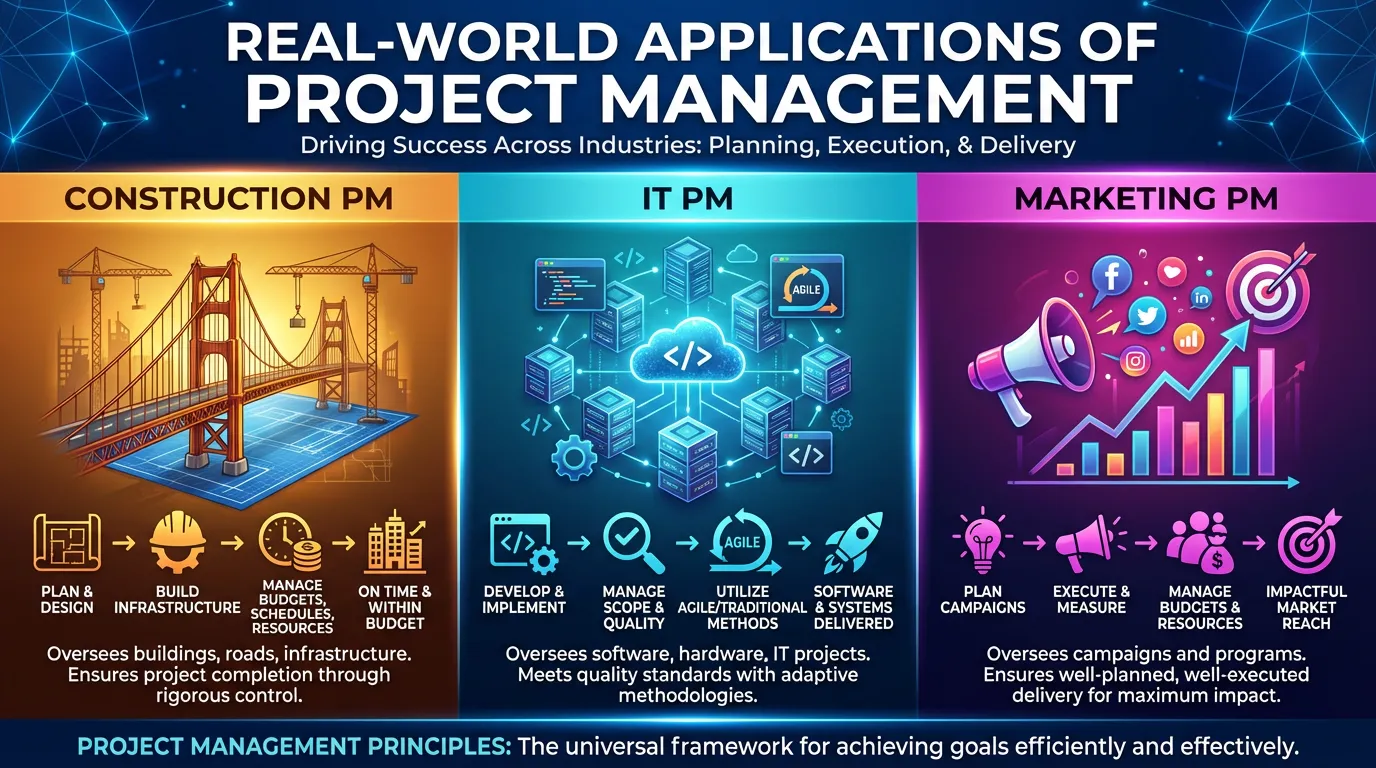 Project management is used in a wide range of industries and applications, from construction and IT to marketing and finance. In construction project management, project managers oversee the planning, design, and construction of buildings, roads, and other infrastructure projects. They must manage budgets, schedules, and resources to ensure that the project is completed on time and within budget.
In IT project management, project managers oversee the development and implementation of software applications, hardware systems, and other IT projects. They must manage the project scope, schedule, and budget, as well as ensure that the project meets the required quality standards. For example, a project manager working on an IT project might use Agile methodologies to deliver a software application, while a project manager working on a construction project might use traditional project management methodologies.
In marketing project management, project managers oversee the planning, execution, and measurement of marketing campaigns and programs. They must manage budgets, schedules, and resources to ensure that the campaign is delivered on time and within budget. By using project management principles and practices, marketing project managers can ensure that their campaigns are well-planned, well-executed, and delivered to the required quality standards.
Project management is used in a wide range of industries and applications, from construction and IT to marketing and finance. In construction project management, project managers oversee the planning, design, and construction of buildings, roads, and other infrastructure projects. They must manage budgets, schedules, and resources to ensure that the project is completed on time and within budget.
In IT project management, project managers oversee the development and implementation of software applications, hardware systems, and other IT projects. They must manage the project scope, schedule, and budget, as well as ensure that the project meets the required quality standards. For example, a project manager working on an IT project might use Agile methodologies to deliver a software application, while a project manager working on a construction project might use traditional project management methodologies.
In marketing project management, project managers oversee the planning, execution, and measurement of marketing campaigns and programs. They must manage budgets, schedules, and resources to ensure that the campaign is delivered on time and within budget. By using project management principles and practices, marketing project managers can ensure that their campaigns are well-planned, well-executed, and delivered to the required quality standards.
Career Development and Job Opportunities
A project manager is responsible for overseeing projects from start to finish, ensuring that they are completed on time, within budget, and to the required quality standards. The job description typically includes tasks such as project planning, resource allocation, risk management, and team leadership. Project managers can work in a wide range of industries, from construction and IT to marketing and finance. The salary range for project managers varies depending on the industry, location, and level of experience. According to the Project Management Institute, the average salary for a project manager is around $115,000 per year. However, salaries can range from $60,000 to over $200,000 per year, depending on the specific job and location. For example, a project manager working in the construction industry might earn a higher salary than a project manager working in the non-profit sector. There are many career advancement opportunities available for project managers. With experience and certification, project managers can move into senior roles, such as program manager or portfolio manager. They can also specialize in a particular industry or type of project, such as IT or construction. By developing their skills and knowledge, project managers can increase their earning potential and career opportunities, as well as improve their job satisfaction and overall career development.Key Takeaways
To become a successful project manager, you need to possess a unique combination of skills, knowledge, and experience. You must have a thorough understanding of the project management framework, as well as strong communication, leadership, and problem-solving skills. You should also consider obtaining a project management certification, such as the PMP or Agile certification, to demonstrate your knowledge and skills to employers and clients. By following the guidance and advice outlined in this article, you can start working towards your goal of becoming a project manager. Remember to focus on developing your skills and knowledge, as well as gaining experience and certification. With dedication and hard work, you can achieve your career goals and become a successful project manager. So, what's the first step you will take today to start your journey towards a rewarding and challenging career in project management?Frequently Asked Questions
What is the average salary of a project manager?
The average salary of a project manager varies by industry and location
What are the most popular project management certifications?
The most popular project management certifications include PMP, Agile, and Scrum
