Australia Skilled Migration 2026: Points calculator, 65-85+ strategies, and Sri Lankan success tips
The 2026 Australian Skilled Migration Landscape: What's New? Australia's skilled migration program is undergoing its most significant transformation in decades. By 2026, applicants will face a system designed to be more targeted, responsive, and directly aligned with the nation's evolving econ...
The 2026 Australian Skilled Migration Landscape: What's New?
Australia's skilled migration program is undergoing its most significant transformation in decades. By 2026, applicants will face a system designed to be more targeted, responsive, and directly aligned with the nation's evolving economic needs. The old, rigid frameworks are making way for a more dynamic approach that values specific, in-demand skills.
Understanding these changes is crucial for anyone planning their migration journey. The focus is shifting from simply accumulating points to demonstrating tangible value to the Australian economy and society.
Here are the key developments shaping the 2026 landscape:
- The "Skills in Demand" Visa: Replacing the Temporary Skill Shortage (TSS) visa, this new three-tiered visa provides clearer pathways. It includes a Specialist Skills Pathway for highly skilled migrants, a Core Skills Pathway for occupations on a new Core Skills Occupation List, and an upcoming Essential Skills Pathway.
- A Reformed Points Test: The traditional points test is under review, with a new system expected to better identify candidates with the greatest potential for success. Expect a greater emphasis on factors like skilled partner contributions, relevant Australian work experience, and superior English proficiency over passive traits like age.
- Shift from Occupations to Skills: The government is moving away from the rigid ANZSCO occupation codes. The new system will focus more on an applicant’s transferable skills, making it more adaptable to new and emerging industries that don't fit into traditional job categories.
- Clearer Pathways to Permanent Residency: A central goal of the reform is to create more straightforward and faster pathways to permanent residency for temporary skilled migrants. This aims to provide greater certainty and encourage long-term settlement for those who contribute effectively.
The 2026 landscape rewards adaptability and strategic planning. For prospective migrants, this means focusing on building a strong skills portfolio and gaining practical experience in sectors Australia needs.

Decoding the 2026 Points Calculator: Every Point Counts
Australia's skilled migration system is built on a competitive points test. This framework is designed to select candidates with the most valuable skills and attributes for the Australian economy. While the minimum eligibility threshold is 65 points, this is often just the starting line. For many popular occupations, a much higher score is necessary to receive an invitation to apply for a visa. Understanding precisely how every point is awarded is the first step toward building a successful application.
Your total score is a combination of factors related to your personal and professional profile. Maximising your potential in each category is crucial.
Core Point Categories:
- Age: Maximum points are awarded to applicants in the prime working-age bracket, typically between 25 and 32 years old.
- English Language Proficiency: This is a critical and high-impact area. Achieving a 'Superior' English score (e.g., IELTS 8 or equivalent) can add up to 20 points, a significant advantage over a 'Competent' score.
- Skilled Employment Experience: Points are granted for relevant work experience in your nominated occupation. More points are awarded for longer periods, with Australian experience often valued more highly than overseas experience.
- Educational Qualifications: Your highest qualification, from a diploma to a Doctorate (PhD), contributes significantly to your total. Specialist qualifications in STEM fields may also attract bonus points.
- Partner Skills: You can claim valuable extra points if your partner is under 45, has competent English, and obtains a positive skills assessment in a relevant occupation.
- Other Avenues: Don't overlook bonus points from completing a Professional Year in Australia, studying in a regional area, or securing a state or territory nomination, which provides a substantial boost to your score.
Remember, reaching 65 points makes you eligible, but aiming for 85 or more makes you competitive. A detailed review of the points calculator will help you identify your strengths and pinpoint areas for improvement, turning your migration goal into a tangible plan.

From 65 to 85+: High-Impact Strategies for a Stronger Profile
Achieving the minimum 65 points is the first step, but in the competitive landscape of Australian skilled migration, it's often not enough to secure an invitation. To stand out, you need a proactive strategy to boost your score towards 85 points or higher. Focusing on the right areas can transform your profile from eligible to highly desirable.
Here are key strategies to significantly increase your points total:
- Master the English Language Test: This is the single most effective way to gain points. Moving from 'Proficient' (e.g., IELTS 7) to 'Superior' (e.g., IELTS 8) English can add a crucial 10 points to your score, taking you from 10 to 20 points for language skills alone.
- Gain More Skilled Employment Experience: Every year of relevant work experience counts. Aim to cross the thresholds of three, five, and eight years for overseas experience to claim more points. Relevant Australian work experience is valued even more highly.
- Leverage Your Partner's Skills: If your partner is under 45, has 'Competent' English, and can obtain a positive skills assessment in a relevant occupation, they can add 10 valuable points to your application. A partner with just 'Competent' English can still add 5 points.
- Consider Further Study or a Professional Year: Completing a Professional Year Program (PYP) in Australia in fields like Accounting, IT, or Engineering adds 5 points. Similarly, studying for at least two years in a designated regional area of Australia can also provide an additional 5 points.
- NAATI Credentialing: For bilingual applicants, becoming a NAATI-certified translator or interpreter in a community language earns you 5 points. This is an excellent opportunity for many Sri Lankan candidates proficient in Sinhala or Tamil.
By strategically combining these elements, you can elevate your profile, dramatically increasing your chances of receiving an invitation to apply for permanent residency by 2026.

The Sri Lankan Edge: Tailored Tips for Success
Sri Lankan professionals possess unique strengths that can be powerfully leveraged for a successful migration journey. While the general points system applies to everyone, a focused strategy that capitalizes on your background can make all the difference. As you prepare for the 2026 intake, consider these tailored tips to build a competitive Expression of Interest (EOI).
- Maximize Your English Proficiency: Many Sri Lankans have a strong English language foundation. Don't settle for a competent score. Aim for ‘Superior’ English (like an IELTS 8+ in each band). This alone provides 20 points and is often the single most significant factor in pushing an application from the 65-point range into the competitive 85+ bracket.
- Meticulously Document Your Experience: The high standard of Sri Lanka’s IT, engineering, and accounting sectors is well-regarded. However, you must prove it. Obtain detailed reference letters that clearly outline your duties and align perfectly with your nominated ANZSCO code. Vague descriptions are a common reason for rejection. Quantify your achievements where possible.
- Leverage Partner Skills: If your spouse or de facto partner has a skilled profession, this is a golden opportunity. Securing a positive skills assessment and competent English for your partner can add crucial points to your application. This is a common and highly effective strategy for Sri Lankan couples to boost their overall score.
- Embrace Regional Pathways: Look beyond Sydney and Melbourne. State and territory nomination programs, especially for regional areas (subclass 491 and 190 visas), often have broader occupation lists and may prioritize applicants committed to living outside major cities. This strategic move can significantly increase your chances of receiving an invitation.
By strategically combining these elements, you can transform your solid qualifications and experience into a high-scoring profile that stands out in the competitive Australian skilled migration landscape.

Related Articles

Australia - Schedule 3 Issues: Protecting Your Visa Status While Building Relationships
In the world of Australian immigration, "Schedule 3" is a term that strikes fear into the hearts of onshore applicants. For many Sri Lankans who travel to Australia on a student or visitor visa and subsequently fall in love with an Australian citizen or permanent resident, the transition to a Partn...
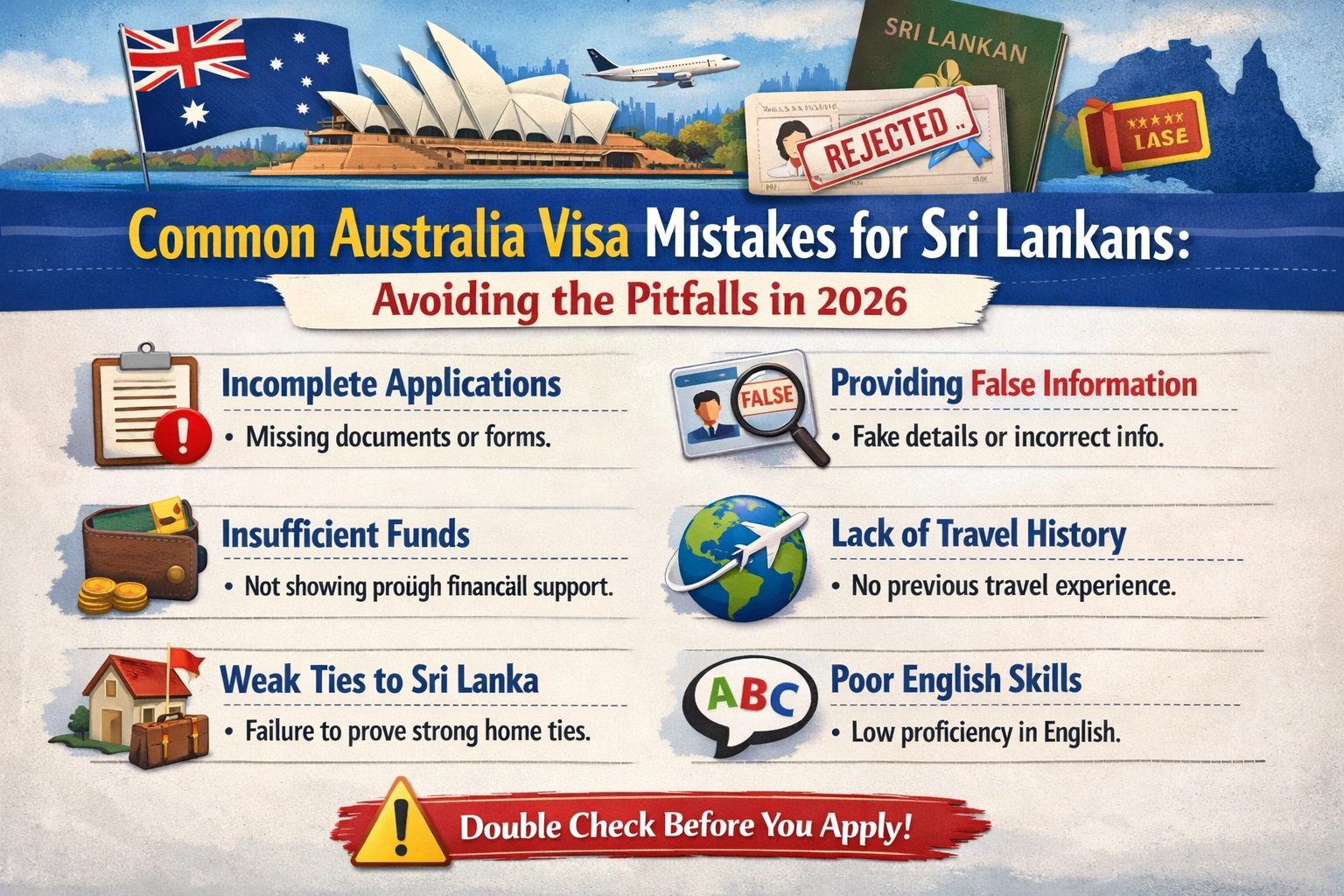
Common Australia Visa Mistakes for Sri Lankans: Avoiding the Pitfalls in 2026
The journey from Sri Lanka to Australia is paved with good intentions but often derailed by small, avoidable errors. In 2026, the Australian Department of Home Affairs (DoHA) has moved toward a "zero-tolerance" digital verification system. A single inconsistency in your employment dates or a "parke...

Australia Credential Recognition: Getting Your Sri Lankan Qualifications Assessed
One of the biggest hurdles for Sri Lankan professionals moving to Australia is "Credential Recognition." You may be a senior engineer in Colombo or a lead developer in Kandy, but to the Australian Department of Home Affairs, your skills don't exist until they are "validated" by an Australian assess...

Australia Partner Visa: The Path to Permanent Residency for Couples
For many Sri Lankans, the journey to Australia isn't just about a career—it's about reuniting with a loved one. Whether you have married an Australian citizen, are in a long-term de facto relationship, or are planning to wed your fiancé(e), the Australian Partner Visa is the specialized pathway des...