From Stability to Growth: Is Sri Lanka Back on Global Investors' Radar?
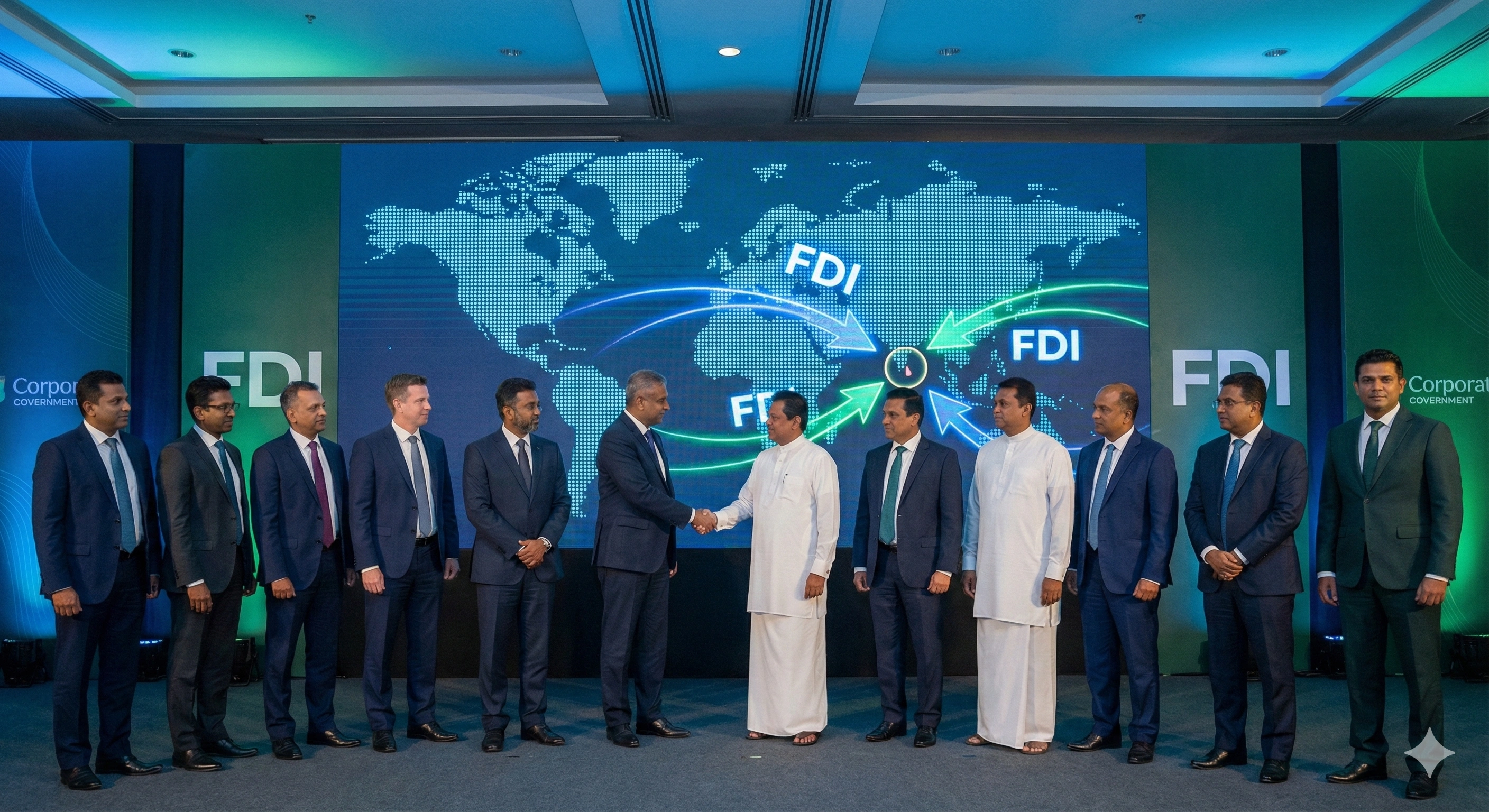
International investor sentiment toward Sri Lanka has warmed significantly, with foreign direct investment (FDI) surging 15% to $507 million in January-October 2025, signaling confidence in post-crisis stability and President Dissanayake's reform trajectory. Apparel captured 40% ($200M) via Indian/...
International investor sentiment toward Sri Lanka has warmed significantly, with foreign direct investment (FDI) surging 15% to $507 million in January-October 2025, signaling confidence in post-crisis stability and President Dissanayake's reform trajectory. Apparel captured 40% ($200M) via Indian/Singaporean factory expansions in Katunayake SEZ, tourism drew $127M for 20 new southern resorts, and IT/BPO secured $100M targeting European digital compliance contracts. Board of Investment approvals for 300+ projects promise 30,000 jobs, technology transfer in automation, and $1 billion annual export uplift.
Strategic versus portfolio inflows distinguish this wave: 70% long-term greenfield investments versus speculative bonds, reducing volatility risks seen in 2021 taper tantrums. Neighboring Bangladesh/India comparisons favor Sri Lanka's English proficiency (20% population fluent), geopolitical neutrality amid US-China tensions, and 15% corporate tax holidays through 2028. Hambantota SEZ revival attracts Japanese logistics firms, creating 10,000 positions with local sourcing mandates ensuring 60% Sri Lankan employment.
For communities, benefits materialize through multiplier effects: each FDI dollar generates 2.5 jobs via supply chains benefiting 50,000 MSMEs. Women's participation rises to 35% in new factories with creche facilities. However, risks loom—policy reversals on tax breaks, 23% youth unemployment mismatches, and cyclone disruptions underscore insurance gaps.
Equitable frameworks demand: 30% local content rules preventing enclave economies, TVET upgrades training 100,000 for Industry 4.0, and profit repatriation caps channeling 10% to community funds. Capital Markets Authority's ESG bond issuances ($200M target) align green FDI with climate resilience.
Past cycles warn caution: 2010-2015 FDI boom bypassed North/East; transparent BOI portals now track regional distribution. Regional peers like Vietnam leverage FDI for 7% growth through skill ecosystems Sri Lanka must emulate.
In conclusion, Sri Lanka's investor renaissance offers catalytic growth if harnessed equitably—jobs for youth, tech for competitiveness, revenues for welfare—transforming stability into inclusive prosperity without repeating boom-bust traps that marginalized communities.
References:
https://internationalbanker.com/finance/sri-lanka-from-stability-to-growth/
https://www.reuters.com/world/asia-pacific/sri-lankan-economy-grew-54-third-quarter-2025-2025-12-15/
https://www.cbsl.gov.lk/en/sri-lanka-economy-snapshot
Related Articles
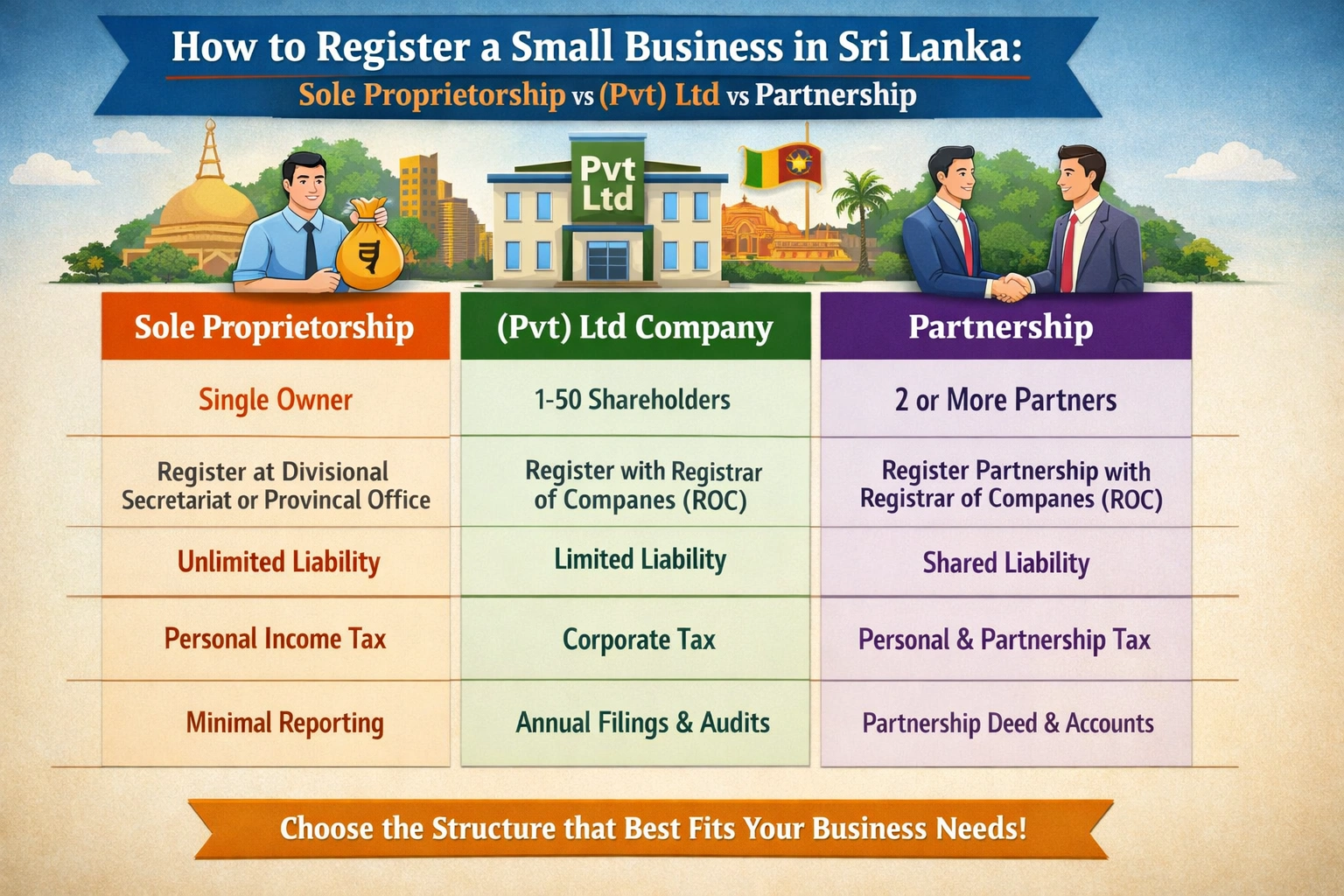
How to register a small business in Sri Lanka: Sole proprietorship vs (Pvt) Ltd vs partnership.
Overview: Choosing the right structure in Sri Lanka In Sri Lanka, most small businesses are set up as a sole proprietorship, partnership, or private limited company ((Pvt) Ltd). The best option for you depends mainly on your risk tolerance, growth plans, tax and compliance burden, and whet...

Emergency Finance and Trade: Shielding Sri Lanka's Export Engine
Cyclone Ditwah threatened Sri Lanka's $12 billion export engine—40% apparel, 15% tea/rubber—but swift multilateral emergency finance preserved vital foreign exchange and 2 million jobs. ADB's $40 million trade guarantees enabled 500 exporters to secure working capital despite $200 million cyclone d...
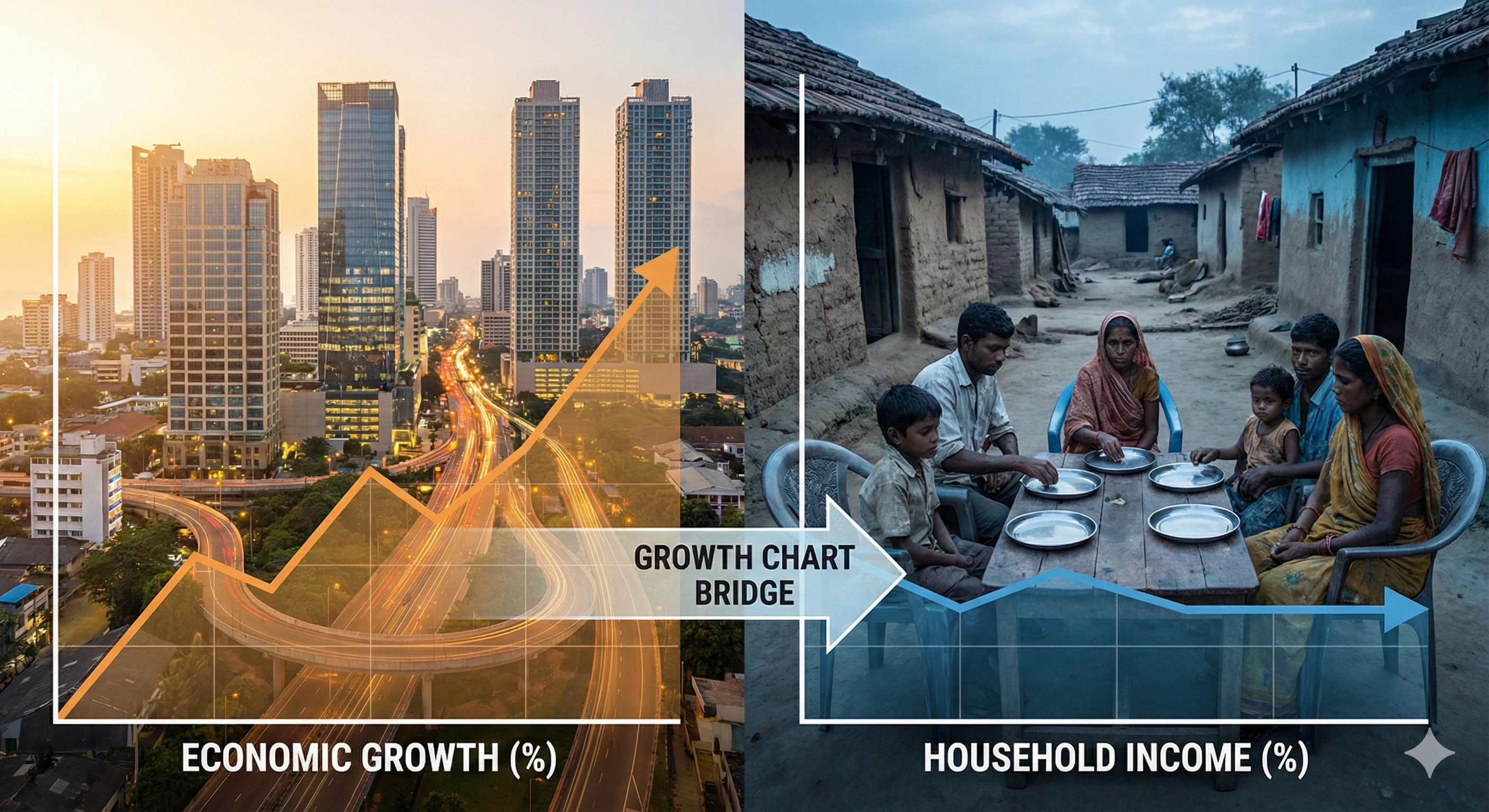
Sri Lanka's Recovery "Still Incomplete": What That Means for Ordinary People
The World Bank characterizes Sri Lanka's post-crisis trajectory as "strong but incomplete," with poverty rates 10% above 2019 levels and 25% of households grappling with food insecurity despite 5.4% Q3 growth. Macro indicators shine—reserves $5.2B, inflation 5.8%, debt stabilizing—but micro-level s...
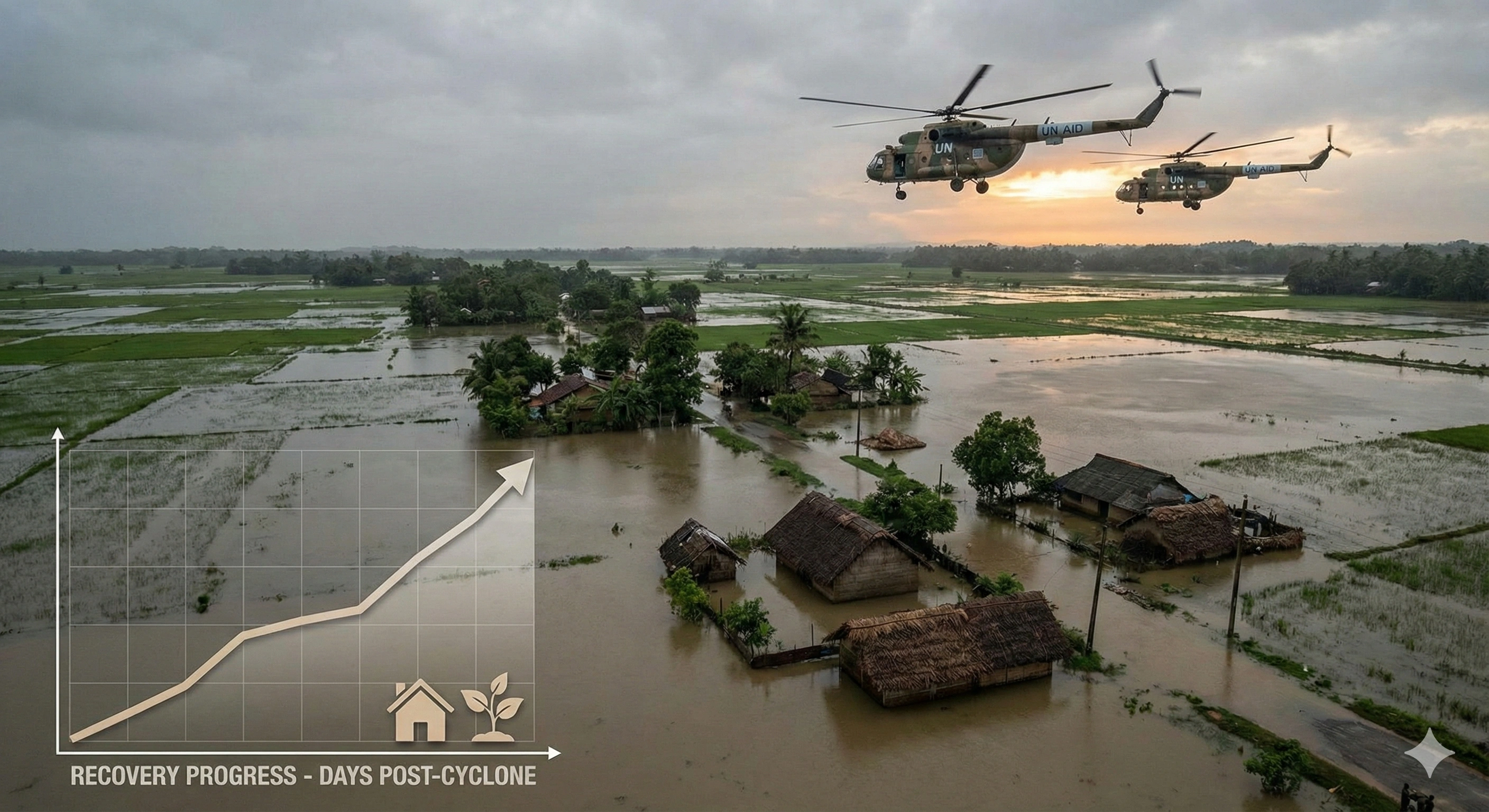
Cyclone Ditwah's $2B Damage to Sri Lanka: Economic Toll and Recovery Path
Cyclone Ditwah struck in early December 2025 with devastating force, inflicting an estimated $2 billion in damages across Sri Lanka's Eastern and Northern Provinces, contracting GDP growth by 0.5-0.7% and displacing over 500,000 people from their homes. The storm's torrential rains flooded 150,000...