Best Productivity Tools for Remote Teams 2026
As you sit at your desk, sipping your morning coffee and staring at your computer screen, you can't help but think about the challenges of managing a remote team. You've got team members scattered across different time zones, and it can be tough to keep everyone on the same page. But what if you h...
Introduction to Remote Team Productivity
When it comes to remote team productivity, there are several key factors to consider. First and foremost, increased productivity is essential for achieving your goals. When team members are able to work efficiently and effectively, they're able to get more done in less time. This can be achieved through the use of tools such as project management software, which helps team members stay organized and focused. For example, a study by Harvard Business Review found that teams that used project management software were able to increase their productivity by up to 25%. Another important factor is improved collaboration. When team members are able to communicate effectively and work together seamlessly, they're able to produce high-quality results. This can be achieved through the use of video conferencing software, which allows team members to connect with each other in real-time. For instance, Zoom is a popular video conferencing platform that allows team members to hold virtual meetings and collaborate on projects. By using tools like these, remote teams can improve their collaboration and achieve better outcomes. Finally, better work-life balance is essential for remote team members. When team members are able to manage their work and personal life effectively, they're able to reduce stress and increase their overall well-being. This can be achieved through the use of tools such as time tracking software, which helps team members stay organized and focused. For example, RescueTime is a time tracking tool that helps team members understand how they're spending their time, and make adjustments to improve their productivity and work-life balance.Communication and Collaboration Tools
Communication and collaboration are essential for remote teams. Without the right tools, team members can feel isolated and disconnected from each other. Video conferencing software is a must-have for remote teams, as it allows team members to connect with each other in real-time. For example, Google Meet is a popular video conferencing platform that allows team members to hold virtual meetings and collaborate on projects. By using video conferencing software, remote teams can improve their communication and collaboration, and achieve better outcomes. Instant messaging software is another essential tool for remote teams. This allows team members to communicate with each other quickly and easily, without having to rely on email or phone calls. For instance, Slack is a popular instant messaging platform that allows team members to communicate with each other in real-time. By using instant messaging software, remote teams can improve their communication and collaboration, and reduce the risk of misunderstandings and miscommunications. Project management software is also essential for remote teams. This allows team members to manage their work and collaborate with each other on projects. For example, Asana is a popular project management platform that allows team members to create and assign tasks, track progress, and collaborate with each other in real-time. By using project management software, remote teams can improve their productivity and achieve better outcomes.Task Management and Organization Tools
Task management and organization are essential for remote teams. Without the right tools, team members can feel overwhelmed and disorganized, which can lead to reduced productivity and poor outcomes. To-do lists are a must-have for remote teams, as they allow team members to manage their work and prioritize their tasks. For example, Trello is a popular to-do list platform that allows team members to create and manage their tasks, and collaborate with each other in real-time. Project timelines are also essential for remote teams. This allows team members to visualize their work and manage their deadlines, which can help to reduce stress and improve productivity. For instance, Microsoft Project is a popular project management platform that allows team members to create and manage their project timelines, and collaborate with each other in real-time. Task assignments are also important for remote teams. This allows team members to assign tasks to each other, and track progress in real-time. For example, Basecamp is a popular project management platform that allows team members to assign tasks to each other, and track progress in real-time. By using task management and organization tools, remote teams can improve their productivity and achieve better outcomes.Time Tracking and Productivity Monitoring Tools
Time tracking and productivity monitoring are essential for remote teams. Without the right tools, team members can feel unsure about how they're spending their time, which can lead to reduced productivity and poor outcomes. Time tracking software is a must-have for remote teams, as it allows team members to track their time and understand how they're spending it. For example, Harvest is a popular time tracking platform that allows team members to track their time, and generate reports to help them understand their productivity. Productivity metrics are also important for remote teams. This allows team members to understand their productivity and identify areas for improvement. For instance, Focus@Will is a popular productivity platform that provides team members with personalized productivity metrics, and helps them to stay focused and on track. Performance analysis is also essential for remote teams. This allows team members to analyze their performance and identify areas for improvement. For example, 15Five is a popular performance analysis platform that allows team members to set goals and track their progress, and provides them with regular check-ins and feedback to help them improve their performance. By using time tracking and productivity monitoring tools, remote teams can improve their productivity and achieve better outcomes.Security and Data Protection Tools
Security and data protection are essential for remote teams. Without the right tools, team members can feel vulnerable to cyber threats and data breaches, which can lead to serious consequences. Data encryption is a must-have for remote teams, as it allows team members to protect their data and prevent unauthorized access. For example, LastPass is a popular password management platform that provides team members with secure data encryption, and helps them to generate strong and unique passwords. Access controls are also important for remote teams. This allows team members to control who has access to their data and systems, and prevent unauthorized access. For instance, Okta is a popular access control platform that provides team members with secure access controls, and helps them to manage their user identities and permissions. Security protocols are also essential for remote teams. This allows team members to establish and enforce security protocols, and prevent cyber threats and data breaches. For example, Malwarebytes is a popular security platform that provides team members with advanced security protocols, and helps them to detect and prevent cyber threats. By using security and data protection tools, remote teams can protect their data and prevent serious consequences.Implementing and Integrating Productivity Tools
Implementing and integrating productivity tools is essential for remote teams. Without the right strategy, team members can feel overwhelmed and unsure about how to use the tools, which can lead to reduced productivity and poor outcomes. Tool selection is a critical step in implementing productivity tools. This involves selecting the right tools for your team's needs, and ensuring that they integrate seamlessly with each other. For example, Zoom and Slack are popular productivity tools that integrate seamlessly with each other, and provide team members with a comprehensive productivity suite. Implementation strategy is also important for remote teams. This involves developing a clear plan for implementing the tools, and ensuring that team members understand how to use them. For instance, Asana provides team members with a comprehensive implementation strategy, and helps them to develop a clear plan for implementing the tools. Team training is also essential for remote teams. This involves providing team members with the training and support they need to use the tools effectively, and ensuring that they understand how to integrate them into their workflow. For example, Trello provides team members with comprehensive training and support, and helps them to develop a clear understanding of how to use the tools. By implementing and integrating productivity tools, remote teams can improve their productivity and achieve better outcomes.Key Takeaways
In conclusion, the right productivity tools can make all the difference for remote teams. By using tools such as video conferencing software, project management platforms, and time tracking tools, team members can improve their communication, collaboration, and productivity. As you consider the best productivity tools for your remote team, remember to prioritize your team's specific needs and goals. What tools will you start with, and how will you implement them to take your team's performance to the next level?Frequently Asked Questions
What are the best productivity tools for remote teams?
The best tools include communication and collaboration tools, task management and organization tools, time tracking and productivity monitoring tools, and security and data protection tools
How do I choose the right productivity tools for my remote team?
Consider your team's specific needs, tool compatibility, and user experience when selecting productivity tools
Related Articles
Home Office Layout Ideas
Are you tired of feeling unproductive and distracted while working from home? You're not alone. Many people struggle to create a dedicated workspace that fosters focus and efficiency. A well-designed home office can be a powerful tool to boost your productivity and overall job satisfaction. By opti...
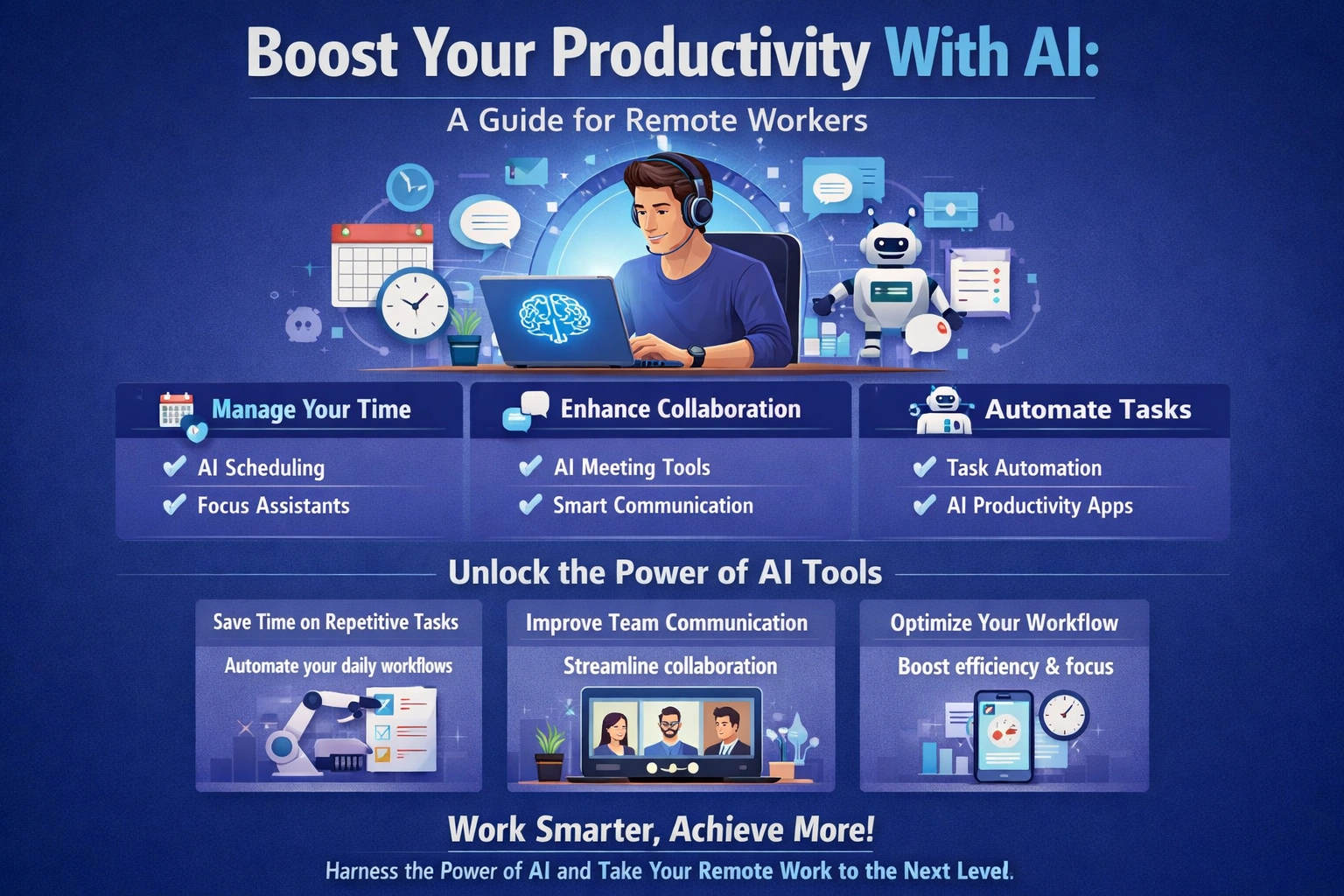
AI Productivity Tools for Remote Workers
As a remote worker, you're likely no stranger to the challenges of staying productive while working from home. With the constant distractions of family members, household chores, and personal errands, it's easy to get sidetracked and lose focus. But what if you could use artificial intelligence (A...
Remote Work Apps and Software Comparison
As you consider transitioning to remote work, you're likely thinking about how to stay productive, manage your team, and maintain security outside of a traditional office setting. With so many remote work apps and software options available, it can be overwhelming to decide which ones to use. You...
Coworking Spaces for Remote Workers
A staggering 63% of companies have remote workers, and this number is expected to grow to 73% in the next decade, according to a report by Upwork. As a remote worker, you're likely no stranger to the flexibility and freedom that comes with working from anywhere. However, you may also be familiar w...