How to Set Up a Home Office
I still remember the day I decided to set up my home office. I had been working from coffee shops and libraries for months, but I realized that I needed a dedicated space to focus on my work. As I sat amidst the chaos of my living room, surrounded by piles of papers and scattered notes, I knew tha...
Introduction to Home Office Setup
Setting up a home office can be a daunting task, but it is an essential step in creating a productive and comfortable work environment. A well-designed home office can help you stay focused, increase your productivity, and achieve a better work-life balance. When you work from home, you have the flexibility to create a space that is tailored to your specific needs and preferences. You can choose the furniture, equipment, and decor that help you stay organized and motivated. One of the primary benefits of a home office is the ability to customize your space to suit your work style. You can create a space that is quiet and secluded, or one that is open and collaborative. You can also choose the lighting, color scheme, and temperature that help you stay focused and productive. For example, some people prefer a cool and quiet environment, while others prefer a warm and lively space. By creating a space that is tailored to your needs, you can improve your overall well-being and job satisfaction. Another benefit of a home office is the potential to increase your productivity. When you work from home, you can avoid the distractions and interruptions that are common in traditional office environments. You can also create a schedule that is tailored to your needs, and take breaks whenever you need to. For instance, you can use the Pomodoro Technique, which involves working in focused 25-minute increments, followed by a five-minute break. This technique can help you stay focused and avoid burnout.Choosing the Right Location for Your Home Office
When it comes to choosing the right location for your home office, there are several factors to consider. One of the most important factors is natural light. Natural light can help you stay focused and energized, and it can also improve your mood and overall well-being. If possible, choose a location that receives plenty of natural light, such as a room with a large window or a skylight. Another important factor is the level of noise and distractions. You want to choose a location that is quiet and secluded, where you can focus on your work without interruptions. Avoid locations that are near high-traffic areas, such as the kitchen or living room. You also want to consider the proximity to amenities, such as a bathroom or a kitchen. For example, you may want to choose a location that is close to a bathroom, so you can take breaks and stretch your legs. In addition to natural light and noise level, you should also consider the overall aesthetic of the space. You want to choose a location that is visually appealing and helps you stay motivated. Consider the color scheme, the type of flooring, and the overall decor of the space. For instance, you can choose a location with a calming color scheme, such as blue or green, to help you stay focused and relaxed. You can also add plants or artwork to create a visually appealing space.Essential Furniture and Equipment for Your Home Office
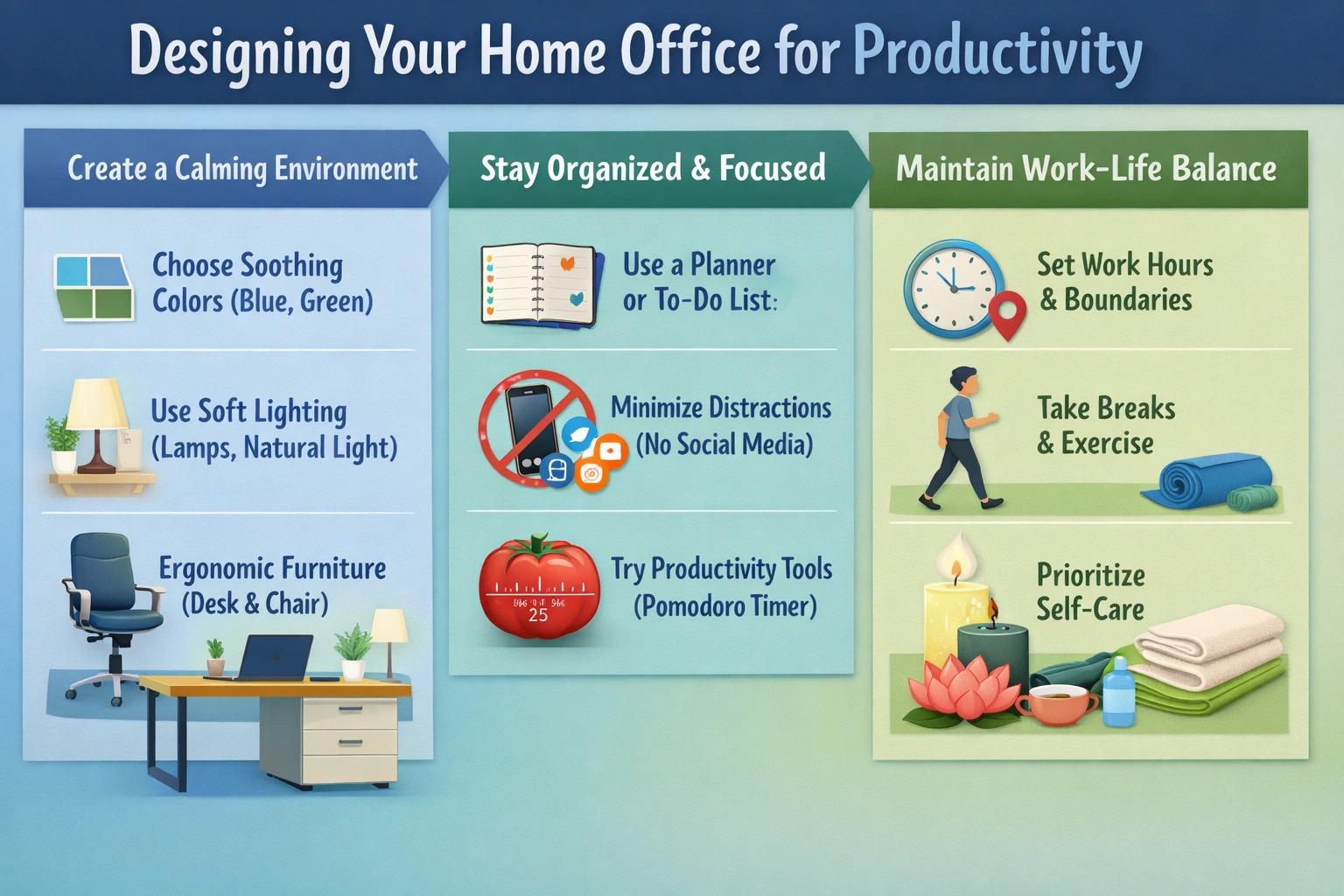
When it comes to setting up your home office, there are several essential pieces of furniture and equipment that you will need. First and foremost, you will need a desk and a chair. Choose a desk that is sturdy and comfortable, with plenty of space to work on your computer and papers. Consider a desk with built-in storage, such as drawers or shelves, to help you stay organized. In addition to a desk and chair, you will also need a computer and internet connection. Choose a computer that is fast and reliable, with plenty of storage and memory. Consider a laptop or desktop computer, depending on your specific needs and preferences. You will also need a reliable internet connection, such as a wired or wireless network. For example, you can choose a high-speed internet plan that meets your needs, such as a plan with a fast upload and download speed. Other essential pieces of equipment include a printer, scanner, and phone. Choose a printer that is reliable and efficient, with plenty of ink and paper. Consider a multi-function printer that can also scan and fax documents. You will also need a phone, such as a landline or mobile phone, to stay in touch with clients and colleagues. For instance, you can choose a phone with a headset or speakerphone, to help you stay hands-free and focused.Designing Your Home Office for Productivity
Minimizing Distractions and Staying Focused in Your Home Office
One of the biggest challenges of working from home is minimizing distractions and staying focused. There are several strategies that you can use to stay on track, such as creating a schedule and setting boundaries. Choose a specific time and place to work, and stick to it as much as possible. Avoid checking email or social media, which can be distracting and overwhelming. Another strategy is to use productivity tools, such as a timer or a to-do list. Choose a tool that is simple and easy to use, such as the Pomodoro Technique or a project management software. Consider using a tool that helps you stay organized and focused, such as a planner or a calendar. For instance, you can use a planner to schedule your tasks and appointments, or a calendar to keep track of your deadlines and milestones. In addition to creating a schedule and using productivity tools, you should also consider the physical environment of your space. Choose a location that is quiet and secluded, where you can focus on your work without interruptions. Consider using noise-cancelling headphones or a white noise machine to help you stay focused. For example, you can use noise-cancelling headphones to block out background noise, or a white noise machine to create a soothing and calming environment.Maintaining a Healthy Work-Life Balance While Working from Home
One of the biggest challenges of working from home is maintaining a healthy work-life balance. It can be easy to get sucked into work and forget about your personal life, or vice versa. To avoid this, it's essential to set boundaries and create a routine. Choose a specific time and place to work, and stick to it as much as possible. Avoid working in your pajamas or in front of the TV, which can blur the lines between work and personal life. Another strategy is to prioritize self-care. Choose activities that are nourishing and rejuvenating, such as exercise or meditation. Consider scheduling time for self-care, such as a walk or a yoga class, to help you stay focused and energized. For instance, you can schedule a daily walk or a weekly yoga class to help you stay active and relaxed. In addition to setting boundaries and prioritizing self-care, you should also consider the physical and mental health benefits of working from home. Choose a location that is comfortable and ergonomic, with plenty of natural light and fresh air. Consider using a standing desk or a ergonomic chair to help you stay comfortable and focused. For example, you can use a standing desk to alternate between sitting and standing, or an ergonomic chair to support your back and neck.Key Takeaways
Setting up a home office requires careful consideration of several factors, including the location, furniture, and equipment. By choosing a location that is quiet and secluded, selecting essential furniture and equipment, designing your space for productivity, minimizing distractions, and maintaining a healthy work-life balance, you can create a space that supports your well-being and helps you achieve your professional goals. As you reflect on your own home office setup, what changes can you make to create a space that is more productive, comfortable, and supportive of your overall well-being?Frequently Asked Questions
What are the essential pieces of furniture for a home office?
A desk, chair, and good lighting are essential for a home office
How can I minimize distractions while working from home?
Create a schedule, set boundaries, and use productivity tools to stay focused
Related Articles
How to Stay Focused Working from Home
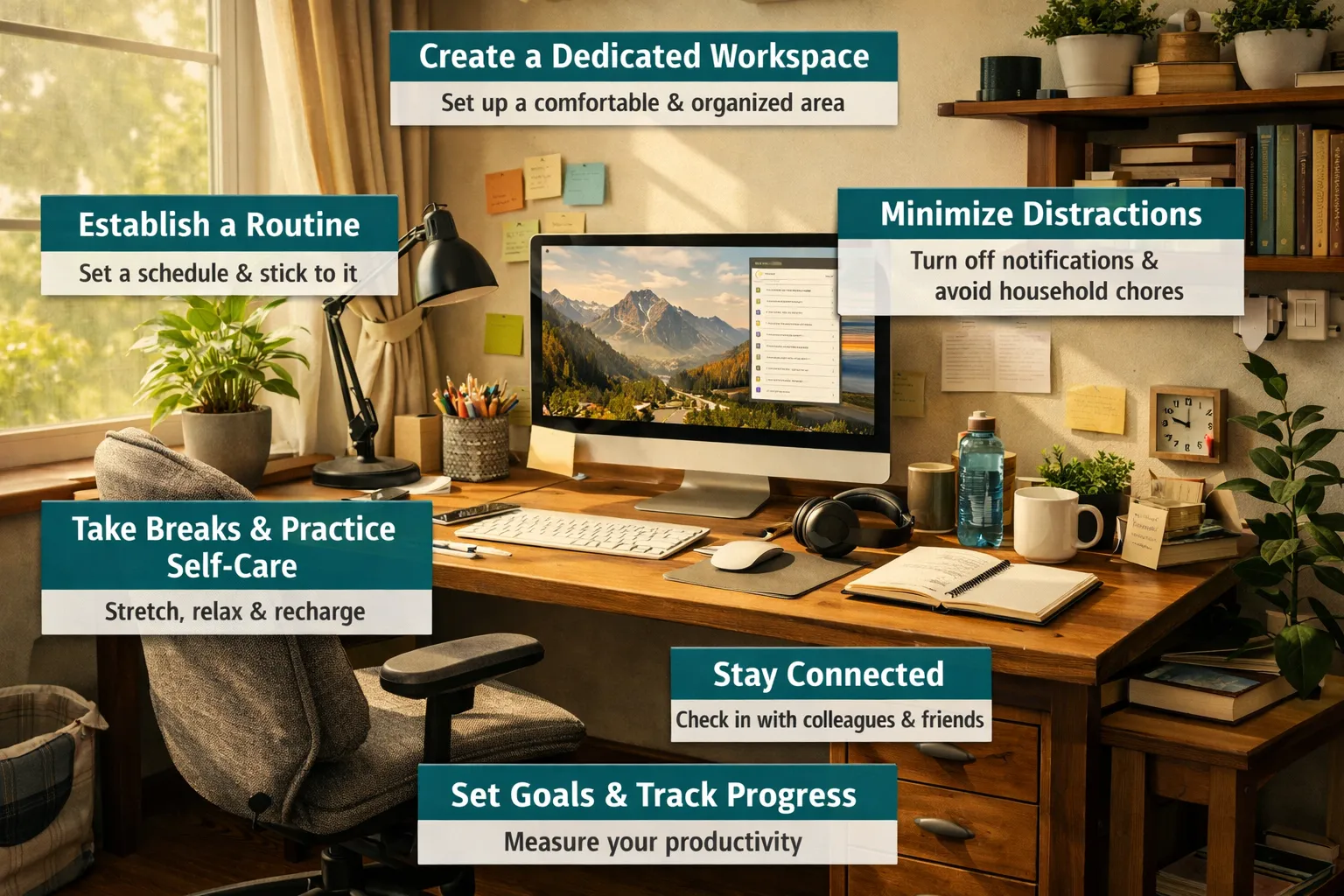
As you sit at your desk, surrounded by the comforts of your own home, you might find yourself struggling to stay focused on the task at hand. The flexibility of working from home can be a blessing, but it can also be a curse, as the lines between work and personal life become blurred. You might fi...

How to Start Investing
As you consider starting your investment journey, you're likely filled with a mix of excitement and uncertainty. Investing can seem daunting, especially with the numerous options and complexities involved. However, with the right approach and knowledge, you can set yourself up for long-term financ...

How to Calculate Percentage
Have you ever found yourself struggling to calculate percentages, whether it's figuring out the tip at a restaurant or understanding the interest rate on your savings account? You're not alone - I think many of us have been there at some point. But the good news is that calculating percentages is...

How to Boil Eggs
According to a study published in the Journal of Food Science, a staggering 60% of people do not cook their eggs to a safe internal temperature, which can lead to foodborne illnesses. As you consider cooking eggs, you may wonder how to boil them perfectly every time. Boiling eggs is a fundamental...