Alternatives to full migration: Remote work for Aus firms from Sri Lanka or hybrid study visas.
The Australian Dilemma: Bridging the Talent Gap Australia faces a persistent challenge in sourcing skilled professionals to fill critical gaps in sectors like technology, engineering, and healthcare. While traditional migration has long been the primary solution, its complexities and costs have le...
The Australian Dilemma: Bridging the Talent Gap
Australia faces a persistent challenge in sourcing skilled professionals to fill critical gaps in sectors like technology, engineering, and healthcare. While traditional migration has long been the primary solution, its complexities and costs have led businesses to explore more agile and innovative strategies. Two powerful alternatives are emerging, creating a dynamic bridge between Australian employers and Sri Lanka's skilled talent pool: remote work and hybrid study visas.
Remote Work: A Borderless Talent Solution
The rise of remote work offers Australian companies a direct pathway to Sri Lanka's highly capable, English-proficient workforce. By hiring professionals for remote roles, firms can bypass lengthy visa processes and high relocation expenses. This model is particularly effective for roles in IT, finance, and digital marketing. The minimal time zone difference ensures seamless collaboration, allowing businesses to expand their teams cost-effectively and fill vacancies almost immediately. For Sri Lankan professionals, it means access to global career opportunities and competitive wages without leaving their home communities, fostering local economic growth.
Hybrid Study Visas: Building a Future-Ready Pipeline
A hybrid study visa presents another forward-thinking approach. This model allows Sri Lankan students to begin their Australian qualifications online from home and then transition to Australia for in-person learning and crucial work experience. It creates a valuable talent pipeline, giving employers access to aspiring professionals who are already integrating into the Australian system. Companies can engage these students through internships and part-time work, assessing their skills and cultural fit before making long-term commitments. This "try-before-you-buy" system de-risks hiring and ensures graduates are job-ready, providing a smoother transition from education to employment.
Together, these flexible models offer a sustainable and mutually beneficial solution, addressing Australia’s skills shortage while creating valuable opportunities for Sri Lankan talent.

Sri Lanka's Advantage: A Hub for Remote Talent
Beyond traditional migration, innovative models are emerging that offer a win-win solution for Australian firms and Sri Lankan professionals. Tapping into Sri Lanka as a hub for remote talent presents a strategic advantage, allowing businesses to access a skilled workforce without the complexities of full-scale migration.
Sri Lanka offers a compelling proposition for Australian companies seeking to build dedicated remote teams. The key benefits include:
- A Highly Skilled Talent Pool: The nation boasts a robust, well-educated workforce, particularly strong in IT, software development, finance, and accounting. With a strong emphasis on professional qualifications, the talent is not just abundant but also highly capable and ready to contribute from day one.
- Cost-Effectiveness: Engaging Sri Lankan talent provides significant operational cost savings compared to hiring locally in Australia. This allows businesses, from startups to large corporations, to scale their teams efficiently while maintaining high standards of quality.
- Favourable Time Zone Alignment: The minimal time difference between Sri Lanka and major Australian cities (approximately 4.5 to 5.5 hours) facilitates seamless collaboration. This overlap in business hours ensures effective communication, team integration, and agile project management.
- High English Proficiency: English is widely spoken in business and professional circles throughout Sri Lanka, eliminating communication barriers and ensuring smooth integration with Australian teams and workplace culture.
Furthermore, hybrid models like study visas that permit part-time work offer another flexible pathway. These arrangements allow individuals to gain international qualifications while providing Australian firms with access to motivated talent eager for practical experience. This blend of earning and learning creates a sustainable talent pipeline, fostering skills development that directly benefits the Australian economy.

The Hybrid Model: Nurturing Talent Through Study Visas
Beyond fully remote arrangements, a powerful hybrid model offers a strategic middle ground for Australian companies and skilled Sri Lankan professionals: leveraging the Australian study visa system. This approach creates a structured pathway that combines world-class education with invaluable, real-world industry experience, building a robust talent pipeline directly within Australia.
The model is straightforward yet effective. A talented individual from Sri Lanka enrols in a relevant postgraduate course, such as a Master's in Data Science or Software Engineering, at an Australian university. Student visa regulations permit them to work part-time during their studies. An Australian firm can strategically hire this student, not for a casual role, but for a position directly aligned with their field. This transforms the part-time work allowance into a prolonged, integrated internship or junior role.
This "grow-your-own" talent strategy presents a win-win scenario:
- For Companies: It de-risks the hiring process. Employers can assess a candidate's skills, work ethic, and cultural fit over an extended period before committing to full-time sponsorship. It provides access to motivated individuals who are actively upskilling with the latest academic knowledge.
- For Professionals: It offers an immersive entry into the Australian workforce. They gain a prestigious qualification, local work experience, and a professional network—critical assets that are difficult to build remotely. This creates a clear and proven pathway to a Post-Study Work Visa and potentially a long-term career in Australia.
Ultimately, this hybrid model serves as a powerful incubator. It nurtures talent onshore, ensuring a seamless transition from student to a fully integrated, high-performing employee upon graduation. It is an investment in a person's development that pays long-term dividends for both the individual and the business.

Implementation Roadmap: Making Global Teams Work
Transitioning to a global workforce model requires a structured approach. This roadmap outlines key phases for Australian firms to successfully integrate Sri Lankan talent through remote work and innovative hybrid models, bypassing the complexities of full migration while building a cohesive and productive team.
Phase 1: Foundation & Pilot Program (Months 1-6)
- Identify Key Roles: Pinpoint functions ideal for remote collaboration, such as software development, finance, customer support, or digital marketing. Start with roles that have clearly defined tasks and measurable outcomes.
- Legal & Payroll Setup: Partner with a local Employer of Record (EOR) entity in Sri Lanka to manage compliance, contracts, and payroll seamlessly. This minimises administrative burden and legal risk.
- Launch a Small-Scale Pilot: Hire a small team of 2-5 professionals to test workflows, communication tools (like Slack and Zoom), and management practices.
- Establish Clear Metrics: Define key performance indicators (KPIs) for productivity, communication response times, and team integration.
Phase 2: Scaling & Hybrid Integration (Months 7-18)
- Expand the Team: Based on pilot success, gradually scale your hiring efforts in Sri Lanka. Refine your recruitment process to attract top-tier talent.
- Invest in Technology: Upgrade collaboration platforms and ensure secure, high-speed connectivity for all team members. Provide standardised equipment to create an equitable work environment.
- Introduce Hybrid Study Visas: For high-potential talent, explore sponsoring short-term vocational courses or industry certifications in Australia. This innovative model blends remote work with valuable in-person training, team-building, and skill development, fostering deeper company loyalty and integration.
- Foster a Unified Culture: Implement cross-team projects, virtual social events, and a mentorship program to bridge geographical distances.
Phase 3: Optimisation & Sustainable Growth (Months 18+)
- Refine Processes: Use feedback from all team members to continually improve onboarding, training, and performance management.
- Explore a Physical Hub: Consider establishing a flexible co-working space or small satellite office in Sri Lanka to enhance collaboration and team cohesion for those who prefer it.
- Develop Career Pathways: Create clear opportunities for advancement for your Sri Lankan team members within the global company structure.

Related Articles

Australia - Schedule 3 Issues: Protecting Your Visa Status While Building Relationships
In the world of Australian immigration, "Schedule 3" is a term that strikes fear into the hearts of onshore applicants. For many Sri Lankans who travel to Australia on a student or visitor visa and subsequently fall in love with an Australian citizen or permanent resident, the transition to a Partn...
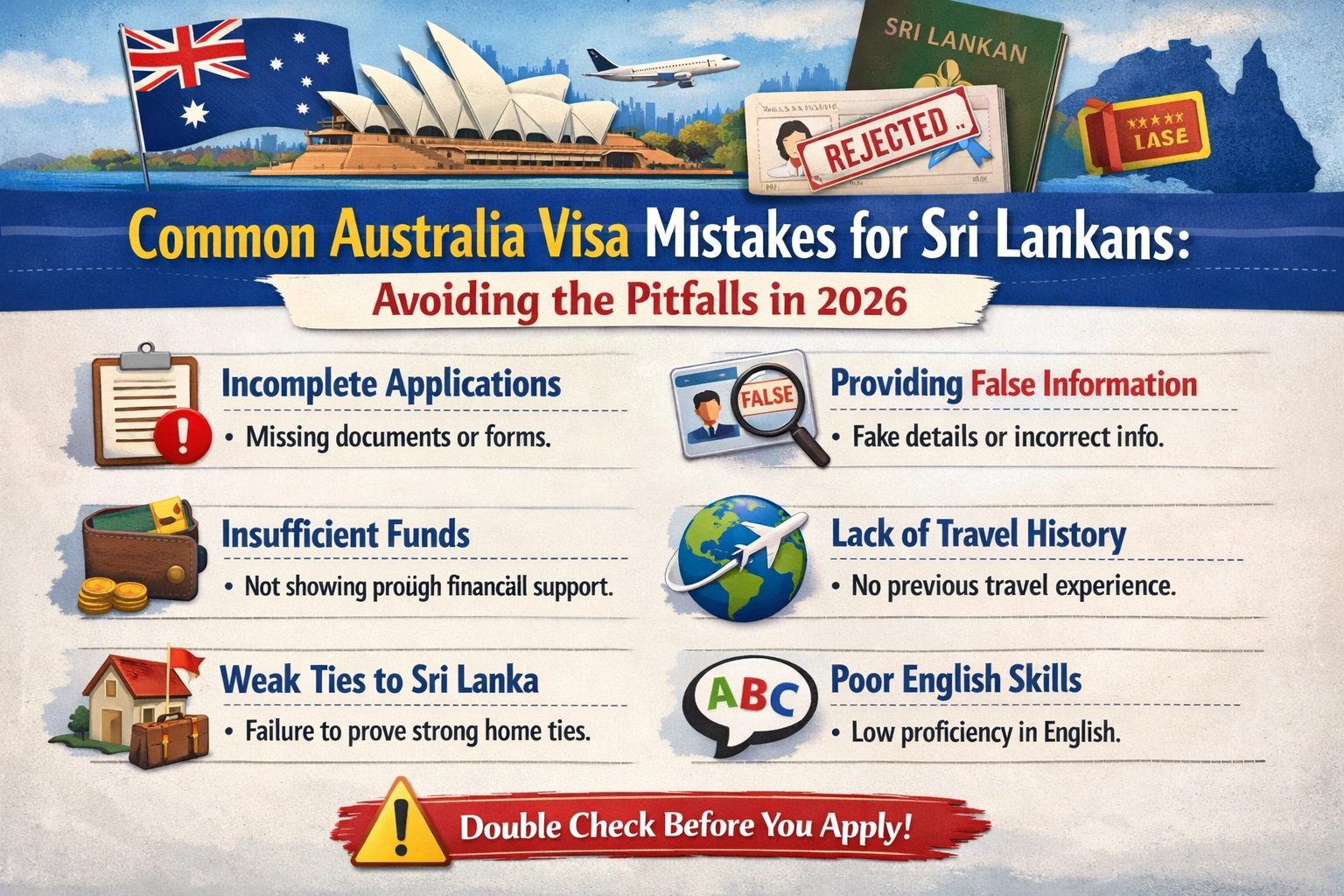
Common Australia Visa Mistakes for Sri Lankans: Avoiding the Pitfalls in 2026
The journey from Sri Lanka to Australia is paved with good intentions but often derailed by small, avoidable errors. In 2026, the Australian Department of Home Affairs (DoHA) has moved toward a "zero-tolerance" digital verification system. A single inconsistency in your employment dates or a "parke...

Australia Credential Recognition: Getting Your Sri Lankan Qualifications Assessed
One of the biggest hurdles for Sri Lankan professionals moving to Australia is "Credential Recognition." You may be a senior engineer in Colombo or a lead developer in Kandy, but to the Australian Department of Home Affairs, your skills don't exist until they are "validated" by an Australian assess...

Australia Partner Visa: The Path to Permanent Residency for Couples
For many Sri Lankans, the journey to Australia isn't just about a career—it's about reuniting with a loved one. Whether you have married an Australian citizen, are in a long-term de facto relationship, or are planning to wed your fiancé(e), the Australian Partner Visa is the specialized pathway des...