Balancing Sri Lankan Family Values with Western Independence: Challenges for young migrants in Aus/NZ
The Cultural Inheritance: Core Sri Lankan Family Values For many young Sri Lankans, family is not just a domestic unit; it is the cornerstone of their identity and the primary lens through which they view the world. Unlike the emphasis on the individual in Western societies, traditional Sri Lankan...
The Cultural Inheritance: Core Sri Lankan Family Values
For many young Sri Lankans, family is not just a domestic unit; it is the cornerstone of their identity and the primary lens through which they view the world. Unlike the emphasis on the individual in Western societies, traditional Sri Lankan culture is deeply collectivist. The family, or pawula, operates as an interconnected web of relationships where the well-being of the group often takes precedence over individual desires.
This cultural inheritance is built upon several key pillars:
- Respect for Elders: A fundamental value is the profound respect granted to elders. This is a hierarchical system where parents, grandparents, and even older siblings hold significant authority. Their wisdom is sought for major life decisions, and their approval is considered essential for everything from career choices to marriage. Disagreement is often viewed as disrespect.
- Collective Responsibility and Interdependence: The concept of "looking after your own" is deeply ingrained. Family members are expected to support one another emotionally and financially throughout their lives. The care of aging parents is not seen as a burden but as a sacred duty and a way of repaying them for their upbringing. Success is a shared victory, and hardship a collective struggle.
- Upholding Family Honour: An individual's actions are a direct reflection of the entire family's reputation and social standing. This concept, often tied to ideas of 'honour' and avoiding 'shame' (lajjawa), acts as a powerful guide for behaviour. Maintaining a good name within the wider community is paramount, influencing personal conduct and choices.
This framework provides a strong sense of belonging, security, and identity. It is a world built on duty, mutual obligation, and a shared history. For a young migrant stepping into the individualistic landscapes of Australia or New Zealand, these deeply held values form the foundation of their identity, even as they begin to face a world that operates on a very different set of principles.
The New Environment: Embracing Western Individualism
For many young Sri Lankan migrants, arriving in Australia or New Zealand is more than a change of scenery; it is a profound shift in cultural philosophy. The transition from a collectivist society, where the family unit or 'we' is paramount, to a culture built on the foundation of the individual 'I' can be both liberating and disorienting.
In this new environment, self-reliance and personal autonomy are highly valued. Decisions about career paths, relationships, and lifestyle are viewed as personal choices, not topics for family consensus. The Western concept of moving out of the parental home to gain independence, rather than upon marriage, is often one of the first major cultural hurdles. This pursuit of individual goals, while celebrated locally, can clash directly with the ingrained Sri Lankan values of respecting elders’ wishes and prioritising family harmony above personal desires.
This divergence often creates an internal tug-of-war. Young migrants grapple with a sense of guilt as they embrace newfound freedoms. The desire to explore their own identity and make independent choices can be misinterpreted by family, both locally and back home, as a rejection of their upbringing or a lack of respect. Explaining a career change based on passion over prestige, or the need for personal space, can become a delicate and often stressful negotiation.
Ultimately, embracing Western individualism is not about abandoning one's heritage. Instead, it becomes a complex process of redefinition. It is the challenge of forging a hybrid identity—one that honours the deep-seated importance of family while also carving out space for personal growth, ambition, and the independent spirit nurtured by their new home.
Navigating the Crossroads: Key Areas of Conflict
The journey for young Sri Lankan migrants is a constant negotiation between deeply ingrained collectivist values and the individualistic ethos of their new home. This cultural tightrope walk creates friction in several key aspects of life where tradition and independence collide.
Career Aspirations vs. Family Expectations
Many Sri Lankan parents envision stable, prestigious careers for their children, such as medicine, engineering, or law, viewing it as a source of family security and honour. However, young migrants immersed in Western culture may feel empowered to pursue passions in creative arts, entrepreneurship, or other non-traditional fields. This divergence can lead to feelings of guilt for the youth and disappointment for the parents, creating a tense conflict between personal fulfilment and familial duty.
Relationships and Personal Freedom
This is perhaps the most significant area of conflict. The Western concepts of casual dating, living with a partner before marriage, and complete autonomy in choosing a spouse clash sharply with traditional Sri Lankan values. Families often expect to have a strong influence on partner selection, prioritising cultural, religious, and social compatibility. Young adults navigating this space must balance their desire for personal romantic freedom with the immense pressure to uphold family reputation and gain parental approval.
Financial Autonomy vs. Collective Responsibility
In Australia and New Zealand, financial independence from a young age is a celebrated milestone. For many young Sri Lankans, however, there is an unspoken expectation to contribute to the family household, support relatives back home, and prioritise collective financial goals over individual ones. While they embrace the opportunity to earn their own money, they often grapple with deciding how much of it is truly their own versus what is owed to the family unit.

Forging a Hybrid Identity: Strategies for Balance
Navigating the space between collectivist family expectations and individualistic societal norms is a profound challenge. Yet, it is also an opportunity to create a unique and resilient hybrid identity. The goal isn't to choose one culture over the other, but to thoughtfully weave elements of both into a personal tapestry that feels authentic. This is a journey of conscious creation, not forced compromise.
Here are some strategies to help forge that balance:
- Open Communication: The Bridge Between Worlds. Instead of creating distance, initiate conversations. Explain your perspective calmly, linking your desire for independence to personal growth and responsibility—values your parents can appreciate. Frame your choices not as a rejection of their culture, but as an adaptation to your new environment.
- Selective Integration: Curate Your Values. You don't have to accept every aspect of both cultures. Consciously choose what resonates. You might embrace the Western emphasis on individual ambition while upholding the Sri Lankan value of deep respect for elders. This isn't about compromise; it's about creating a personal code that is true to you.
- Find Your 'Third Culture' Community. Connect with peers who share your dual heritage. These friendships provide a crucial support system where you can share frustrations and successes without needing to over-explain your context. This shared space validates your experience and demonstrates that you are not alone on this path.
- Demonstrate, Don't Just Declare. Actions can be more powerful than words. Show your family that independence does not mean abandonment. Maintain regular contact, actively participate in cultural celebrations, and contribute to the family in new ways. This reassures them that your love and commitment remain steadfast, even as your lifestyle evolves.
Forging this identity is an act of strength. It's about building a foundation that honours your roots while giving you the freedom to grow your own branches, allowing you to thrive authentically in both worlds.

Related Articles

Australia - Schedule 3 Issues: Protecting Your Visa Status While Building Relationships
In the world of Australian immigration, "Schedule 3" is a term that strikes fear into the hearts of onshore applicants. For many Sri Lankans who travel to Australia on a student or visitor visa and subsequently fall in love with an Australian citizen or permanent resident, the transition to a Partn...
Common Australia Visa Mistakes for Sri Lankans: Avoiding the Pitfalls in 2026
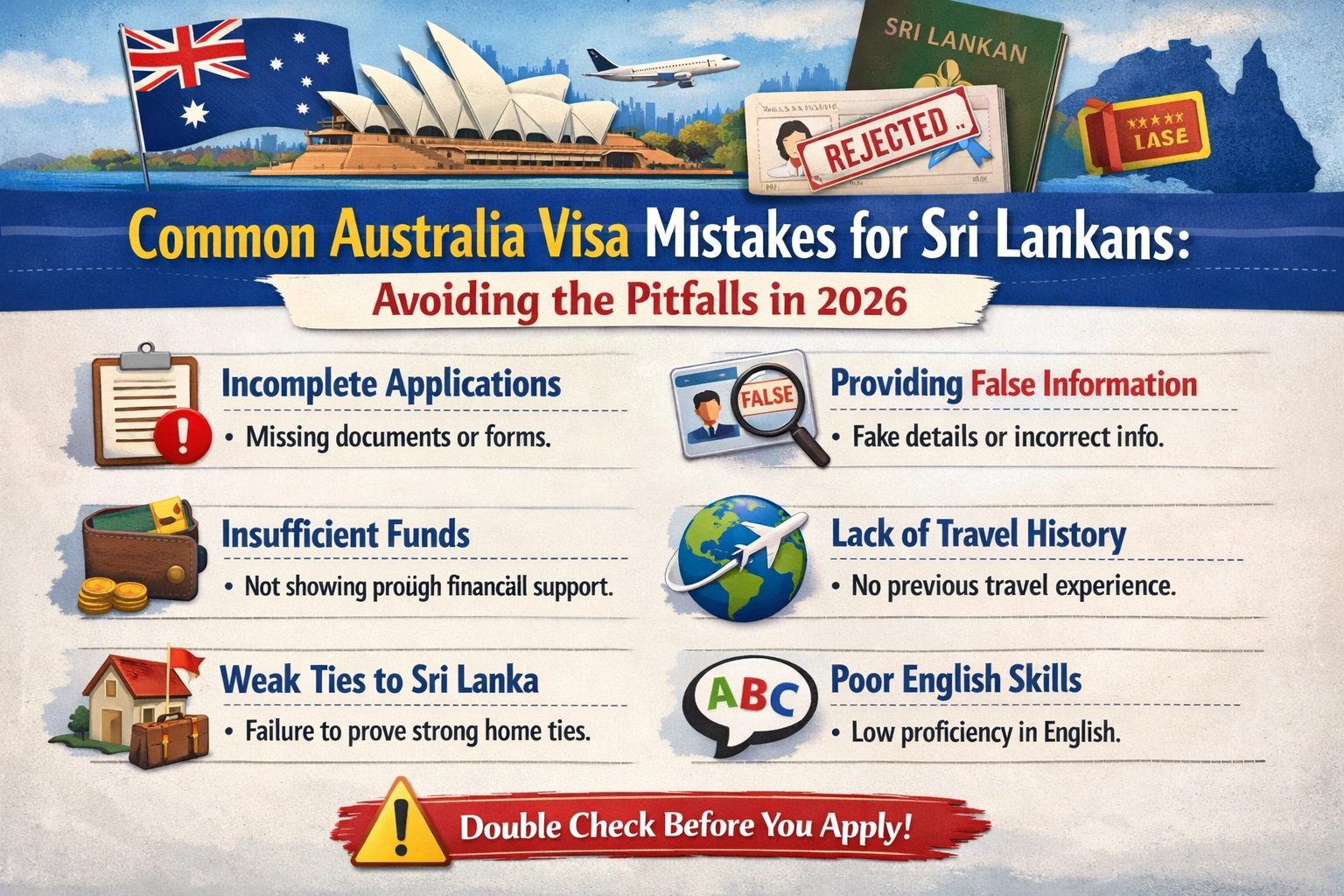
The journey from Sri Lanka to Australia is paved with good intentions but often derailed by small, avoidable errors. In 2026, the Australian Department of Home Affairs (DoHA) has moved toward a "zero-tolerance" digital verification system. A single inconsistency in your employment dates or a "parke...

Australia Credential Recognition: Getting Your Sri Lankan Qualifications Assessed
One of the biggest hurdles for Sri Lankan professionals moving to Australia is "Credential Recognition." You may be a senior engineer in Colombo or a lead developer in Kandy, but to the Australian Department of Home Affairs, your skills don't exist until they are "validated" by an Australian assess...

Australia Partner Visa: The Path to Permanent Residency for Couples
For many Sri Lankans, the journey to Australia isn't just about a career—it's about reuniting with a loved one. Whether you have married an Australian citizen, are in a long-term de facto relationship, or are planning to wed your fiancé(e), the Australian Partner Visa is the specialized pathway des...