USA F-1 Visa for Sri Lankans: Avoid Common Mistakes
Have you ever meticulously prepared your university applications, secured that life-changing acceptance letter, only to feel a growing sense of dread about the F-1 visa interview? For many Sri Lankan students, this final step feels like the most unpredictable part of the journey. The paperwork see...
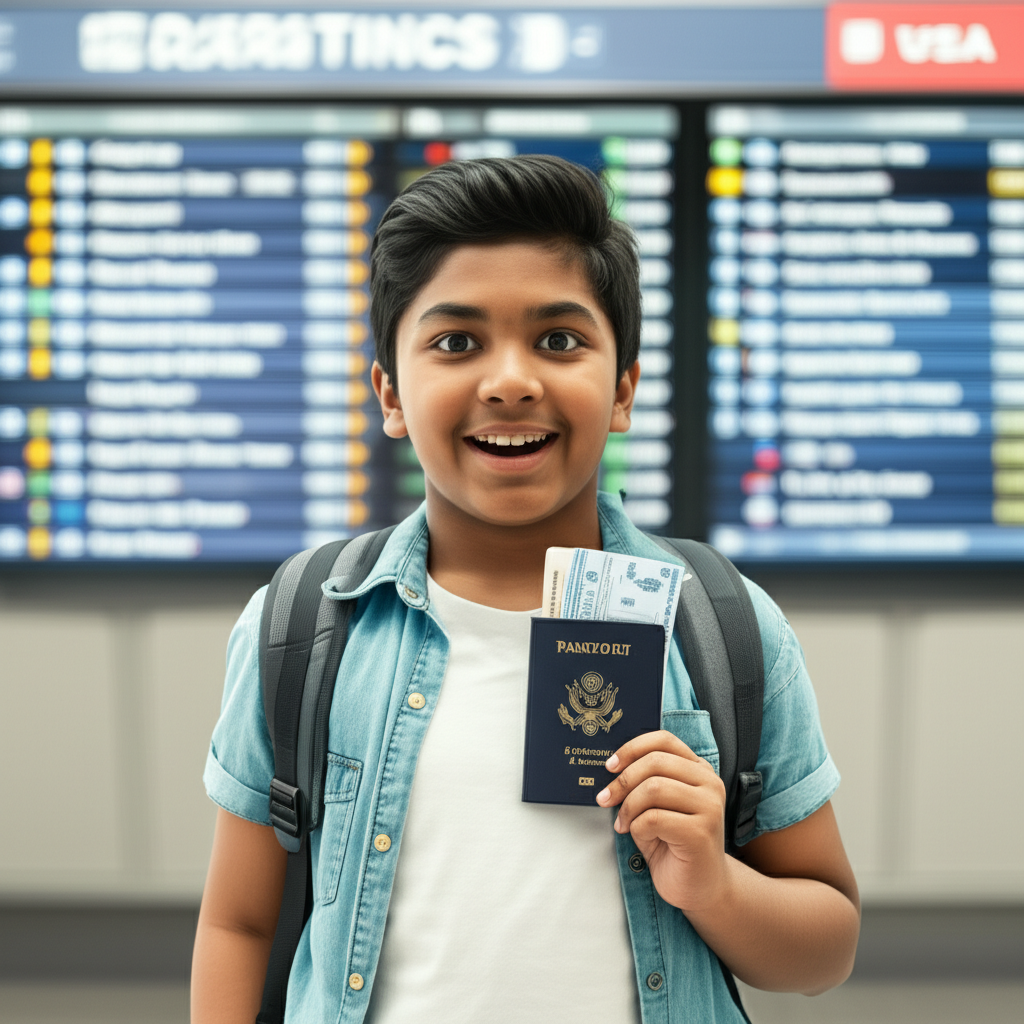
From Applicant to Approved: Your Final Step
The fear of a visa denial after months of hard work is a heavy weight for many Sri Lankan students. It's easy to get lost in the details of financial documents and interview questions, worrying about a single slip-up. The key to transforming this anxiety into confidence lies in one core principle: building a consistent and believable narrative. More than just paperwork, your application is the story of your ambition in the U.S. and your definite plan to return to Sri Lanka. When every document and every answer supports this single, powerful story, your application becomes compelling. Feeling overwhelmed? Ensure your application is perfect. Schedule a one-on-one consultation with our F-1 visa experts today!Frequently Asked Questions
How much bank balance is required for an F-1 visa from Sri Lanka?
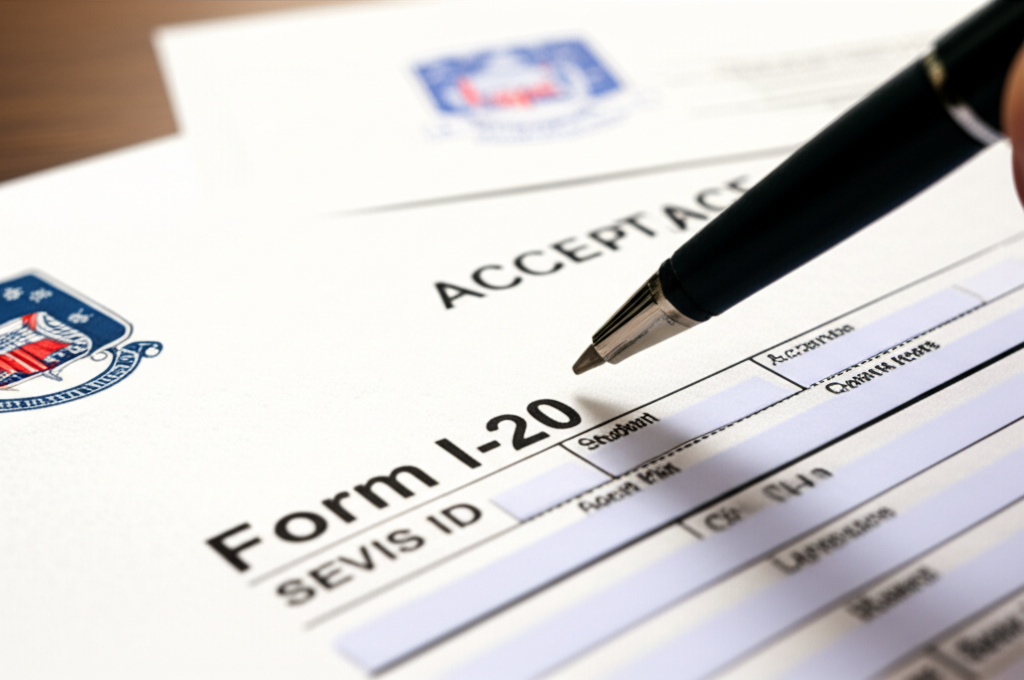
There is no exact amount. You must prove you have liquid funds to cover at least the first year of expenses listed on your I-20 form. This includes tuition, living expenses, and fees. It is recommended to show funds for the entire duration of the course if possible.
What are considered strong ties to Sri Lanka for a student visa?
Strong ties are aspects of your life that would compel you to return to Sri Lanka after your studies. These include family (parents, spouse, children), property ownership, a confirmed job offer upon your return, and a clear career plan that requires you to be in Sri Lanka.
Can I work in the USA on an F-1 visa?
F-1 visa holders have limited work privileges. You can typically work on-campus for up to 20 hours per week during the semester. Off-campus work requires special authorization (CPT or OPT) and is strictly regulated. You cannot rely on working in the US to fund your studies.
Related Articles
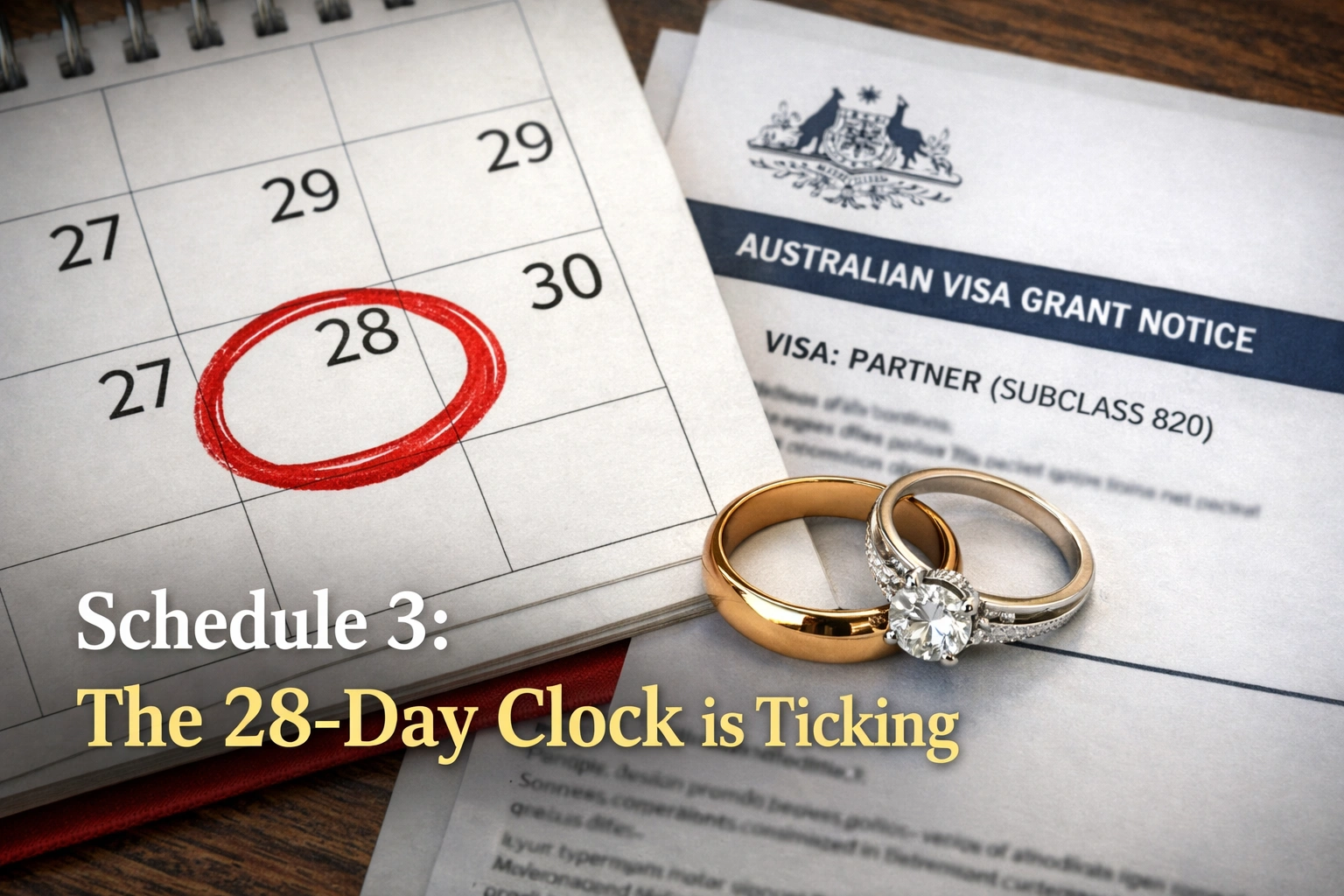
Australia - Schedule 3 Issues: Protecting Your Visa Status While Building Relationships
In the world of Australian immigration, "Schedule 3" is a term that strikes fear into the hearts of onshore applicants. For many Sri Lankans who travel to Australia on a student or visitor visa and subsequently fall in love with an Australian citizen or permanent resident, the transition to a Partn...
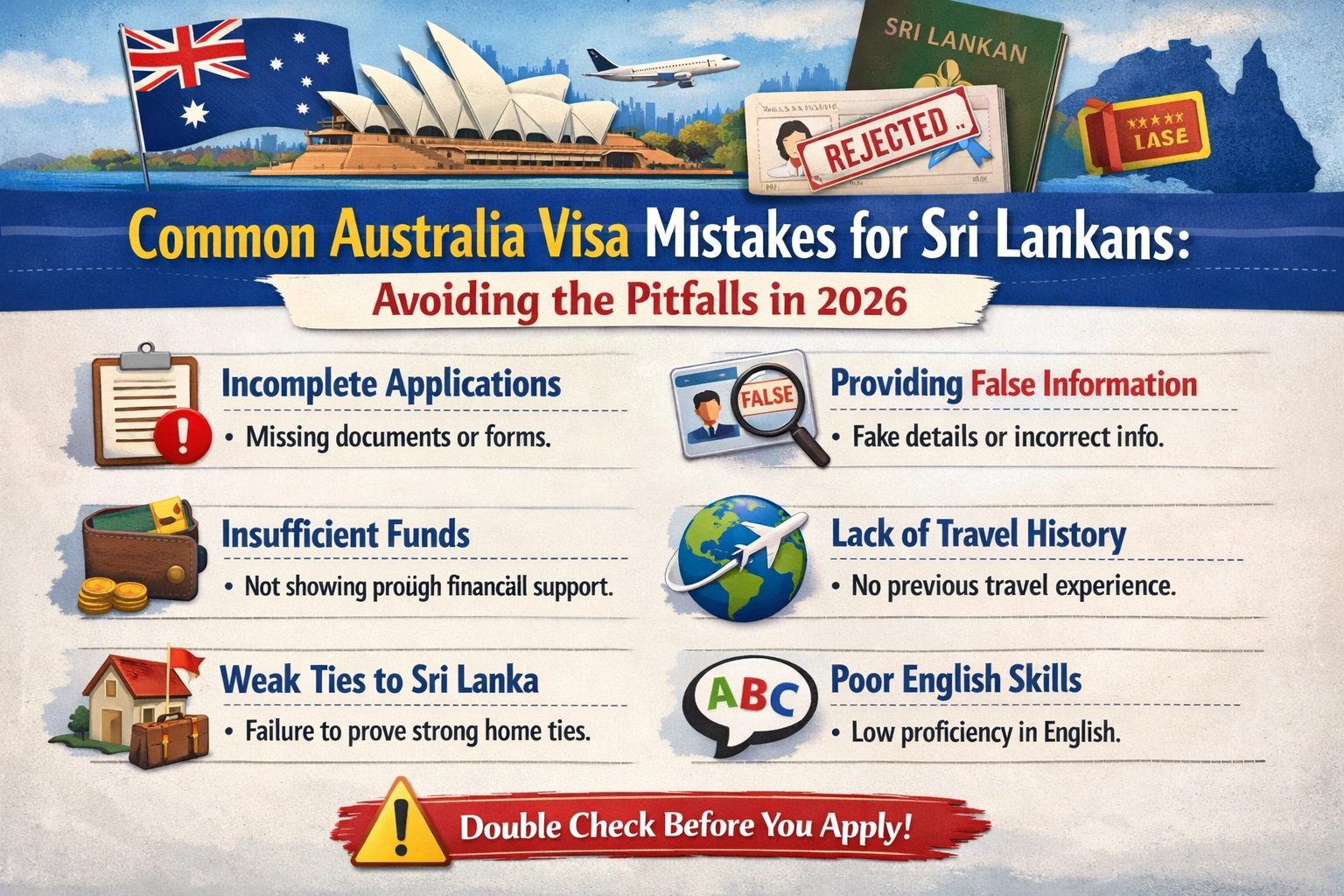
Common Australia Visa Mistakes for Sri Lankans: Avoiding the Pitfalls in 2026
The journey from Sri Lanka to Australia is paved with good intentions but often derailed by small, avoidable errors. In 2026, the Australian Department of Home Affairs (DoHA) has moved toward a "zero-tolerance" digital verification system. A single inconsistency in your employment dates or a "parke...
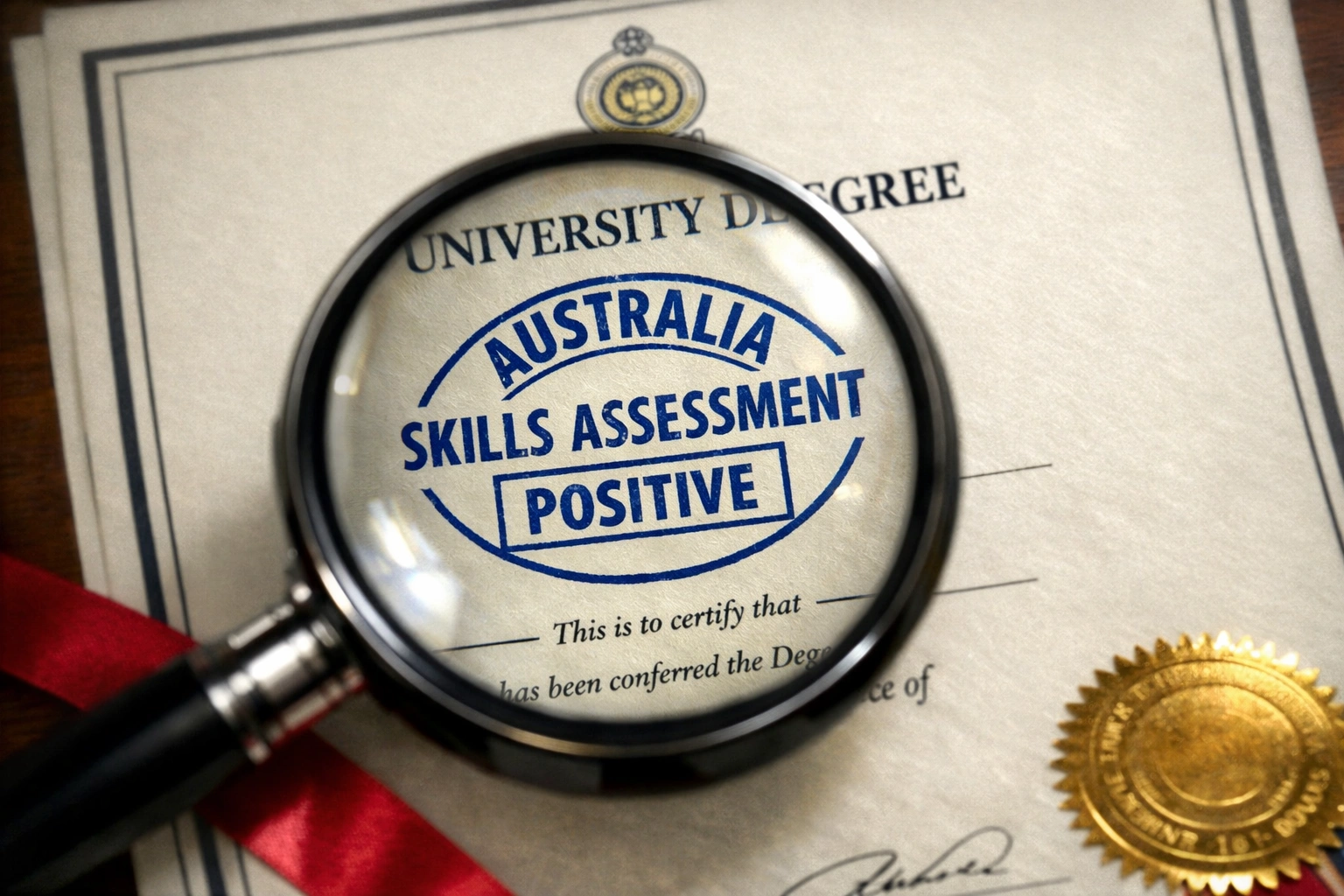
Australia Credential Recognition: Getting Your Sri Lankan Qualifications Assessed
One of the biggest hurdles for Sri Lankan professionals moving to Australia is "Credential Recognition." You may be a senior engineer in Colombo or a lead developer in Kandy, but to the Australian Department of Home Affairs, your skills don't exist until they are "validated" by an Australian assess...
Australia Partner Visa: The Path to Permanent Residency for Couples
For many Sri Lankans, the journey to Australia isn't just about a career—it's about reuniting with a loved one. Whether you have married an Australian citizen, are in a long-term de facto relationship, or are planning to wed your fiancé(e), the Australian Partner Visa is the specialized pathway des...