The Best Web Design Companies in Sri Lanka in 2026: Reviews, Ratings, and Real Client Feedback Analysis
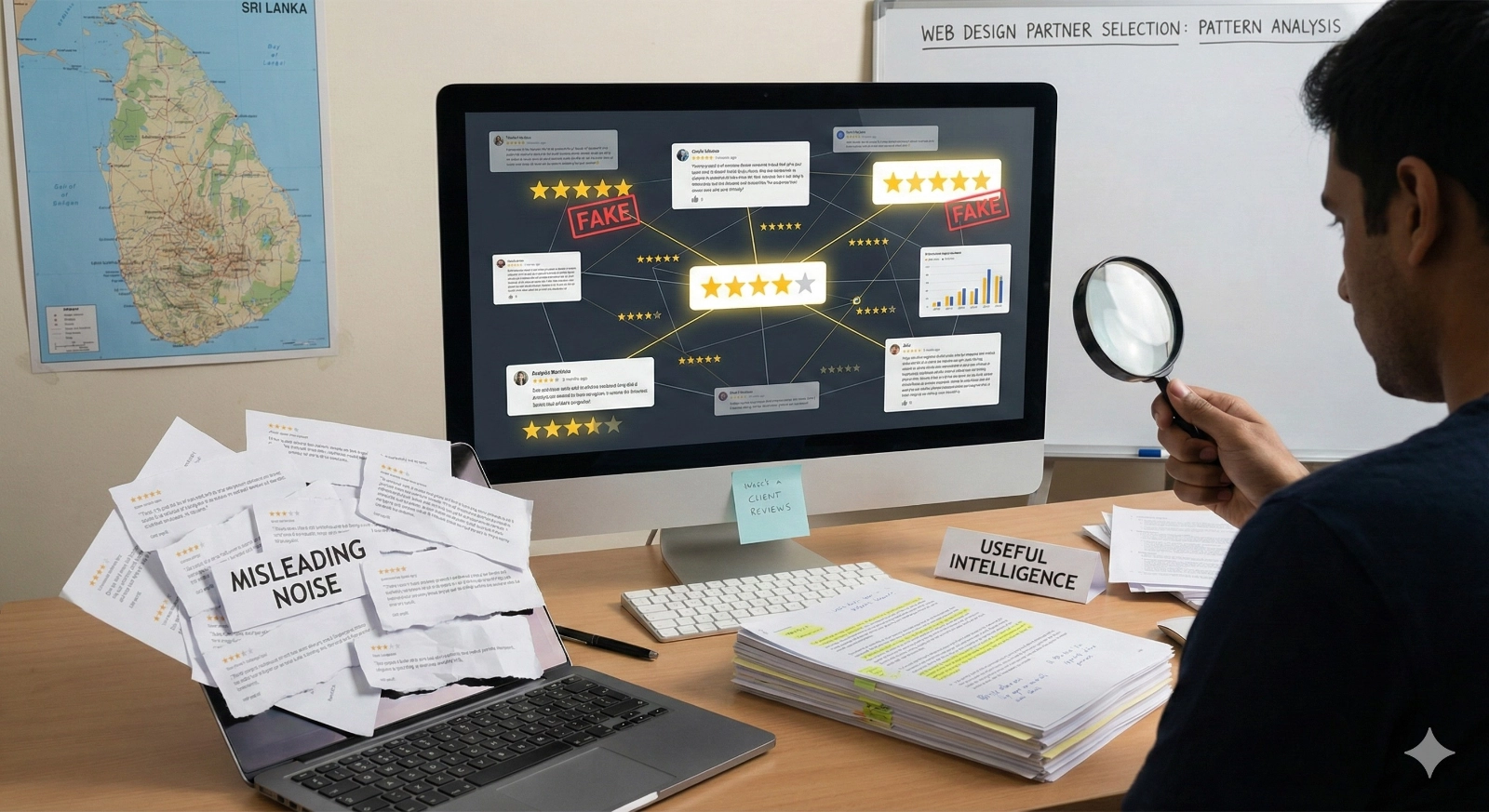
Client reviews and ratings offer invaluable perspective when selecting a web design partner, revealing experiences that portfolios and capabilities presentations cannot convey. However, the review landscape has grown increasingly complex, with fake reviews, selective testimonials, and rating manipu...
Client reviews and ratings offer invaluable perspective when selecting a web design partner, revealing experiences that portfolios and capabilities presentations cannot convey. However, the review landscape has grown increasingly complex, with fake reviews, selective testimonials, and rating manipulation creating noise that obscures genuine quality signals. Knowing how to analyze feedback effectively separates useful intelligence from misleading information, helping you identify partners who consistently deliver for clients rather than those who merely curate favorable impressions.
Finding the best web design company in Sri Lanka requires moving beyond star ratings to understand the substance of client experiences. Patterns across multiple reviews reveal consistent strengths and recurring problems that individual testimonials might miss. This analytical approach protects you from both unfairly negative reviews and artificially inflated ratings, revealing the authentic quality picture that should guide your partner selection.
Where to Find Reliable Reviews
Review sources vary significantly in reliability and relevance. Understanding where to look and how to weight different platforms helps you gather comprehensive feedback while avoiding sources prone to manipulation or irrelevance.
Google Business reviews provide accessible feedback from local clients who found and evaluated companies through search. These reviews benefit from Google's account verification requirements, making fake review creation somewhat more difficult than on unverified platforms. However, Google reviews skew toward clients motivated by strong positive or negative experiences, potentially missing the moderate majority whose projects proceeded unremarkably.
Industry-specific platforms like Clutch, DesignRush, and GoodFirms specialize in agency reviews with more detailed feedback structures. These platforms often verify reviews through direct client contact and require specific information about project scope, budget, and outcomes. The additional verification and detail requirements produce more substantive reviews, though the platforms' business models sometimes create incentive complications worth understanding.
Social Media and Professional Networks
LinkedIn recommendations offer peer-validated feedback from professional connections. Recommendations visible on company pages and individual profiles provide perspective from clients who put their professional reputations behind their endorsements. The public nature of LinkedIn recommendations creates accountability that anonymous reviews lack, though the platform's relationship-focused nature means most visible feedback skews positive.
Facebook business pages accumulate reviews from clients who discovered companies through social channels. These reviews often come from smaller businesses and individuals rather than corporate clients, providing perspective on how companies serve different market segments. The casual nature of Facebook reviews can yield more honest assessments than formal testimonial processes, though review volume varies significantly across companies.
Analyzing Review Patterns and Substance

Individual reviews matter less than patterns emerging across multiple feedback sources. Consistent praise or criticism appearing repeatedly signals genuine strengths or weaknesses rather than isolated experiences. Systematic analysis reveals these patterns more effectively than casual review scanning.
Read reviews chronologically to detect quality trajectory. Companies improving over time show progressively better recent reviews compared to older feedback. Declining quality appears as deteriorating recent reviews despite positive historical feedback. Stable quality produces consistent ratings across time periods. This temporal analysis reveals whether current quality matches historical reputation.
Examine review specificity to assess authenticity. Genuine reviews typically mention specific projects, team members, or concrete outcomes. Vague reviews praising general excellence without detail may indicate fabricated or incentivized feedback. Look for mentions of actual challenges and how companies addressed them, as authentic experiences rarely proceed without any complications.
Identifying Potential Fake Reviews
Fake reviews undermine the review ecosystem, making detection skills essential for accurate evaluation. Common fake review indicators include generic language applicable to any company, reviewer profiles lacking other activity or history, clusters of reviews appearing within short timeframes, and suspiciously uniform star ratings without any negative or moderate feedback.
Examine reviewer histories when platforms allow. Legitimate reviewers typically have review histories across multiple businesses reflecting normal consumer behavior. Profiles with single reviews or reviews concentrated in one industry may indicate purchased feedback. However, some legitimate reviewers simply do not leave many reviews, making this indicator suggestive rather than conclusive.
Competitor-planted negative reviews represent another manipulation form. These typically appear without specific detail, may contain factual inaccuracies, or focus on issues that seem unlikely based on company presentation. Patterns of negative reviews appearing around marketing campaigns or competitive situations warrant skepticism about authenticity.
What Quality Reviews Actually Tell You
Beyond star ratings, review content reveals specific aspects of working relationships that determine project success. Analyzing what clients actually say about their experiences provides far more useful guidance than aggregate scores.
Communication quality appears frequently in meaningful reviews. Comments about responsiveness, clarity, and proactive updates indicate how companies manage client relationships. Multiple reviews mentioning communication problems suggest systemic issues rather than isolated incidents. Conversely, consistent praise for communication indicates reliable partnership characteristics.
Timeline and budget adherence receive attention in reviews because overruns cause significant client frustration. Patterns of deadline misses or cost escalations appearing across reviews indicate project management problems. Companies consistently delivering on time and within budget demonstrate operational competence that review patterns reveal.
Technical Quality and Post-Launch Support
Reviews often mention technical issues encountered after launch, revealing quality assurance practices and ongoing support responsiveness. Patterns of bugs, security problems, or performance issues suggest development quality concerns. Strong post-launch support mentions indicate companies that stand behind their work rather than disappearing after final payment.
Long-term relationship feedback proves particularly valuable. Reviews from clients discussing multi-year partnerships reveal how companies handle ongoing relationships, maintenance responsiveness, and evolving needs support. These perspectives from extended relationships often provide more nuanced quality assessment than feedback from single-project engagements.
Testimonials on Company Websites

Website testimonials represent curated feedback selected to present companies favorably. While inherently biased toward positive presentation, testimonials still provide useful information when analyzed appropriately.
Testimonial specificity indicates authenticity. Detailed testimonials mentioning specific outcomes, project challenges, and named individuals suggest real client experiences. Generic praise without substance may indicate fabricated or heavily edited feedback. Request permission to contact testimonial sources directly for companies you seriously consider.
Testimonial diversity reveals client base breadth. Companies showing feedback from various industries and business sizes demonstrate versatility. Testimonials concentrated in narrow segments may indicate specialized expertise or limited experience outside core areas. Match testimonial sources to your own business profile to assess relevance.
Case Study Depth Beyond Testimonials
Detailed case studies provide richer information than brief testimonials. Studies explaining challenges faced, solutions implemented, and results achieved demonstrate analytical thinking and outcome focus. Companies publishing substantive case studies invest in documenting success rather than merely claiming it.
Compare case study claims against client willingness to verify. Companies confident in their case study accuracy readily provide client references who can confirm details. Reluctance to connect potential clients with case study subjects may indicate embellishment or relationship deterioration since project completion.
Conducting Reference Checks
Direct conversations with past clients provide insights that written reviews cannot convey. Reference checks allow you to ask specific questions relevant to your situation and probe areas of particular concern.
Request references matching your project profile. A company might deliver excellent results for enterprise clients while struggling with small business budgets, or vice versa. References from clients with similar project scope, budget, and industry provide more relevant perspective than mismatched comparisons.
Prepare specific questions addressing your priorities rather than accepting generic reference conversations. Ask about communication during challenging project phases, how disputes were resolved, and whether final results matched initial expectations. Inquire about hidden costs, timeline changes, and ongoing support experience. These specific questions reveal actionable information that generic satisfaction questions miss.
Reading Between the Lines
Reference conversations often communicate through implication rather than direct criticism. Lukewarm responses like acceptable or adequate suggest reservations clients hesitate to voice directly. Enthusiasm gaps between different aspects of projects reveal relative strengths and weaknesses. Notice what references avoid discussing as much as what they address.
Ask whether references would hire the company again for similar projects. This forward-looking question often yields more honest assessment than backward-looking satisfaction ratings. Hesitation or qualified answers suggest problems that general positive comments might obscure.
Industry Recognition and Third-Party Validation
Industry rankings and awards provide additional quality signals when properly understood. Various organizations publish lists of top web design companies based on different criteria and methodologies.
Understand ranking methodologies before weighting them heavily. Some rankings rely heavily on self-reported information, creating opportunities for exaggeration. Others incorporate verified reviews, financial audits, or independent evaluation. Rankings based on rigorous methodology provide more reliable signals than those easily manipulated through self-promotion.
Directory listings on platforms like Clutch, UpCity, and similar sites often correlate with review collection efforts. Companies appearing prominently on these platforms typically have invested in gathering client feedback systematically. While presence indicates engagement with review processes, ranking positions may reflect marketing investment as much as quality differentiation.
Synthesizing Feedback Into Partner Selection
No feedback source provides complete pictures independently. Synthesizing insights across multiple sources produces more reliable assessments than relying on any single platform or review type.
Create evaluation frameworks that weight different feedback types appropriately. Direct references from clients similar to you warrant heavy weighting. Verified reviews on industry platforms carry more weight than anonymous public reviews. Website testimonials serve as starting points for verification rather than conclusive evidence.
Look for consistency across sources. Companies that receive positive feedback across Google, industry platforms, LinkedIn, and direct references demonstrate broad satisfaction that transcends any single channel. Discrepancies between sources warrant investigation, as they may indicate targeted reputation management or isolated problems.
Balancing Feedback With Other Factors
Reviews and references inform but should not solely determine partner selection. A highly-reviewed company might be wrong for your specific needs due to budget mismatch, technology preferences, or communication style differences. Conversely, newer companies lacking extensive review histories might offer excellent value if other evaluation criteria indicate quality.
Use feedback analysis to eliminate clearly unsuitable options and validate finalists rather than mechanically selecting highest-rated companies. The goal is finding partners who deliver quality experiences for clients in your situation, not those with most impressive aggregate ratings.
Warning Signs in Review Patterns
Certain patterns should trigger caution regardless of overall ratings:
- Sudden rating drops after historically positive feedback suggesting quality deterioration or key personnel changes
- Defensive or aggressive responses to negative reviews indicating poor conflict resolution approaches
- Absence of reviews over extended periods possibly indicating client acquisition struggles or deliberate suppression
- Exclusively perfect ratings across all platforms suggesting review manipulation rather than genuine universal satisfaction
- Patterns of billing disputes, contract conflicts, or legal threats mentioned in reviews indicating problematic business practices
Making Feedback Work For Your Selection
Effective feedback analysis requires time investment but pays dividends in partner selection confidence. Begin by identifying relevant review sources for your market and project type. Systematically gather feedback across multiple platforms rather than stopping at first impressions. Analyze patterns rather than individual reviews, looking for consistent themes across sources and time periods.
Conduct reference checks with prepared questions addressing your specific concerns. Listen for enthusiasm, hesitation, and what remains unsaid alongside explicit statements. Compare reference feedback against review patterns to test consistency.
Weight feedback appropriately within your overall evaluation framework. Strong reviews should reinforce assessments based on portfolio quality, capabilities alignment, and communication fit rather than override other concerns. Use feedback to validate promising candidates and eliminate problematic ones while making final selections based on comprehensive evaluation.
Finding excellent web design in Sri Lanka ultimately requires combining feedback analysis with direct assessment of capabilities, communication, and value alignment. Reviews and references reveal experiences that portfolios cannot show, but they represent one input among many in identifying partners positioned to deliver successful projects for your specific situation. Approaching feedback analytically rather than accepting ratings at face value ensures this valuable information actually improves your partner selection rather than merely confirming or confusing first impressions.
Related Articles
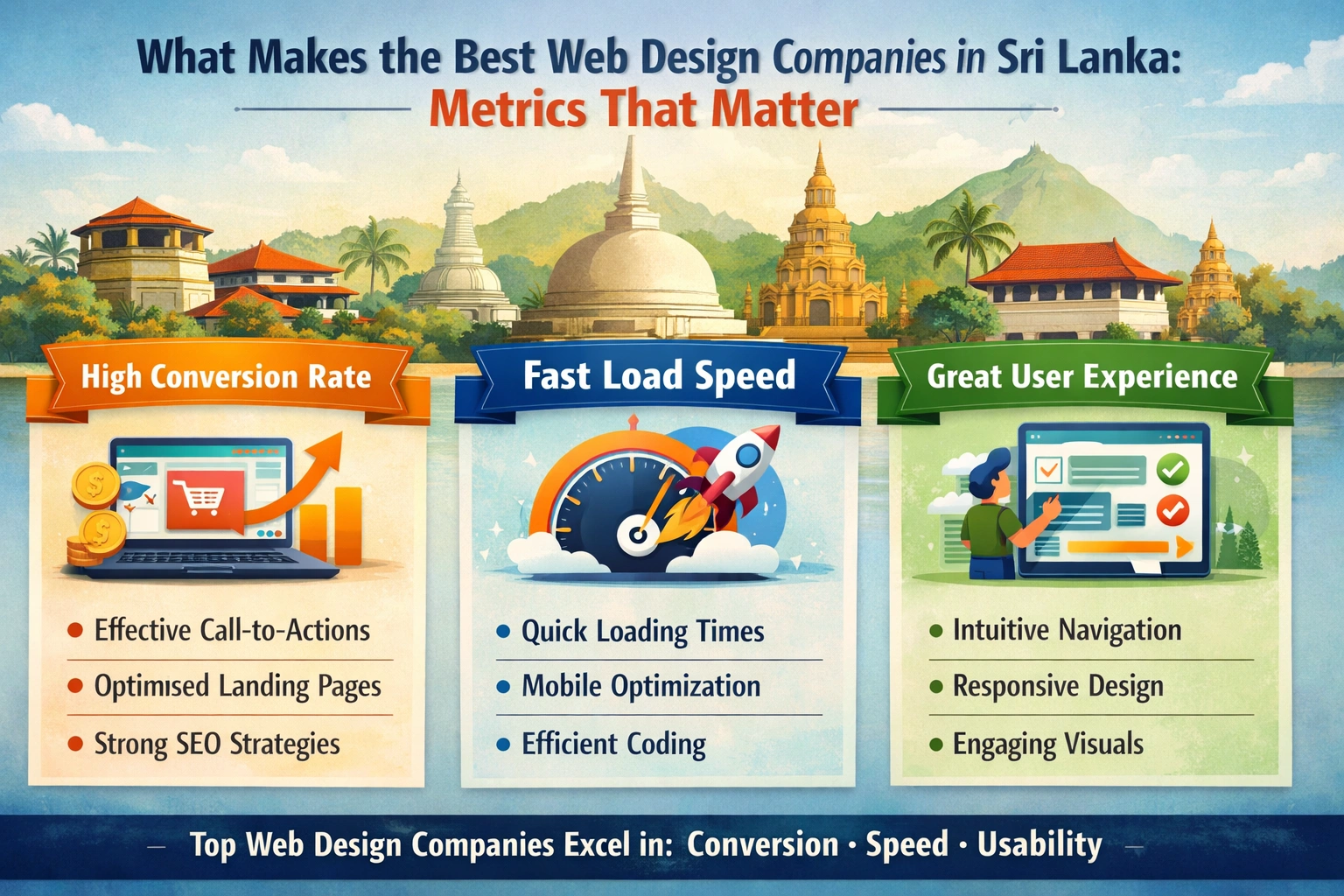
What Makes the Best Web Design Companies in Sri Lanka: Metrics That Matter (Conversion Rate, Load Speed, User Experience)
Subjective assessments of web design quality often lead businesses astray. A website might look stunning to your eyes yet fail to convert visitors into customers. Another site might seem plain but consistently outperform competitors in generating leads and sales. The best web design companies under...
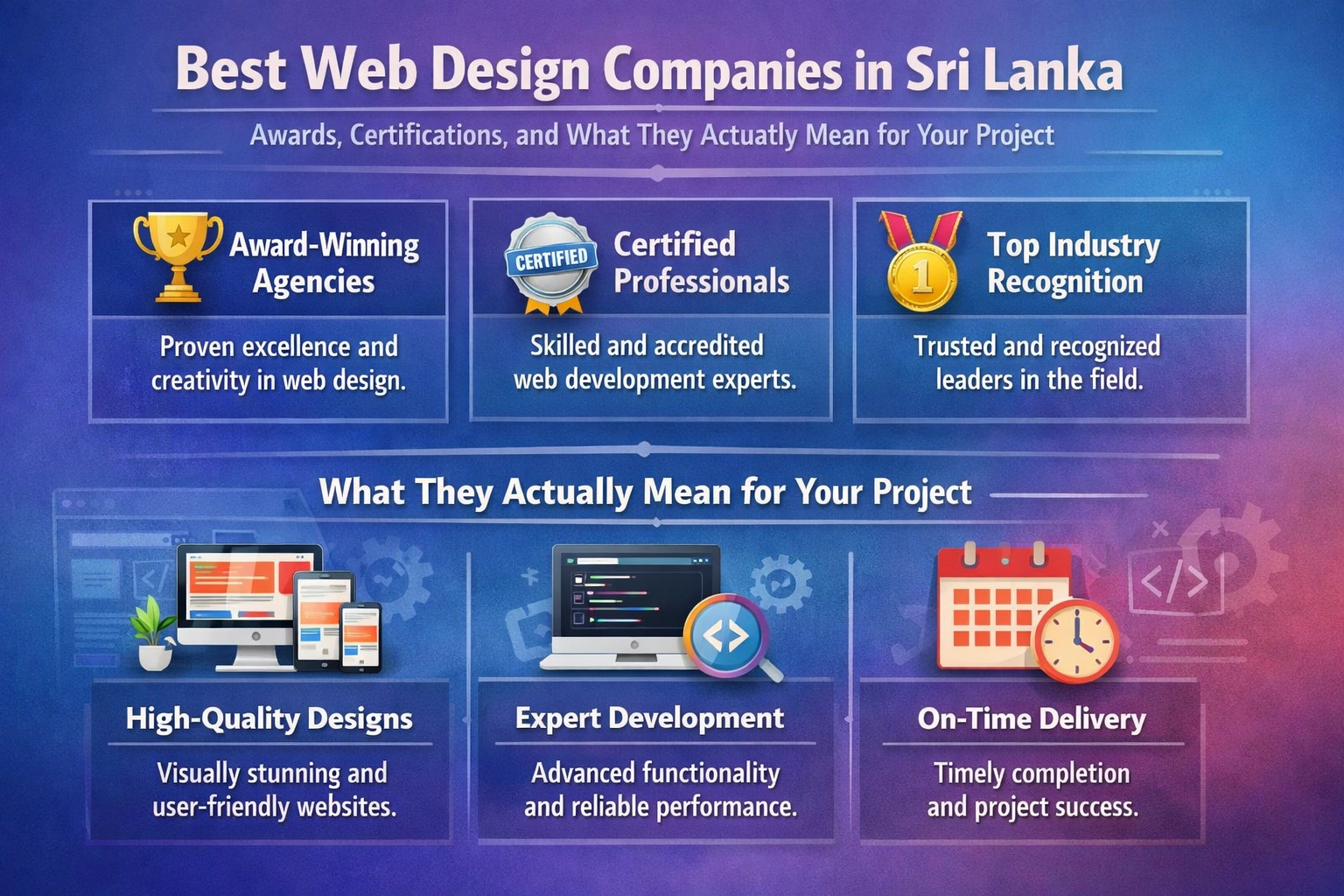
Best Web Design Companies in Sri Lanka: Awards, Certifications, and What They Actually Mean for Your Project
Web design companies frequently display awards, certifications, and recognition badges throughout their websites and proposals. These credentials promise quality assurance and industry standing, but their actual significance varies enormously. Some certifications indicate genuine expertise validate...

Web Design Companies in Sri Lanka: Real Results from Transformation Projects Across Industries
Portfolio galleries and capability claims only tell part of the story when evaluating web design companies. The real measure of a design partner's value lies in the business outcomes they help clients achieve. Transformation projects demonstrate how professional web design converts struggling onlin...

Web Design Companies in Sri Lanka: What Services Should Your Partner Offer? (Design, Development, SEO, Maintenance)
Choosing a web design partner involves far more than comparing portfolios and price quotes. The services a company offers determine whether they can truly support your business growth or leave you scrambling to fill gaps with additional vendors. Many businesses in Sri Lanka discover too late that t...