Web Design Companies in Sri Lanka: Real Results from Transformation Projects Across Industries
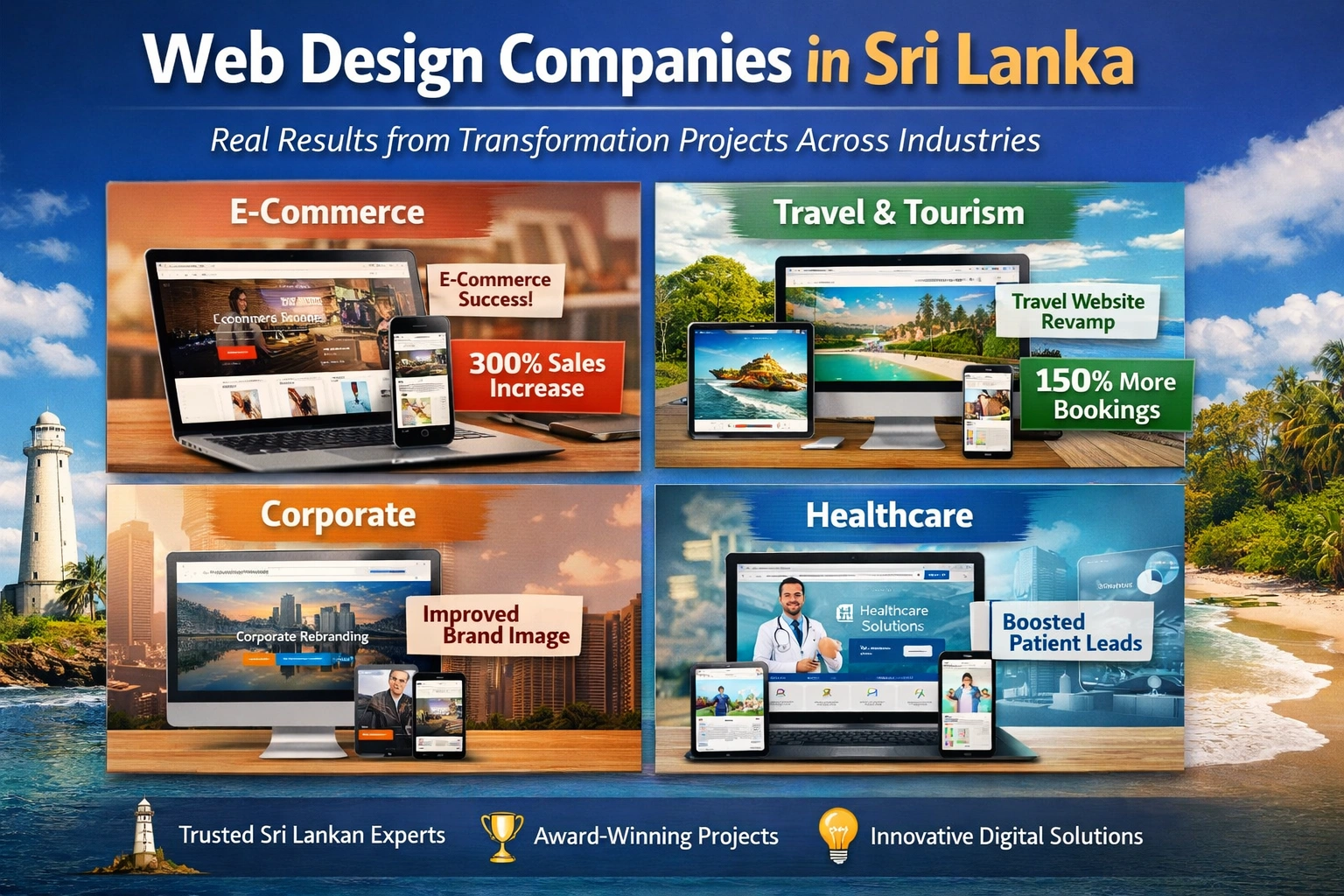
Portfolio galleries and capability claims only tell part of the story when evaluating web design companies. The real measure of a design partner's value lies in the business outcomes they help clients achieve. Transformation projects demonstrate how professional web design converts struggling onlin...
Portfolio galleries and capability claims only tell part of the story when evaluating web design companies. The real measure of a design partner's value lies in the business outcomes they help clients achieve. Transformation projects demonstrate how professional web design converts struggling online presences into powerful business assets that generate leads, drive sales, and build lasting competitive advantages.
Understanding what transformation looks like across different industries helps you envision what a capable web design company in Sri Lanka might accomplish for your business. These patterns of improvement reveal the strategic thinking and technical execution that separate exceptional partners from those who simply make websites look better.
Tourism and Hospitality Transformations
The tourism sector presents unique challenges that test design companies' abilities to combine visual storytelling with complex functionality. Hotels and tour operators frequently approach redesign projects with websites that fail to capture the emotional appeal of travel experiences or that create friction during booking processes. Transformation projects in this sector typically address both aesthetic shortcomings and conversion optimization simultaneously.
Successful tourism transformations often begin with photography and visual content strategy. Properties that relied on amateur photos or outdated imagery see dramatic improvements when professional photography showcases accommodations, amenities, and surrounding attractions effectively. Design companies that understand tourism know that visitors make emotional decisions based on imagery, making visual presentation investments essential rather than optional enhancements.
Booking system integration represents another common transformation focus. Many hospitality businesses operated with inquiry-only websites that required potential guests to email or call for availability and pricing. Modern booking engines that display real-time availability, instant pricing, and secure payment processing remove friction from the customer journey. Properties implementing integrated booking typically report substantial increases in direct bookings while reducing the administrative burden of manual inquiry handling.
Measuring Tourism Website Success
Quantifiable improvements from tourism transformations include direct booking revenue increases, often ranging from thirty to over one hundred percent compared to previous website performance. Average booking values frequently increase as well, attributed to better presentation of room categories and upselling of additional services during the booking flow. Reduced dependency on online travel agencies translates directly to improved profit margins by avoiding commission payments on bookings that would otherwise go through third-party platforms.
Mobile booking rates provide another meaningful metric. Travelers increasingly research and book accommodations from smartphones, making mobile optimization critical for capturing this traffic. Transformations that prioritize mobile experience typically see mobile conversion rates approach or exceed desktop performance, whereas poorly optimized sites lose substantial mobile traffic to competitors.
Retail and E-commerce Transformations

Sri Lankan retailers expanding into e-commerce often start with basic online stores that lack the sophistication needed to compete effectively. Transformation projects address everything from product presentation and navigation to checkout optimization and post-purchase experience. The measurable nature of e-commerce makes these projects particularly satisfying, as improvements can be tracked precisely through revenue and conversion data.
Product presentation improvements frequently anchor retail transformations. Stores using manufacturer-provided images with minimal product descriptions struggle against competitors investing in custom photography and compelling copy. Design companies skilled in e-commerce understand that online shoppers cannot touch products, making visual and written content crucial for building purchase confidence. Enhanced product pages with multiple images, zoom functionality, detailed specifications, and customer reviews dramatically improve conversion rates.
Navigation and product discovery improvements help visitors find relevant products without frustration. Poor category structures and inadequate filtering options cause potential customers to abandon sites before finding items they would purchase. Thoughtful information architecture combined with robust filtering and search functionality keeps visitors engaged and moving toward purchase. Smart product recommendations based on browsing behavior and purchase history increase average order values by surfacing relevant items customers might not have discovered independently.
Checkout and Conversion Optimization
Cart abandonment represents one of e-commerce's most significant challenges, with many retailers losing majority of potential sales during checkout. Transformation projects often achieve dramatic improvements by simplifying checkout flows, offering guest checkout options, integrating trusted payment methods familiar to Sri Lankan consumers, and addressing common abandonment triggers through strategic interventions. Exit-intent offers, abandoned cart email sequences, and progress indicators all contribute to completing more sales.
Post-purchase experience improvements often go overlooked but significantly impact customer lifetime value. Order confirmation clarity, shipping notification emails, delivery tracking integration, and streamlined return processes all contribute to customer satisfaction that drives repeat purchases and positive reviews. Retailers who view the transaction as the relationship's end rather than its beginning miss substantial revenue opportunities from existing customers.
Professional Services Transformations

Law firms, medical practices, consulting companies, and other professional service providers face distinct challenges in communicating expertise and building trust through their websites. Many professional firms operate with dated websites that fail to convey the credibility their real-world reputations deserve. Transformation projects help these organizations present themselves with the polish and professionalism clients expect.
Credibility establishment drives many professional service transformations. This involves more than visual modernization, though aesthetic improvements certainly matter. Effective transformations strategically highlight credentials, certifications, and professional affiliations. Team presentation humanizes the organization while demonstrating collective expertise. Case studies and success stories provide evidence of capability without violating confidentiality obligations common in professional services.
Lead generation optimization transforms websites from digital brochures into active business development tools. Clear calls to action guide visitors toward consultation requests or contact submissions. Strategic content positioning addresses common questions and concerns while establishing thought leadership. Some firms implement gated content strategies, offering valuable resources in exchange for contact information that feeds sales pipelines.
Trust Building Through Content
Professional service transformations frequently include content strategy development that positions firms as authoritative resources in their fields. Regular publishing of insights, analysis, and educational content attracts search traffic from potential clients researching issues the firm addresses. This content serves dual purposes: improving search visibility while demonstrating expertise that builds trust before initial conversations occur.
Client testimonials and reviews require careful handling in professional services contexts. Privacy considerations and professional ethics guidelines may restrict how feedback can be solicited and displayed. Design companies experienced with professional services understand these constraints and implement appropriate testimonial strategies that build credibility within applicable guidelines.
Healthcare Industry Transformations

Medical practices, hospitals, and healthcare providers operate under unique constraints including regulatory requirements, privacy obligations, and the need to communicate complex information to patients with varying health literacy levels. Transformation projects must balance professional credibility with accessibility while ensuring compliance with applicable regulations.
Patient experience improvements often drive healthcare website transformations. Practices with confusing appointment booking processes, unclear service descriptions, or inadequate provider information create frustration that may send patients to competitors. Streamlined online appointment scheduling, clear service explanations written for patient comprehension, and comprehensive provider profiles that build trust all contribute to improved patient acquisition and satisfaction.
Accessibility considerations take heightened importance in healthcare contexts. Patients may have visual impairments, motor limitations, or cognitive challenges that affect website navigation. Healthcare transformations must ensure compliance with accessibility guidelines while providing exceptional experiences for all users. This attention to accessibility reflects the inclusive values patients expect from healthcare providers.
Educational Content for Patient Empowerment
Healthcare websites that provide valuable educational content serve patients while building practice visibility. Condition explanations, treatment information, and preventive health guidance help patients make informed decisions while demonstrating provider expertise. Search traffic from health-related queries can substantially expand practice reach beyond direct referrals and existing patient networks.
Video content has proven particularly effective in healthcare transformations. Provider introduction videos help patients feel comfortable before appointments. Procedure explanation videos reduce anxiety and improve treatment compliance. Facility virtual tours familiarize patients with environments before visits. These content investments humanize practices while addressing common patient concerns proactively.
Manufacturing and B2B Transformations

Business-to-business companies often underinvest in web presence, assuming their relationships-driven sales processes make websites less important. Transformation projects demonstrate that even relationship-based businesses benefit from professional online presences that support sales efforts and attract new opportunities. Manufacturing companies, distributors, and industrial service providers discover that modernized websites generate qualified leads that sales teams can convert into substantial contracts.
Product catalog presentation poses challenges for manufacturers with extensive product lines. Transformation projects implement sophisticated filtering, search functionality, and product comparison tools that help buyers navigate complex offerings efficiently. Technical specifications must be comprehensive yet accessible, serving both engineering professionals who need precise details and purchasing managers who need broader capability overviews.
Trust signals in B2B contexts differ from consumer markets. Certifications, quality standards compliance, client logos, and industry association memberships all contribute to establishing credibility with business buyers. Case studies demonstrating successful implementations for similar companies prove particularly valuable, helping prospects envision how the manufacturer's products or services might address their specific needs.
Lead Generation for Complex Sales
B2B sales cycles often extend for months or years, making lead nurturing capabilities essential. Transformation projects implement lead capture mechanisms suited to long consideration periods. Downloadable resources like technical white papers, specification sheets, and case studies provide value while collecting contact information. Email nurturing sequences keep prospects engaged throughout extended decision processes, delivering relevant content that moves them toward purchase readiness.
Common Transformation Patterns
Regardless of industry, successful website transformations share certain characteristics. Speed improvements appear in virtually every transformation, as outdated websites often suffer from bloated code, unoptimized images, and inefficient hosting that frustrate visitors and harm search rankings. Modern development practices and performance optimization typically cut load times dramatically, improving both user experience and search visibility.
Mobile experience enhancement features prominently across all sectors as smartphone traffic continues growing. Transformations replace desktop-focused designs with responsive approaches that provide excellent experiences regardless of device. Touch-friendly navigation, appropriately-sized tap targets, and streamlined mobile interfaces prevent the frustration that causes mobile visitors to abandon sites designed primarily for desktop viewing.
Search visibility improvements follow from technical optimization, content development, and improved site architecture. Businesses that struggled to appear in search results for relevant queries discover that professional web design in Sri Lanka combined with SEO best practices substantially expands their organic reach. This increased visibility generates ongoing traffic without the continuous expense of paid advertising.
Evaluating Transformation Potential

Understanding what transformations accomplish helps you assess your own website's improvement potential. Consider current conversion rates, traffic sources, and user engagement metrics as baseline measurements. Identify specific frustrations or limitations in your existing site that parallel issues addressed in transformation examples. This analysis helps you communicate needs clearly to potential partners and evaluate their proposed solutions meaningfully.
Request specific outcome data when evaluating web design companies. Companies that deliver genuine transformations can discuss concrete improvements in relevant metrics. Vague claims about making sites "better" or "more modern" suggest focus on surface-level changes rather than business outcome optimization. Partners who understand transformation think in terms of conversion rates, revenue impact, and user engagement rather than purely aesthetic considerations.
Consider the ongoing relationship implications of transformation projects. Websites that generate strong results require ongoing optimization, content development, and technical maintenance to sustain performance. Partners who view transformation as a continuous improvement process rather than a one-time project better position clients for long-term success.
Starting Your Transformation Journey
Transformation begins with honest assessment of your current website's performance and clear articulation of business objectives. Document specific metrics you want to improve, whether lead generation, online sales, appointment bookings, or other relevant outcomes. Gather feedback from customers and staff about current website frustrations and wished-for features. This preparation enables productive conversations with potential partners and ensures transformation efforts address genuine business needs.
Evaluate multiple web design companies with specific transformation questions. Ask about similar industry projects and their outcomes. Request references from clients whose situations parallel yours. Assess whether proposed approaches address your identified challenges or represent generic solutions applied regardless of specific circumstances.
Set realistic expectations for transformation timelines and investments. Meaningful improvements require adequate resources for research, design, development, and optimization. Rushed projects or inadequate budgets produce surface-level changes that fail to deliver lasting business impact. Transformation represents investment in business infrastructure with returns that accumulate over years of improved online performance.
Real transformation projects demonstrate what capable web design partners can accomplish when they combine strategic thinking with technical execution. These outcomes reveal the difference between companies that simply build websites and those that build businesses through digital excellence. Choosing a partner with proven transformation experience positions your organization for similar success.
Related Articles
The Best Web Design Companies in Sri Lanka in 2026: Reviews, Ratings, and Real Client Feedback Analysis
Client reviews and ratings offer invaluable perspective when selecting a web design partner, revealing experiences that portfolios and capabilities presentations cannot convey. However, the review landscape has grown increasingly complex, with fake reviews, selective testimonials, and rating manipu...
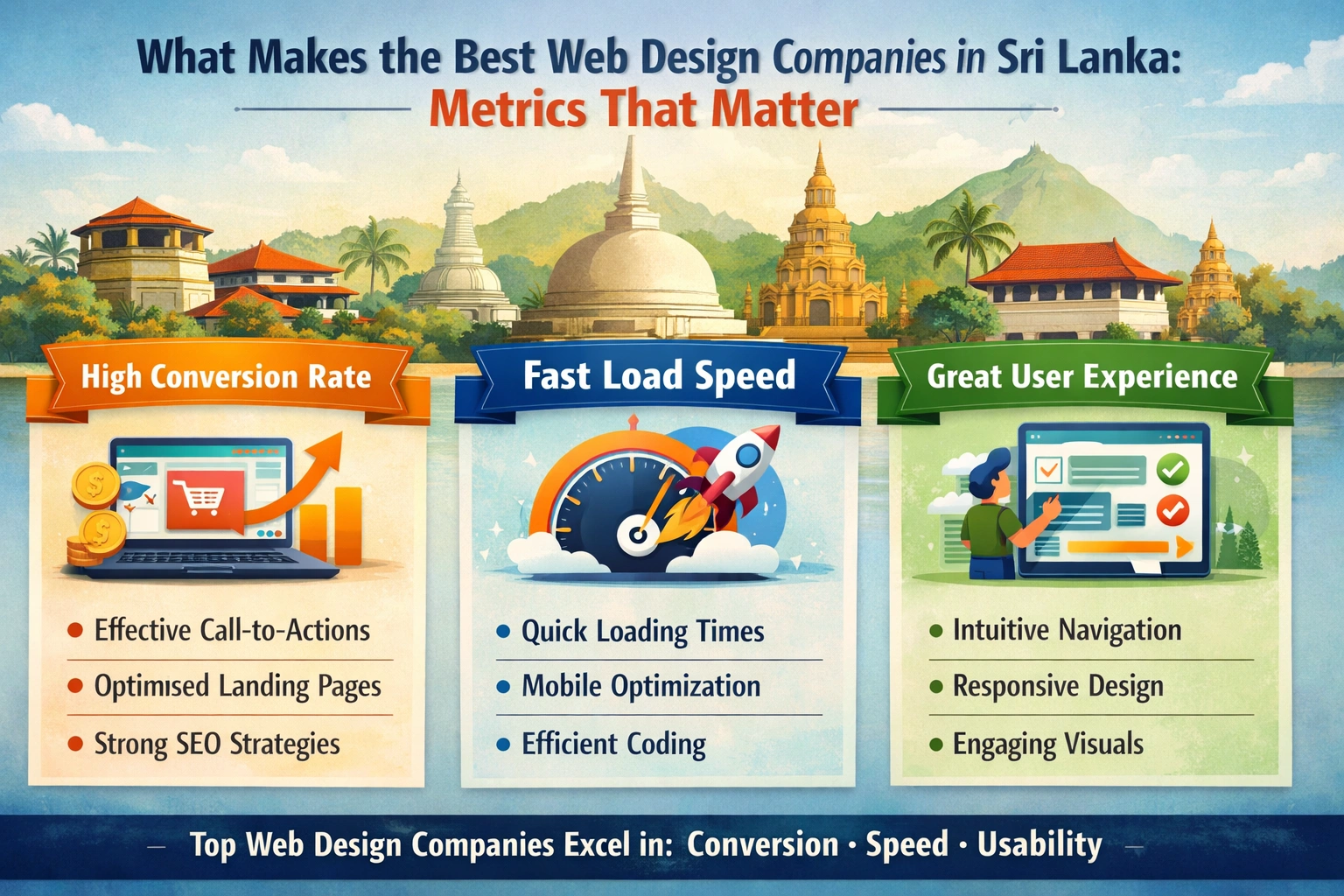
What Makes the Best Web Design Companies in Sri Lanka: Metrics That Matter (Conversion Rate, Load Speed, User Experience)
Subjective assessments of web design quality often lead businesses astray. A website might look stunning to your eyes yet fail to convert visitors into customers. Another site might seem plain but consistently outperform competitors in generating leads and sales. The best web design companies under...
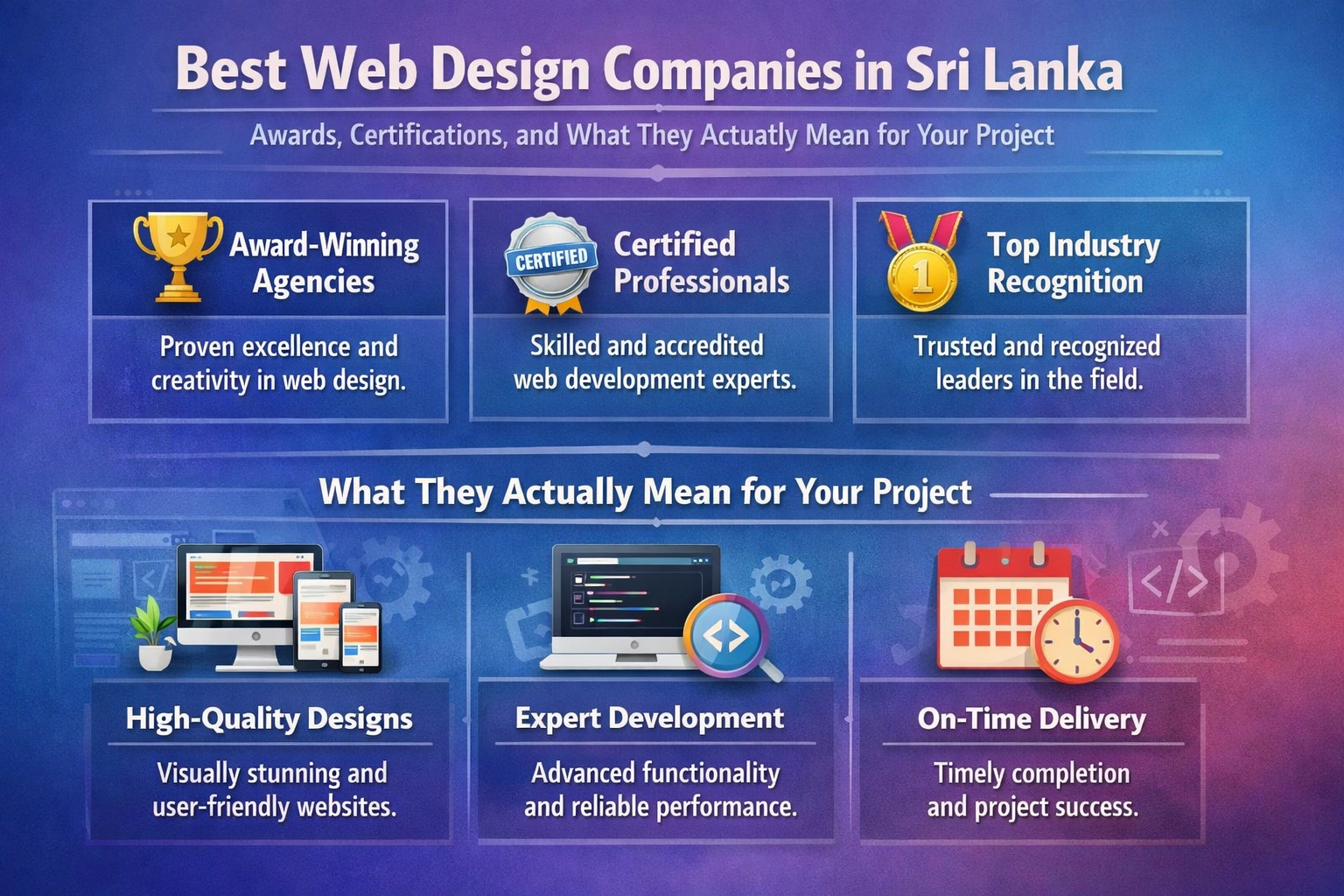
Best Web Design Companies in Sri Lanka: Awards, Certifications, and What They Actually Mean for Your Project
Web design companies frequently display awards, certifications, and recognition badges throughout their websites and proposals. These credentials promise quality assurance and industry standing, but their actual significance varies enormously. Some certifications indicate genuine expertise validate...
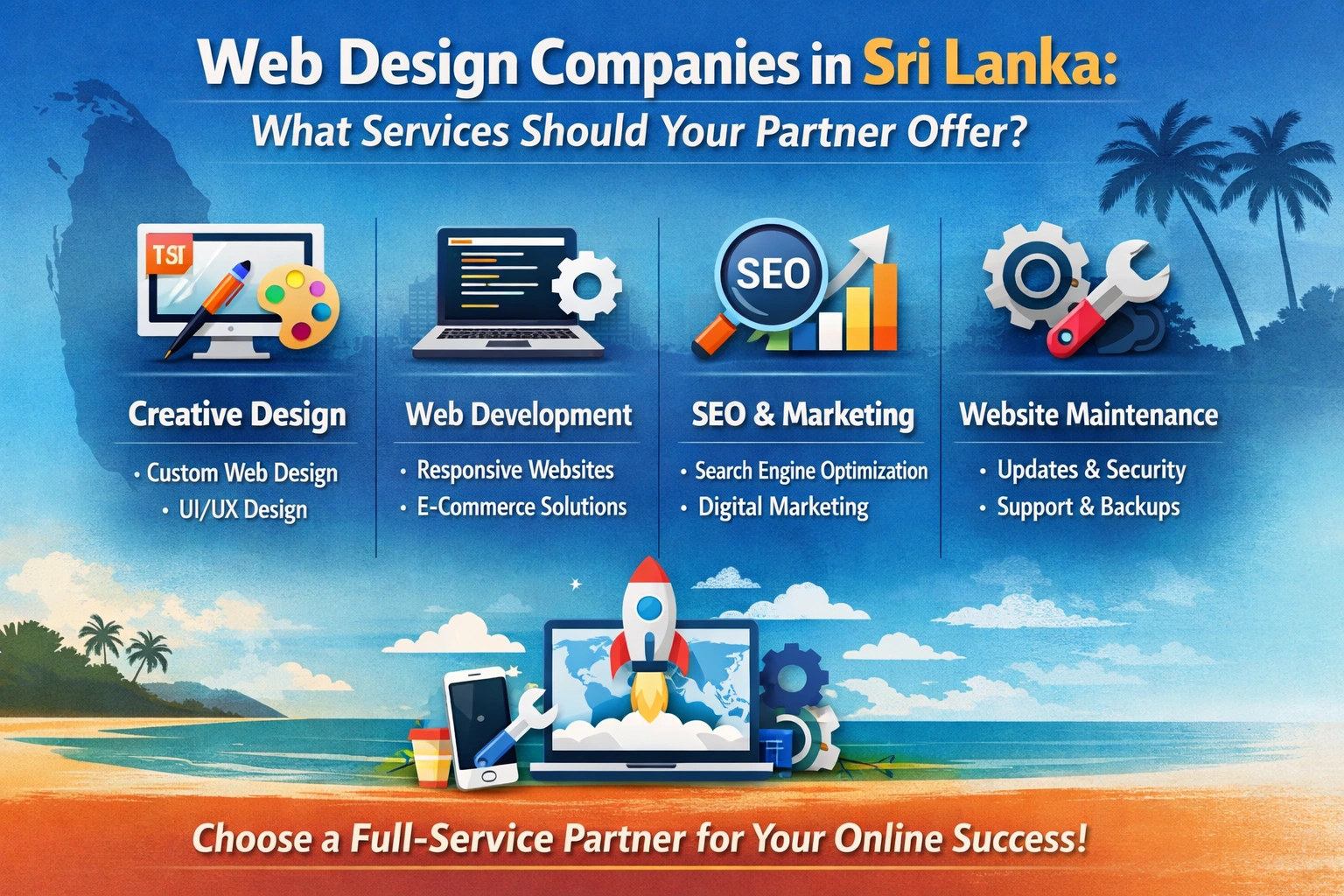
Web Design Companies in Sri Lanka: What Services Should Your Partner Offer? (Design, Development, SEO, Maintenance)
Choosing a web design partner involves far more than comparing portfolios and price quotes. The services a company offers determine whether they can truly support your business growth or leave you scrambling to fill gaps with additional vendors. Many businesses in Sri Lanka discover too late that t...