Finding the Right Web Designer in Sri Lanka: Credentials, Portfolio Review, and What to Expect
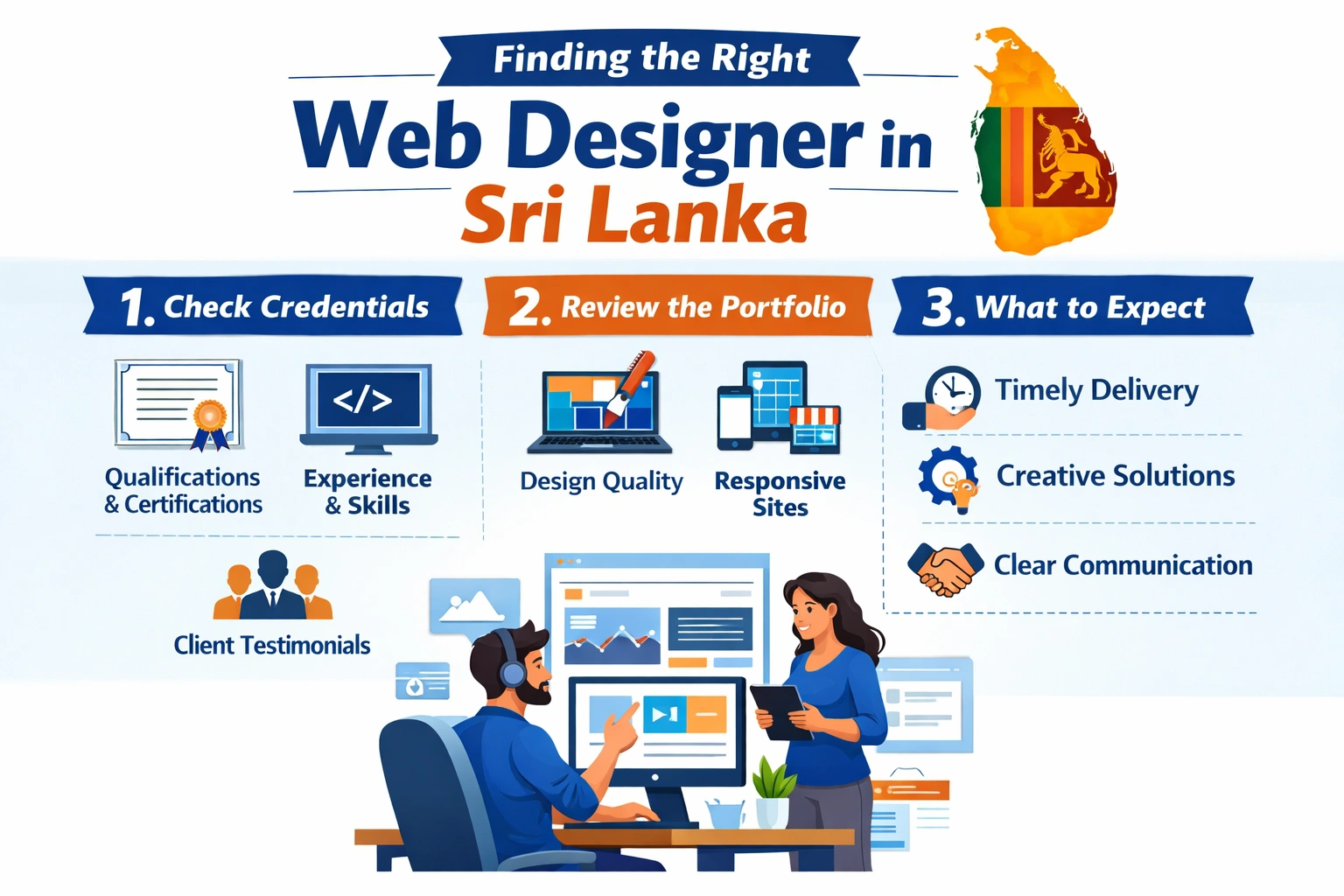
Choosing a web designer feels consequential because it is. The person or team you select will shape how your business appears online for years to come. A good choice leads to a website that drives business results and evolves with your needs. A poor choice means wasted money, lost time, and the eve...
Choosing a web designer feels consequential because it is. The person or team you select will shape how your business appears online for years to come. A good choice leads to a website that drives business results and evolves with your needs. A poor choice means wasted money, lost time, and the eventual expense of starting over.
The challenge is that evaluating web designers requires judging expertise you might not possess yourself. How can you tell if someone's code is solid or held together with digital tape? How do you distinguish genuine creativity from superficial trendiness? Let's work through a systematic approach to finding and evaluating the right web designer in Sri Lanka for your project.
Understanding What You're Looking For
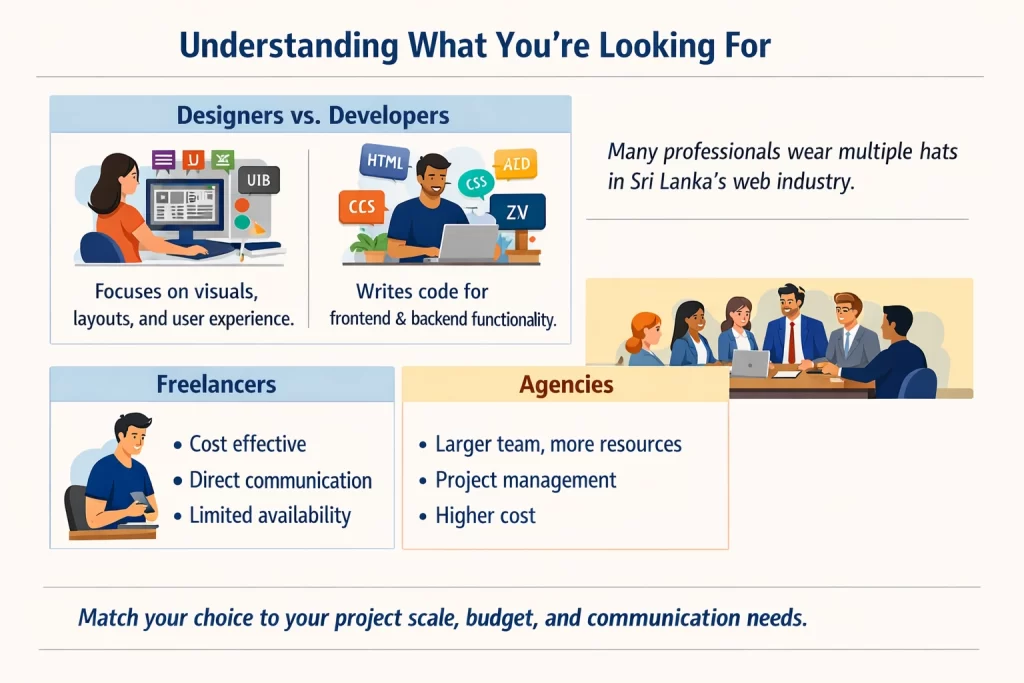
Before evaluating candidates, clarify what type of professional you actually need. The web industry includes various specialisations, and while they overlap, they're not identical.
Designers vs. Developers
Web designers focus on visual aspects—layouts, colour schemes, typography, user interface elements. They might work primarily in design tools like Figma or Adobe XD, creating mockups that developers then implement.
Web developers write the code that makes websites function. Frontend developers handle the user-facing code (HTML, CSS, JavaScript), while backend developers manage server-side functionality (databases, APIs, business logic).
Many professionals wear multiple hats, particularly in Sri Lanka's market where smaller team sizes are common. A "web designer" might actually design and build sites. A "developer" might have solid design sensibilities. Don't get too hung up on titles—focus on actual capabilities.
Freelancers vs. Agencies
Freelance designers typically cost less and offer more direct communication—you work with the person actually doing the work. However, freelancers have limited capacity and might become unavailable when you need urgent changes.
A web design company in Sri Lanka brings more resources: multiple designers, developers, project managers, and support staff. This provides redundancy and broader capabilities but typically costs more and may involve less direct communication with individual creators.
Neither is inherently better. Match your choice to your project scale, budget, and communication preferences.
Evaluating Credentials and Experience
Formal credentials matter less in web design than in many fields. There's no required licence or certification to call yourself a web designer. However, certain indicators suggest genuine competence.
Education and Training
Relevant degrees (computer science, graphic design, multimedia) provide foundation, but many excellent designers are self-taught or learned through bootcamps and online courses. What matters more is demonstrated skill and continued learning.
Ask about recent training or courses. The web industry evolves constantly; designers who stopped learning years ago probably haven't kept current with best practices and technologies.
Years of Experience
Experience matters, but interpret it carefully. Five years of building cutting-edge websites teaches different lessons than five years of cranking out identical template modifications. Quality of experience trumps quantity.
Look for experience with projects similar to yours in scope and complexity. A designer with three years of focused e-commerce experience might serve an online retailer better than one with ten years of general web work.
Platform Expertise
If you have specific platform requirements—WordPress, Joomla, Shopify, custom development—verify relevant expertise. Ask about certifications, contribution to the platform community, or portfolio examples on that platform.
The Portfolio Review Process
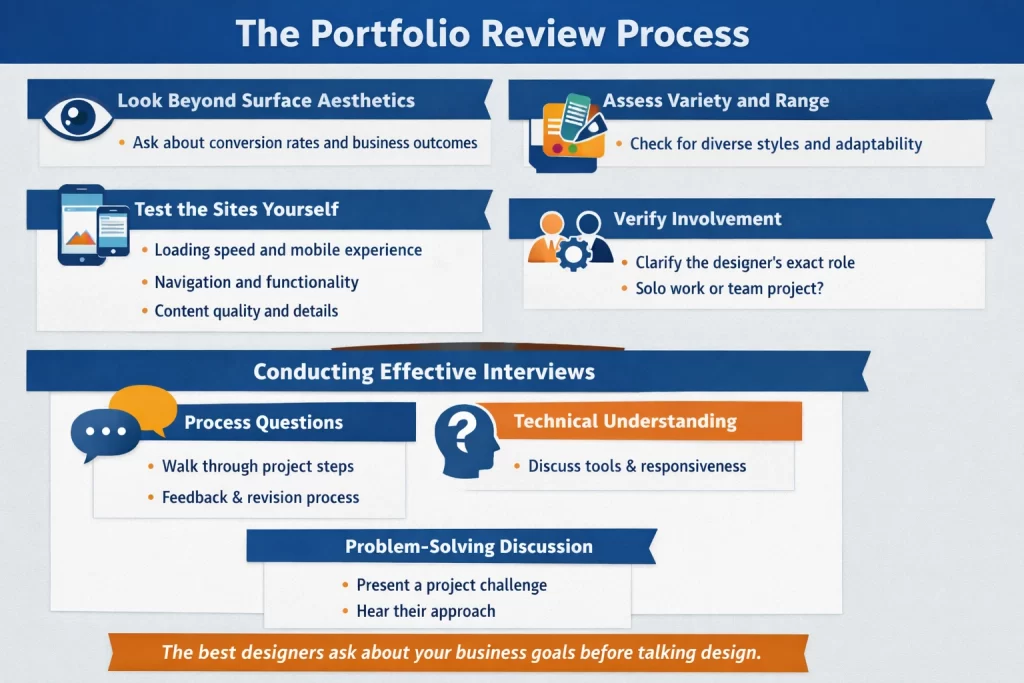
Portfolios reveal more than credentials ever could. But reviewing portfolios effectively requires knowing what to look for and what questions to ask.
Look Beyond Surface Aesthetics
A portfolio full of beautiful sites means something, but beauty alone doesn't guarantee effectiveness. Try to learn whether those attractive designs actually achieved business objectives. Ask about conversion rates, traffic growth, or business outcomes where possible.
Assess Variety and Range
Does the portfolio show flexibility or formulaic repetition? Can this designer adapt to different brand personalities and industry requirements, or does everything look like variations on a single theme?
Some consistency is fine—even desirable—but complete uniformity suggests either limited capability or excessive reliance on templates.
Test the Sites Yourself
Don't just look at screenshots. Visit the actual websites in the portfolio. Browse them on your phone. Try to accomplish typical user tasks. Notice how fast they load, how intuitive navigation feels, whether anything seems broken or awkward.
Pay attention to:
- Loading speed across different pages
- Mobile experience quality
- Navigation clarity and consistency
- Form functionality
- Overall polish and attention to detail
- Content quality and presentation
Verify Involvement
For any portfolio piece that impresses you, ask specifically what role the designer played. Did they handle complete design and development, or just visual design while someone else built it? Was it a solo project or team effort? Understanding their actual contribution matters.
Conducting Effective Interviews
Conversations with potential designers reveal things portfolios cannot: communication style, problem-solving approach, business understanding, and personality fit.
Process Questions
Ask designers to walk you through how they typically handle projects. Good answers demonstrate structured approaches with clear phases, milestones, and communication checkpoints. Vague answers suggest disorganised working styles that often lead to problematic projects.
Specific questions to consider: How do you handle the discovery phase? What does your design approval process look like? How do you manage feedback and revisions? What happens if we need changes after launch?
Technical Understanding
You don't need to evaluate technical competence deeply, but listen for genuine understanding versus buzzword recitation. Ask why they recommend certain technologies. How do they approach mobile responsiveness? What do they do to ensure sites load quickly?
Good answers explain technical choices in terms of business benefits. "I recommend WordPress because it will let your team easily update content without technical help" beats "WordPress is the industry standard" in demonstrating practical understanding.
Problem-Solving Discussion
Present a challenge specific to your project and ask how they'd approach it. The quality of their thinking process matters more than reaching a perfect answer. Do they ask clarifying questions? Do they consider trade-offs? Do they bring relevant experience to bear?
Listening to Questions They Ask
Pay attention to what potential designers ask you. Those who immediately jump to discussing design preferences without understanding your business goals, target audience, and success metrics are probably more focused on what they want to create than what you need.
The best web designers in Sri Lanka ask business questions before design questions. They want to understand what success looks like before proposing how to achieve it.
Reference Checking
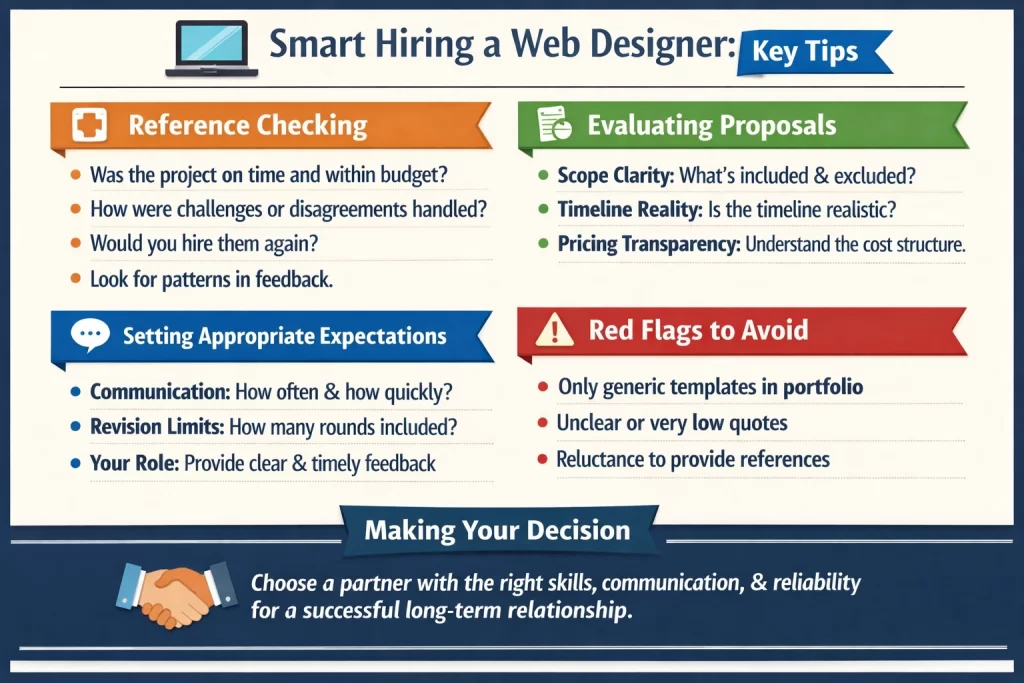
Request references from recent clients—ideally three or more. When speaking with references, dig beyond basic satisfaction:
Was the project completed on time and within budget? If not, why? How did the designer handle challenges or disagreements? How responsive were they to communication? Would you hire them again? Is there anything you wish had gone differently?
Listen for patterns. One negative comment might reflect a difficult client more than a problematic designer. Multiple similar complaints indicate genuine issues.
Evaluating Proposals
Once you've narrowed candidates, request detailed proposals for your specific project. Compare them carefully, looking beyond price.
Scope Clarity
Does the proposal clearly specify what's included and what's not? Ambiguity here leads to disputes later. You should understand exactly what you'll receive, what milestones will be reached when, and what constitutes project completion.
Timeline Reality
Be wary of timelines that seem unrealistically short. Quality work takes time. A designer promising the same deliverables as competitors in half the time is either cutting corners or underestimating the work required—both problematic.
Pricing Transparency
Understand how pricing is structured. Is it a fixed project fee, hourly billing, or some hybrid? What triggers additional charges? How are revisions handled?
The lowest price isn't automatically the best value. Consider what you're getting for the money and the designer's reliability in delivering as promised.
Setting Appropriate Expectations
Understanding what to expect from the process helps you be a better client and recognise when things go wrong.
Communication Patterns
Establish communication expectations explicitly. How quickly should you expect responses? What's the preferred communication channel? How often will you receive project updates?
Designers vary widely in communication style. Some prefer minimal client contact while they work; others favour frequent check-ins. Neither is wrong, but alignment with your preferences matters for a productive relationship.
Revision Reality
Revisions are normal and expected. However, understand the limits. Most designers include a reasonable number of revision rounds in their pricing, with additional changes incurring extra fees. Know these boundaries before starting.
Also understand that revisions become increasingly expensive to implement as projects progress. Changing fundamental design direction after development has begun costs more than catching issues during initial mockup review.
Your Role
Good outcomes require good clients. Be prepared to provide clear requirements, timely feedback, necessary content and assets, and reasonable availability for questions. Projects where clients disappear for weeks, provide contradictory feedback, or constantly change requirements rarely end well.
Red Flags to Avoid
Certain warning signs should prompt serious caution:
Portfolios showing only template modifications with minimal customisation. Inability to explain technical or design choices clearly. Reluctance to provide references. Quotes significantly below market rates without clear explanation. Pressure to decide quickly without time for proper evaluation. Vague contracts that don't specify deliverables clearly. No discussion of post-launch support.
Making Your Decision
After thorough evaluation, trust your judgment. Choose the web development partner who best combines relevant skills, good communication, reasonable pricing, and a working style that matches yours.
Remember that this is the beginning of a relationship, not a transaction. The right designer becomes a long-term asset to your business, someone who understands your brand and can help your online presence evolve over time. That long-term value far exceeds the importance of any single project decision.
Related Articles
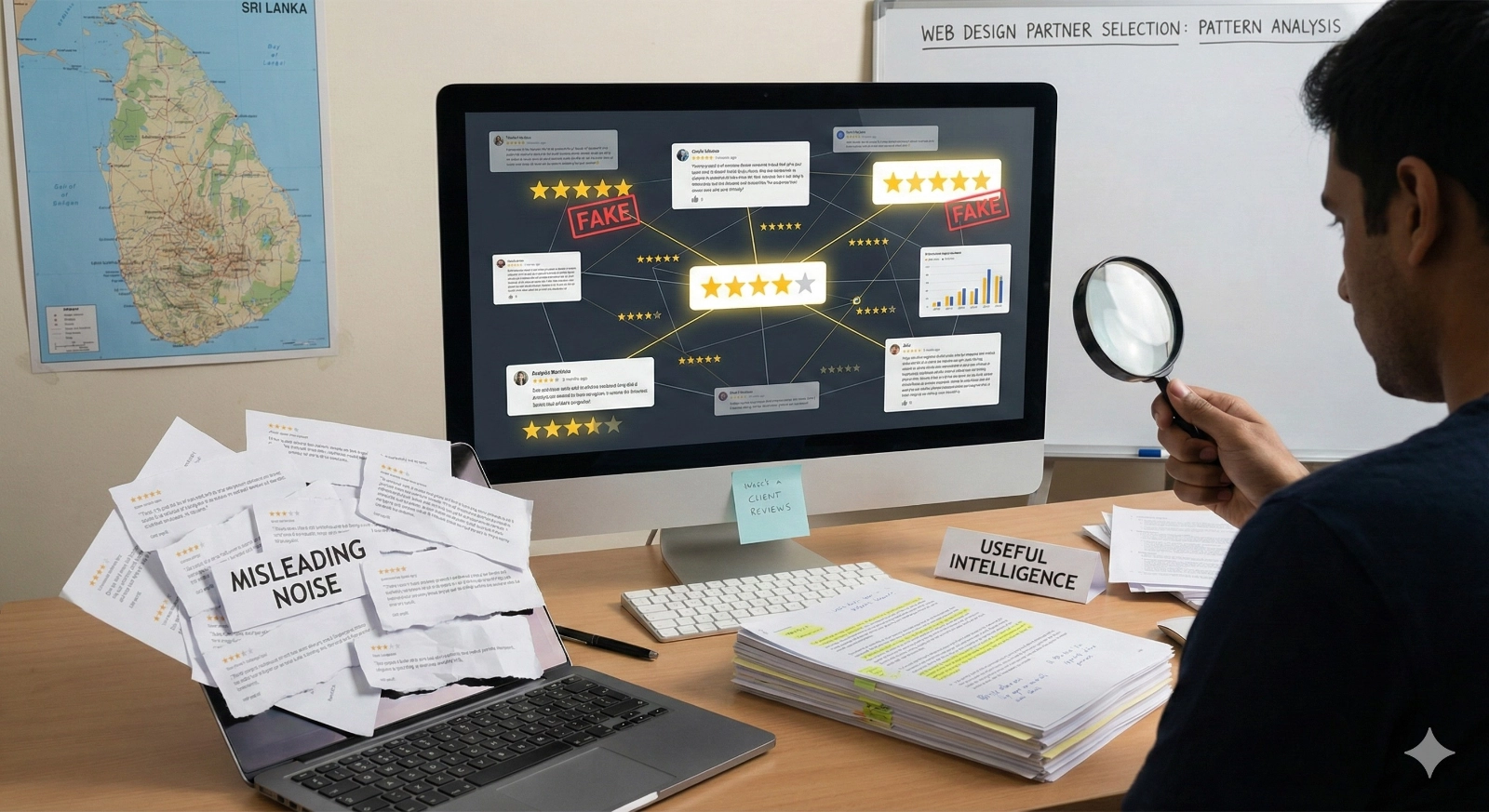
The Best Web Design Companies in Sri Lanka in 2026: Reviews, Ratings, and Real Client Feedback Analysis
Client reviews and ratings offer invaluable perspective when selecting a web design partner, revealing experiences that portfolios and capabilities presentations cannot convey. However, the review landscape has grown increasingly complex, with fake reviews, selective testimonials, and rating manipu...
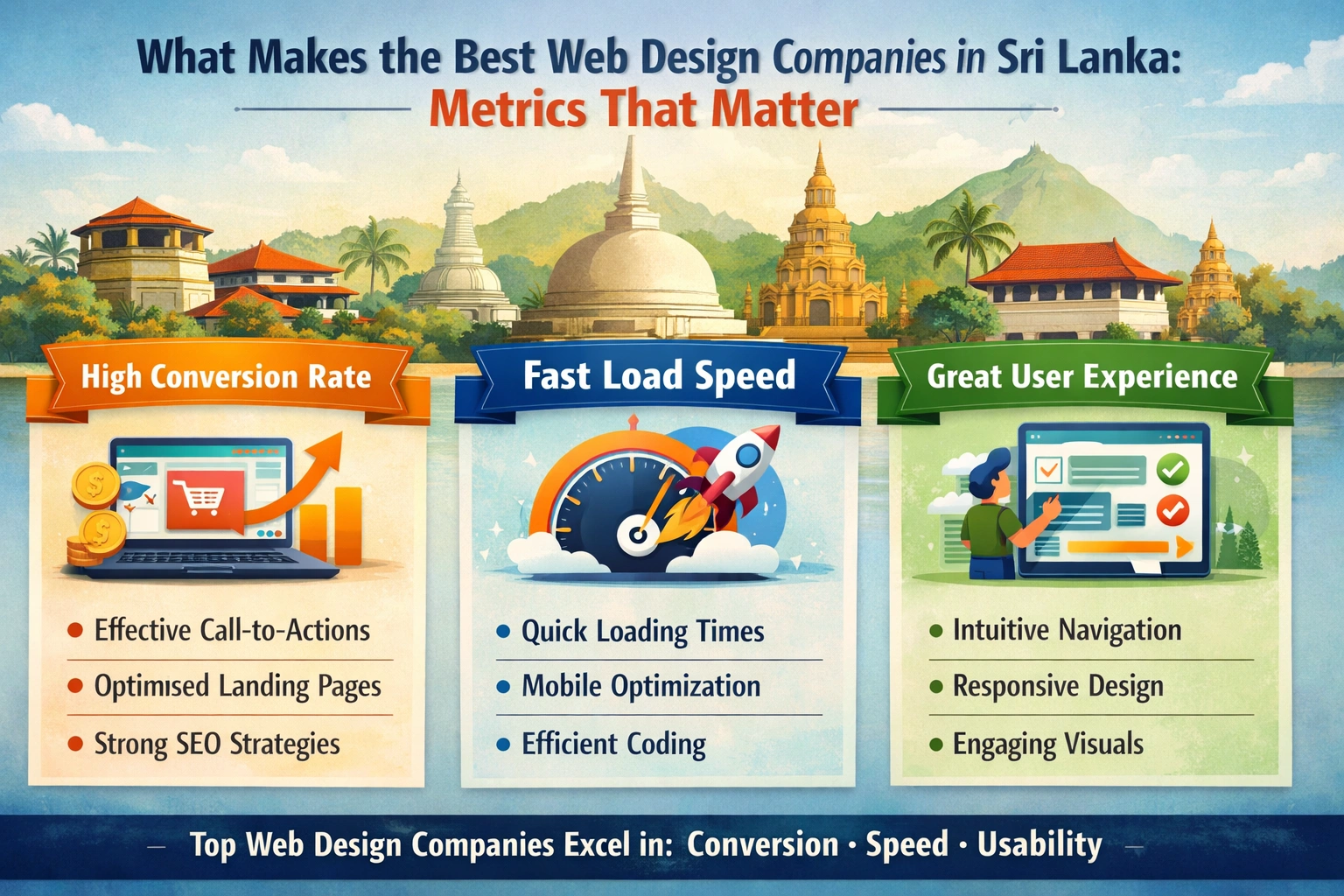
What Makes the Best Web Design Companies in Sri Lanka: Metrics That Matter (Conversion Rate, Load Speed, User Experience)
Subjective assessments of web design quality often lead businesses astray. A website might look stunning to your eyes yet fail to convert visitors into customers. Another site might seem plain but consistently outperform competitors in generating leads and sales. The best web design companies under...
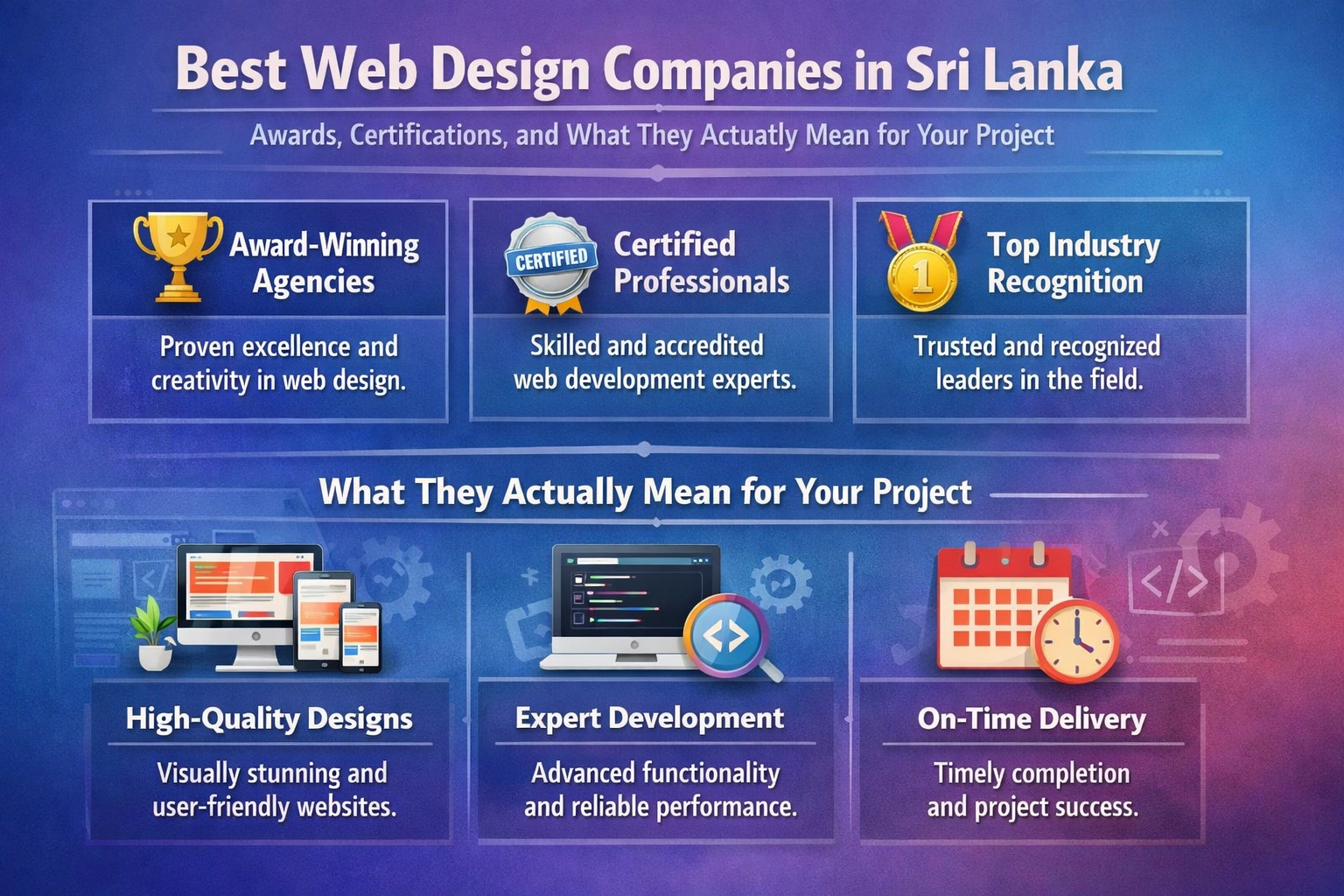
Best Web Design Companies in Sri Lanka: Awards, Certifications, and What They Actually Mean for Your Project
Web design companies frequently display awards, certifications, and recognition badges throughout their websites and proposals. These credentials promise quality assurance and industry standing, but their actual significance varies enormously. Some certifications indicate genuine expertise validate...

Web Design Companies in Sri Lanka: Real Results from Transformation Projects Across Industries
Portfolio galleries and capability claims only tell part of the story when evaluating web design companies. The real measure of a design partner's value lies in the business outcomes they help clients achieve. Transformation projects demonstrate how professional web design converts struggling onlin...