Hiring Web Developers in Sri Lanka: From Freelancers to Development Teams for Different Project Scales
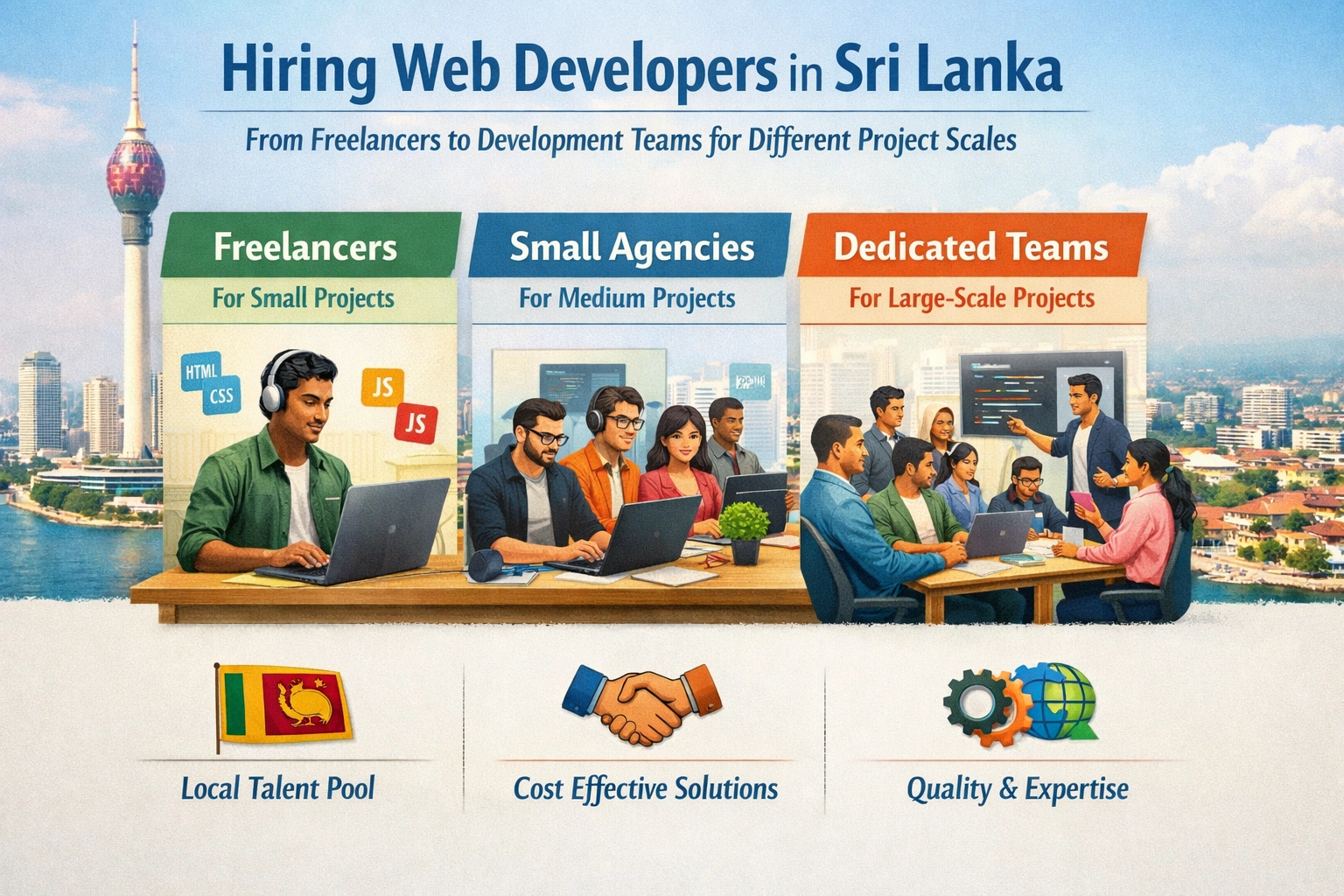
The decision between hiring a freelance developer or engaging a development team shapes your project in fundamental ways. Each option offers distinct advantages and limitations, and the right choice depends heavily on your specific circumstances—project complexity, budget, timeline, and how much ma...
The decision between hiring a freelance developer or engaging a development team shapes your project in fundamental ways. Each option offers distinct advantages and limitations, and the right choice depends heavily on your specific circumstances—project complexity, budget, timeline, and how much management bandwidth you have available.
Sri Lanka's web development market includes excellent options across the spectrum, from highly skilled individual freelancers to well-structured development teams. Understanding how to match your project to the right engagement model helps ensure you get results that justify your investment.
Understanding Your Options
Let's start by clearly defining what we mean by each engagement type, because the lines can blur.
Solo Freelancers
Individual professionals working independently. They handle projects personally, often managing the full process from initial consultation through delivery. Some freelancers specialize narrowly (frontend only, WordPress only); others work as generalists handling complete small projects.
Small Teams or Partnerships
Two to five professionals working together, often with complementary skills. Perhaps a designer and developer partnership, or a small group covering different technical areas. These operate informally compared to larger agencies but offer more resources than solo practitioners.
Established Agencies
Structured web development companies with dedicated roles—designers, developers, project managers, quality assurance, support staff. They bring formal processes, multiple skill sets, and business continuity that smaller operations can't match.
When Freelancers Make Sense
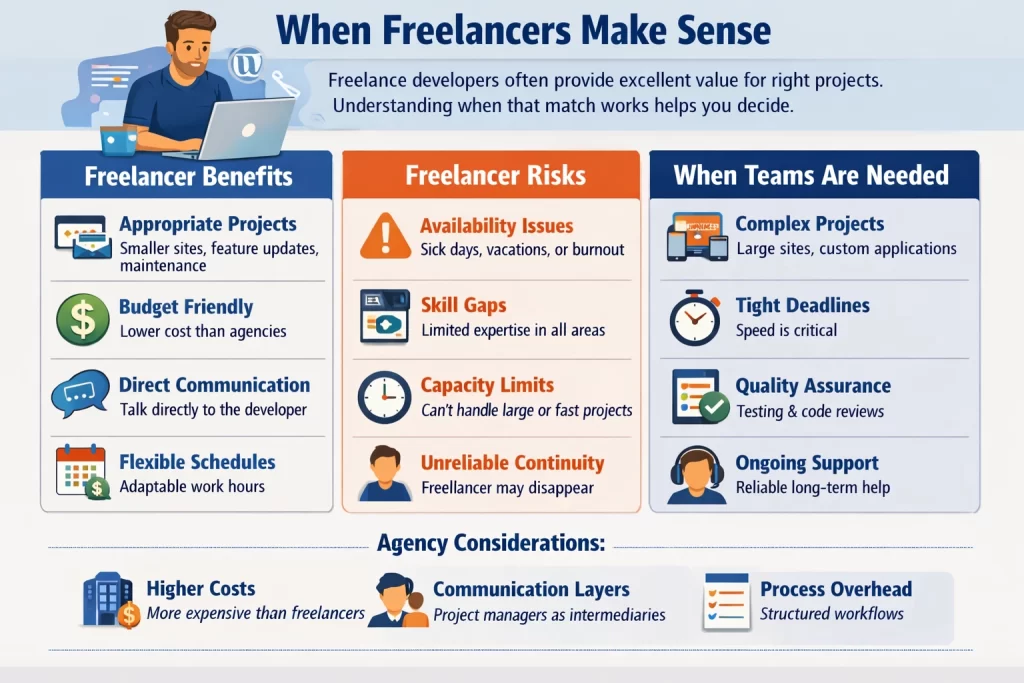
Freelance developers often provide excellent value for the right projects. Understanding when that match works helps you decide.
Appropriate Project Types
Freelancers typically handle smaller projects well—brochure websites, simple WordPress implementations, specific feature additions to existing sites, or maintenance work. Projects where one skilled person can reasonably manage the complete scope without becoming overwhelmed suit the freelance model.
Budget Advantages
Freelancers generally cost less than agencies. They don't carry overhead for office space, management layers, or support staff. If your budget is limited and your project genuinely fits the freelance model, you can access quality work at lower rates.
Direct Communication
You communicate directly with the person doing the work. There's no message passing through project managers or account executives. This directness can mean faster decisions and clearer understanding, provided you have time to engage directly.
Flexibility
Freelancers often accommodate flexible arrangements—part-time work, irregular schedules, evolving scope—more easily than agencies with structured processes.
Freelancer Risks and Limitations
The freelance model's advantages come with corresponding challenges:
Availability and Dependency
You depend entirely on one person. If they get sick, take holiday, or become unavailable, your project stops. For ongoing work, this dependency creates business risk—what happens if your freelancer moves on to other work or stops freelancing entirely?
Skill Limitations
No individual excels at everything. A freelancer might be an excellent developer but a mediocre designer, or vice versa. Projects requiring deep expertise across multiple areas may strain freelancer capabilities.
Capacity Constraints
Freelancers can only work so many hours. Larger projects or tight timelines may simply exceed what one person can deliver. If your project grows beyond initial expectations, a freelancer might not be able to scale with it.
Business Continuity
Freelancers can disappear. While most are reliable professionals, some do abandon projects or become unreachable. The informal nature of freelance arrangements provides less recourse if things go wrong.
When Development Teams Are Essential
Certain situations clearly call for the resources and structure that teams provide.
Complex Projects
Projects with significant scope—comprehensive e-commerce platforms, custom web applications, sites requiring both excellent design and complex backend functionality—need multiple skill sets working together. A web design company in Sri Lanka can assemble the right combination of specialists.
Tight Timelines
When speed matters, teams can parallelise work that freelancers must tackle sequentially. While a designer creates mockups, developers prepare technical foundations. This parallel work compresses timelines significantly for larger projects.
Quality Assurance Needs
Agencies typically include quality assurance processes—code reviews, testing protocols, multiple eyes on deliverables. This systematic quality checking catches problems that individuals working alone might miss.
Ongoing Support Requirements
If your website needs reliable ongoing support, agencies provide continuity. Team members may change, but the organization persists. Knowledge remains within the company even if individual employees move on.
Risk Management
Agencies represent lower risk for critical projects. They have contractual obligations, business reputations to protect, and resources to address problems. For projects where failure isn't acceptable, this risk reduction justifies higher costs.
Agency Considerations
Working with development teams brings its own considerations:
Higher Costs
Agencies cost more. They carry overhead, employ multiple people, and maintain structured operations. This overhead provides value, but you pay for it. Ensure the project actually requires agency-level resources before committing to agency-level costs.
Communication Layers
You might communicate primarily with project managers rather than developers directly. While good project managers facilitate communication, this layer can sometimes slow decisions or introduce misunderstandings.
Process Overhead
Agency processes exist for good reasons but can feel heavy for simple projects. Required documentation, formal approval stages, and structured workflows make sense for large projects but may seem excessive for smaller ones.
Fit Matters
Agencies have cultures, specialisations, and typical project types. An agency geared toward enterprise clients might be wrong for a startup project, even if technically capable. Finding agencies whose typical work resembles yours helps ensure good fit.
Matching Project Scale to Engagement Type
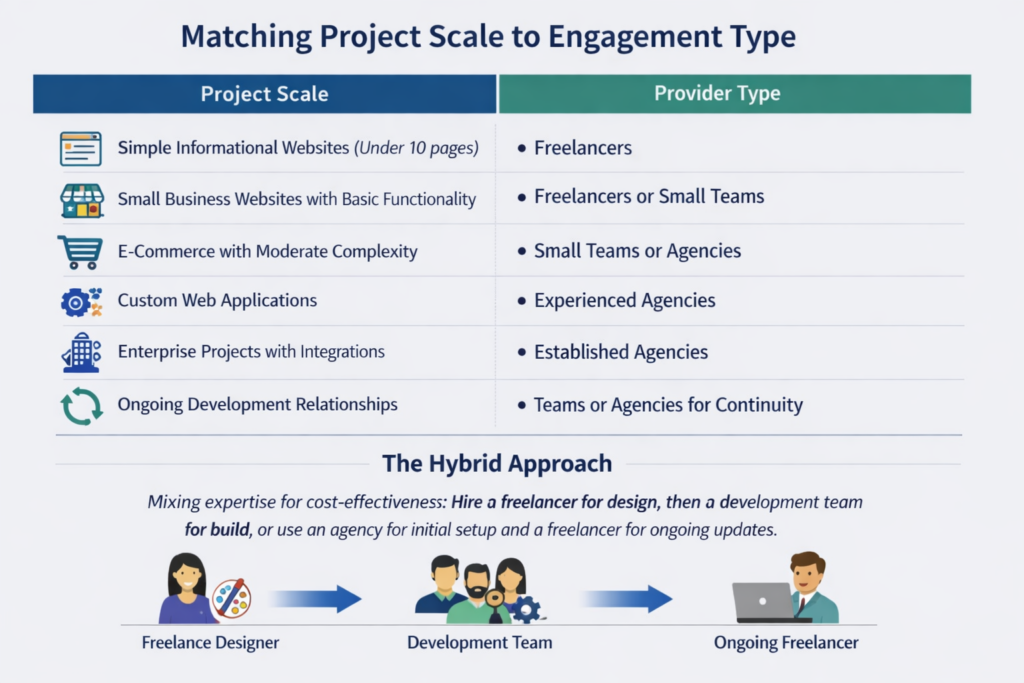
Here's a practical framework for matching projects to providers:
- Simple informational websites (under 10 pages, basic functionality): Freelancers typically handle these well
- Small business websites with some functionality (contact forms, basic content management): Capable freelancers or small teams
- E-commerce with moderate complexity: Small teams or agencies, depending on feature requirements
- Custom web applications: Teams or agencies with relevant technical depth
- Enterprise projects with integration requirements: Established agencies with demonstrated capability
- Ongoing development relationships: Teams or agencies that provide continuity
The Hybrid Approach
Many projects benefit from hybrid approaches. You might hire a freelance designer for visual concepts, then engage a development team for implementation. Or use an agency for initial build, then maintain with a freelancer for routine updates.
This approach lets you access the right expertise at each stage while managing costs. However, it requires more coordination on your part and careful handoff management between different providers.
Evaluating Candidates Across Types
Regardless of engagement type, certain evaluation principles apply:
Relevant Portfolio
Have they done work similar to what you need? Success with different project types is worth less than demonstrated capability with your specific requirements.
References and Reviews
What do previous clients say? For freelancers, check platforms like LinkedIn for recommendations. For agencies, request references and actually call them.
Communication Quality
How well do they communicate during the sales process? This preview indicates how communication will flow during your project. Poor pre-sales communication rarely improves after engagement.
Process Clarity
Can they clearly explain how they work? Both freelancers and agencies should articulate their process—how they gather requirements, manage feedback, handle changes, and deliver work.
Contract and Engagement Considerations
Structure your engagement appropriately regardless of provider type:
Clear Scope Documentation
Written scope matters more with informal freelance arrangements where verbal agreements can lead to misunderstandings. But even with agencies and formal contracts, detailed scope documentation prevents disputes.
Milestone-Based Payments
Tying payments to deliverable milestones protects both parties. You don't pay entirely upfront for work not yet delivered; providers receive payment as they complete agreed work. This structure applies whether you're working with freelancers or agencies.
Change Management
Agree upfront how changes beyond original scope will be handled. What's the process for requesting changes? How will additional costs be calculated and approved? Clear change management prevents the friction that often derails projects.
Ownership and Access
Ensure you'll own the final work and have access to everything needed to maintain or modify it later. This includes source code, design files, and any credentials for third-party services. This protection matters especially with freelancers who might become unavailable.
Long-Term Relationship Thinking
Your website needs evolve over time. Consider not just the immediate project but ongoing needs.
If you anticipate regular updates and improvements, engaging a web development partner for ongoing work might make more sense than repeatedly finding project-based help. Familiarity with your site, your preferences, and your business makes ongoing work more efficient.
Building relationships with reliable providers—whether freelancers or agencies—creates valuable business assets. When you need web work done, having trusted partners ready to engage beats starting the search from scratch each time.
Making Your Decision
Be honest about your project's actual requirements. Businesses often over-specify (assuming they need agency resources for simple projects) or under-specify (hoping freelancers can handle enterprise-grade complexity). Neither serves well.
Consider your own bandwidth. Freelancers often require more client involvement in coordination. If you lack time for active project management, the additional structure agencies provide might be worth its cost.
Think about risk tolerance. How bad would it be if this project failed or was significantly delayed? Higher stakes justify investing in more robust engagement models with better risk mitigation.
The Sri Lankan market offers quality options across the spectrum. Your job is matching your genuine needs to the right type of provider, then finding excellent candidates within that category. Get this match right, and you're positioned for project success regardless of whether you're working with a skilled freelancer or a comprehensive web design agency.
Related Articles
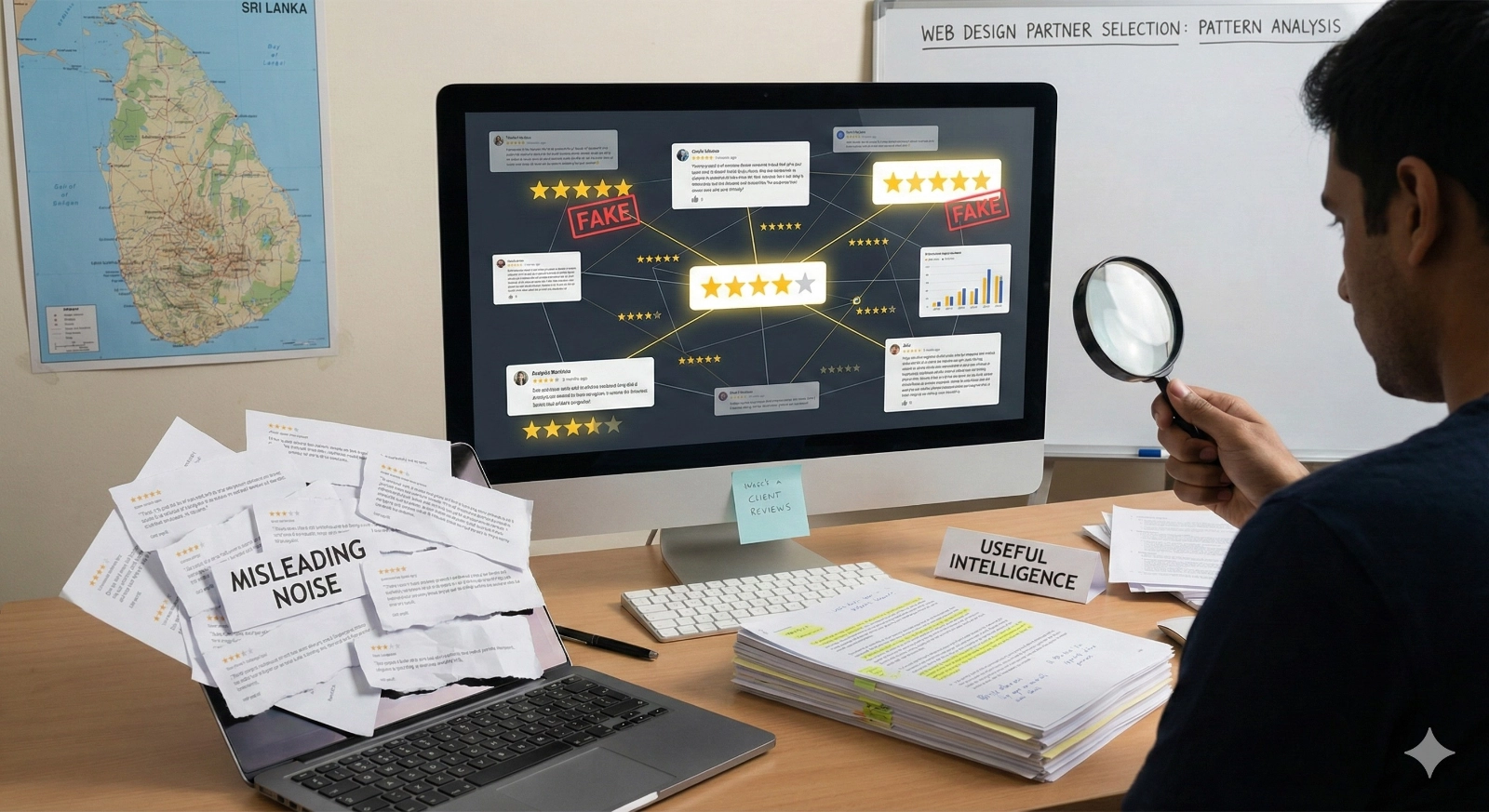
The Best Web Design Companies in Sri Lanka in 2026: Reviews, Ratings, and Real Client Feedback Analysis
Client reviews and ratings offer invaluable perspective when selecting a web design partner, revealing experiences that portfolios and capabilities presentations cannot convey. However, the review landscape has grown increasingly complex, with fake reviews, selective testimonials, and rating manipu...
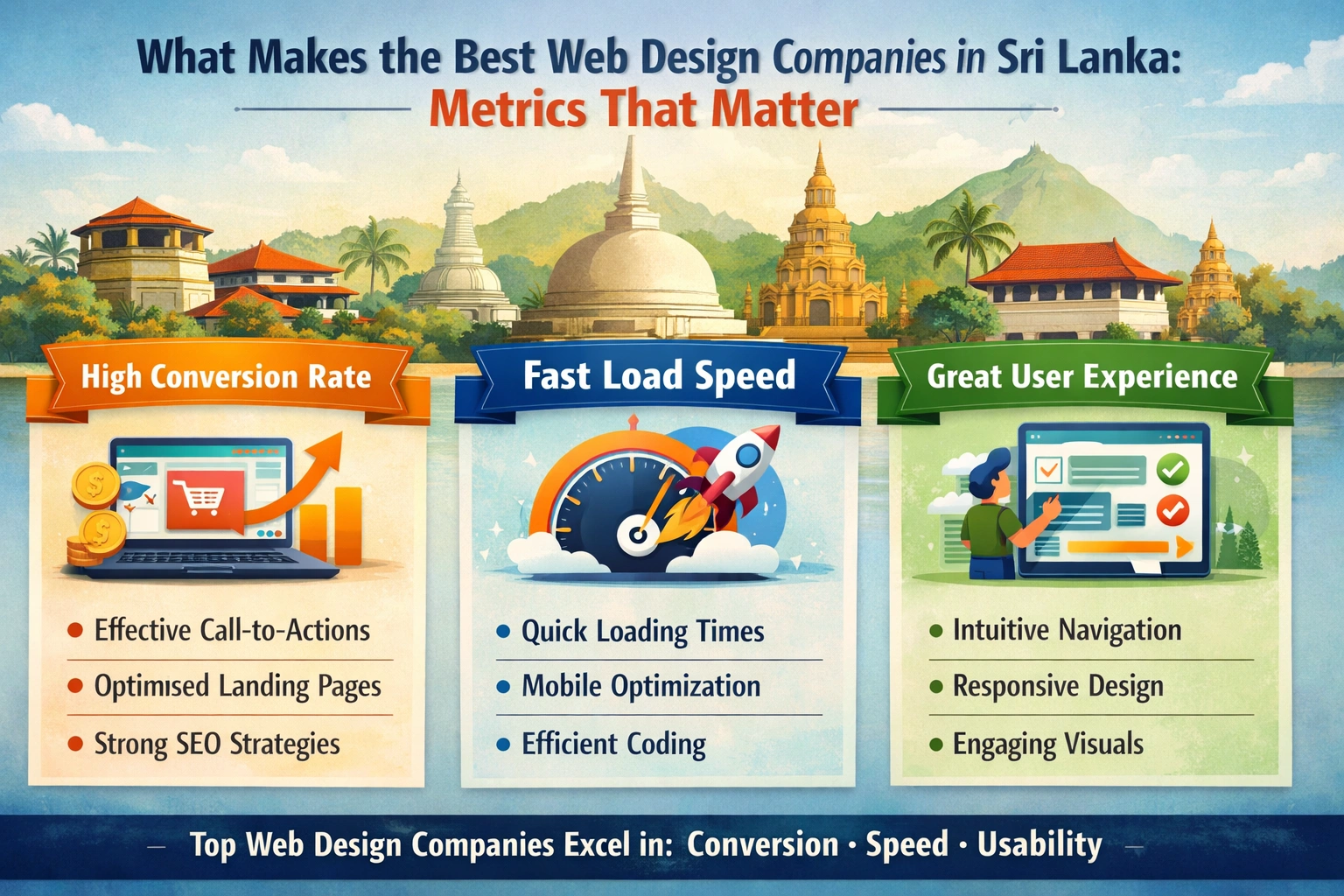
What Makes the Best Web Design Companies in Sri Lanka: Metrics That Matter (Conversion Rate, Load Speed, User Experience)
Subjective assessments of web design quality often lead businesses astray. A website might look stunning to your eyes yet fail to convert visitors into customers. Another site might seem plain but consistently outperform competitors in generating leads and sales. The best web design companies under...
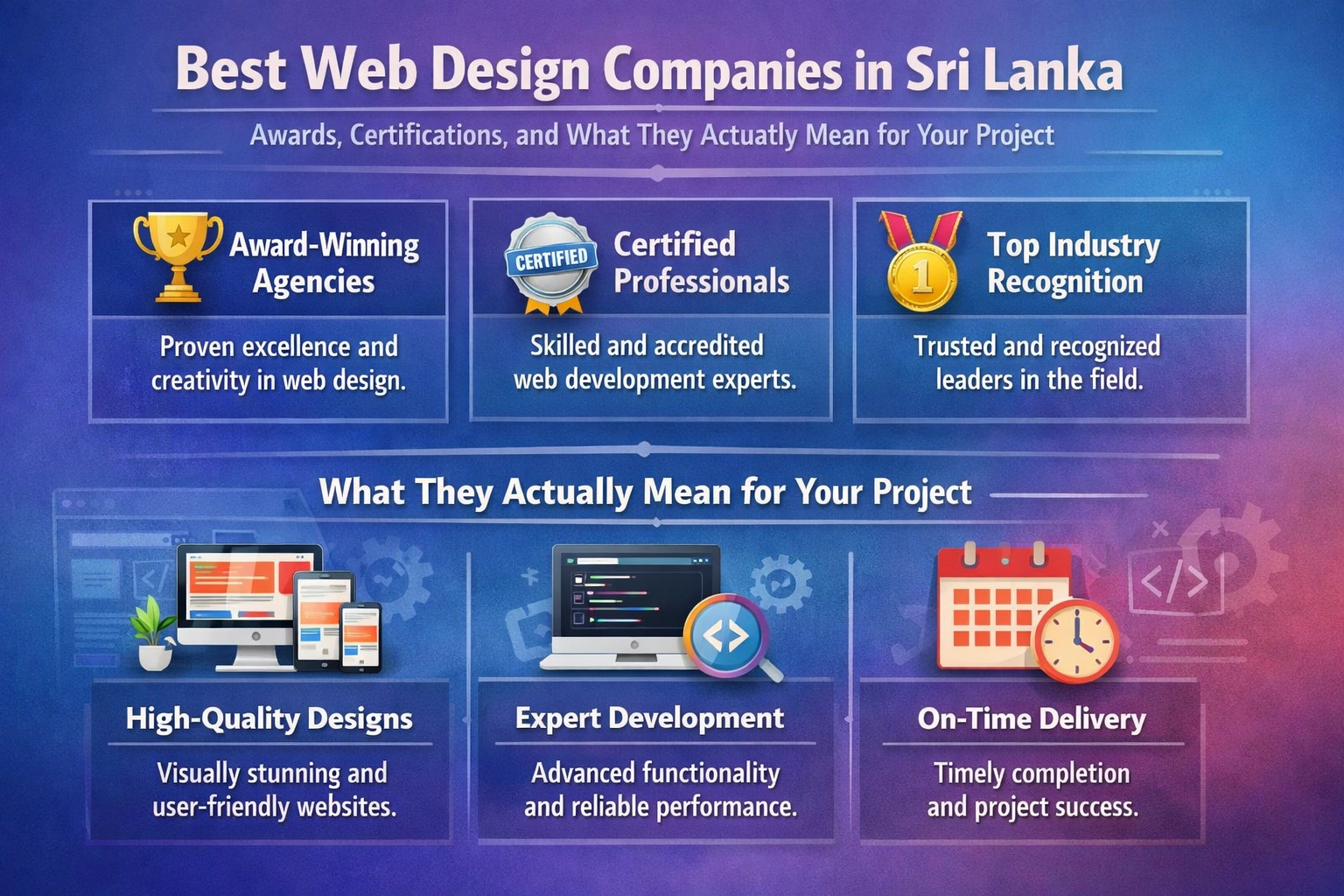
Best Web Design Companies in Sri Lanka: Awards, Certifications, and What They Actually Mean for Your Project
Web design companies frequently display awards, certifications, and recognition badges throughout their websites and proposals. These credentials promise quality assurance and industry standing, but their actual significance varies enormously. Some certifications indicate genuine expertise validate...
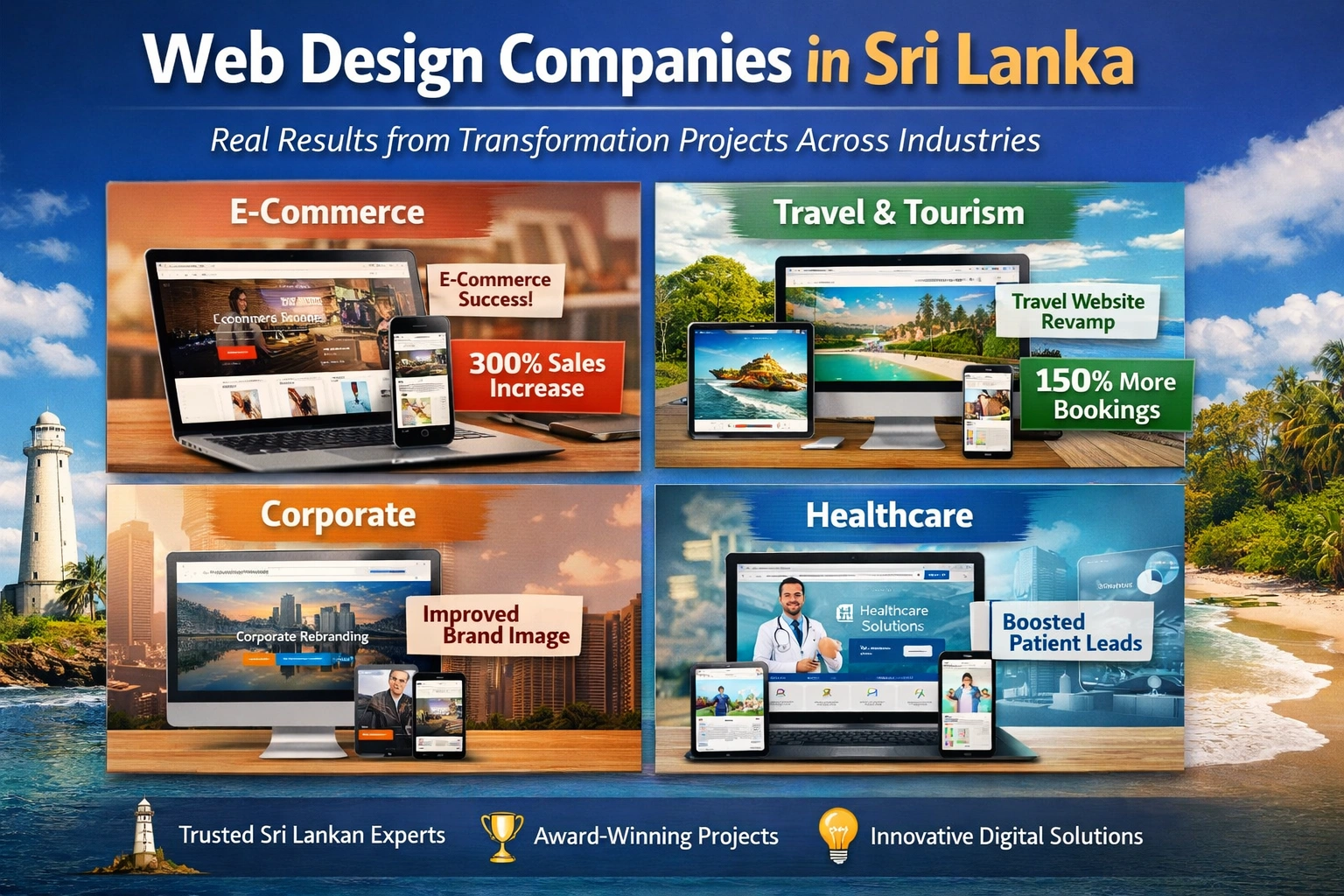
Web Design Companies in Sri Lanka: Real Results from Transformation Projects Across Industries
Portfolio galleries and capability claims only tell part of the story when evaluating web design companies. The real measure of a design partner's value lies in the business outcomes they help clients achieve. Transformation projects demonstrate how professional web design converts struggling onlin...