Web Design Companies in Sri Lanka: What Services Should Your Partner Offer? (Design, Development, SEO, Maintenance)
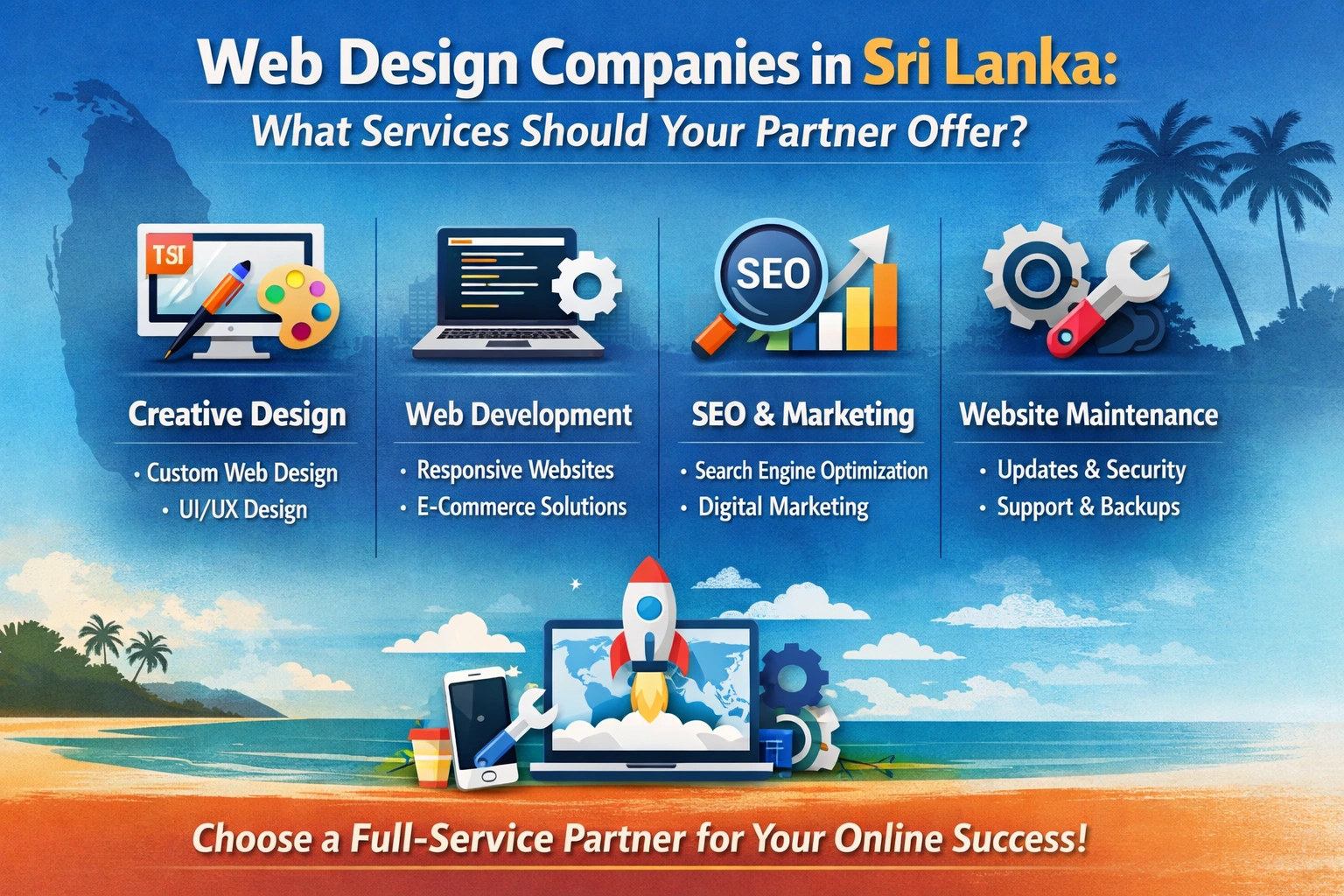
Choosing a web design partner involves far more than comparing portfolios and price quotes. The services a company offers determine whether they can truly support your business growth or leave you scrambling to fill gaps with additional vendors. Many businesses in Sri Lanka discover too late that t...
Choosing a web design partner involves far more than comparing portfolios and price quotes. The services a company offers determine whether they can truly support your business growth or leave you scrambling to fill gaps with additional vendors. Many businesses in Sri Lanka discover too late that their web design company only handles visual design, leaving them without development support, struggling with search visibility, or facing unexpected maintenance costs.
A comprehensive web design company in Sri Lanka should function as a complete digital partner, capable of handling everything from initial concept through long-term optimization. Understanding what services to expect helps you ask the right questions during evaluation and ensures you partner with a company equipped to meet your evolving needs.
Core Design Services: The Foundation of Your Digital Presence
Visual design forms the most visible aspect of any web design company's work, but professional design services encompass far more than attractive layouts. A capable design partner should offer user interface design that balances aesthetic appeal with functional clarity. This means creating visual hierarchies that guide visitors toward important actions, selecting typography that enhances readability across devices, and developing color schemes that reinforce your brand identity while meeting accessibility standards.
User experience design represents a distinct discipline that many companies bundle with visual design without providing genuine expertise. True UX services include user research to understand your audience's needs and behaviors, information architecture to organize content logically, and wireframing to test navigation concepts before visual design begins. Companies that skip these steps often produce beautiful websites that fail to convert visitors into customers.
Brand integration should extend throughout the design process. Your website needs to feel like a natural extension of your overall brand identity, not a disconnected digital property. This requires designers who understand brand guidelines, can adapt existing identity systems for digital contexts, and possess the creativity to extend brand elements into interactive experiences. Some companies offer brand development services for businesses that lack established identity systems, creating logos, color palettes, and design guidelines alongside website design.
Responsive Design and Multi-Device Optimization
Any design service discussion must address responsive design capabilities. With mobile traffic dominating web usage in Sri Lanka, your partner must demonstrate expertise in creating designs that function beautifully across smartphones, tablets, laptops, and desktop monitors. This goes beyond simply making elements shrink on smaller screens. Professional responsive design involves rethinking navigation for touch interfaces, optimizing tap targets for finger-based interaction, and ensuring content hierarchy works regardless of screen orientation.
Progressive enhancement approaches ensure websites function on older devices and slower connections while providing enhanced experiences on modern hardware. This consideration proves particularly important for Sri Lankan businesses serving diverse audiences who may access websites from varying device capabilities and network conditions.
Development Services: Turning Designs into Functional Websites
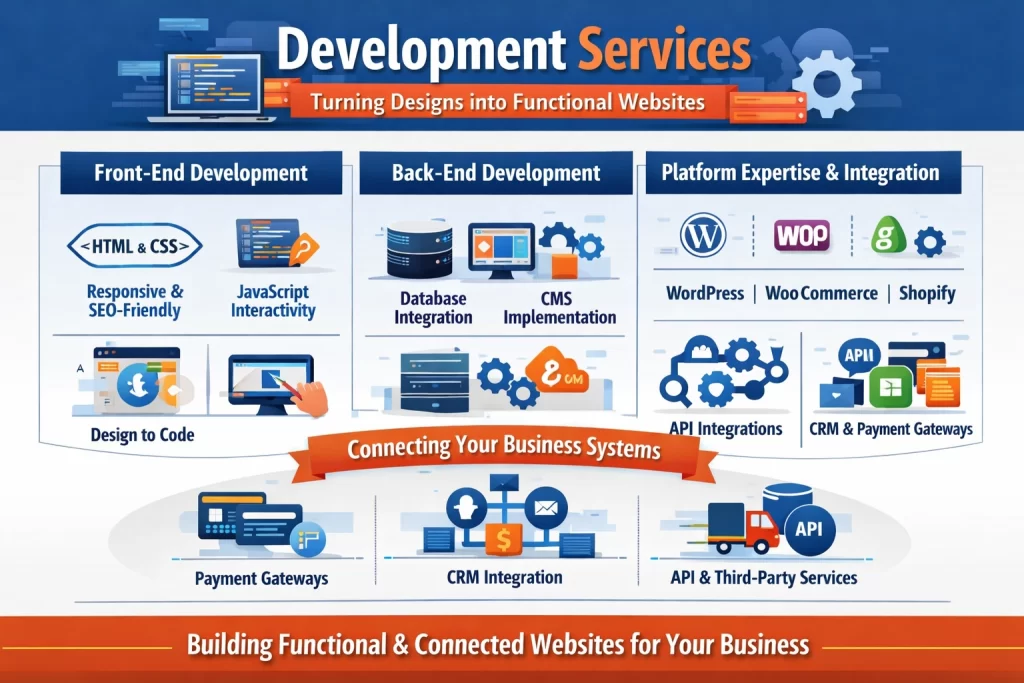
The gap between a design concept and a working website requires substantial technical expertise. Web development companies in Sri Lanka should offer frontend development that translates visual designs into clean, efficient code. This includes HTML structure that supports accessibility and search engine optimization, CSS styling that maintains design fidelity across browsers, and JavaScript functionality that creates smooth, intuitive interactions.
Backend development powers the dynamic features that make websites useful for business operations. Content management system implementation allows your team to update content without technical knowledge. Database integration supports features like user accounts, product catalogs, and order processing. Server-side programming handles form submissions, payment processing, and integration with external services.
Platform expertise matters significantly when evaluating development capabilities. Companies should demonstrate proficiency in relevant content management systems like WordPress, Joomla, or Drupal for content-focused websites. E-commerce businesses need partners familiar with WooCommerce, Magento, or Shopify depending on scale and requirements. Custom application development requires different skillsets altogether, including experience with frameworks like Laravel, React, or Node.js.
Integration and API Development
Modern websites rarely function in isolation. Your development partner should offer integration services connecting your website with business systems. This includes payment gateway integration for e-commerce operations, CRM connections that sync customer data between your website and sales tools, and accounting software integration that automates financial record-keeping.
API development and integration enables communication between your website and third-party services. Whether connecting with shipping providers, implementing social media features, or building custom integrations with industry-specific software, these capabilities expand what your website can accomplish. Companies lacking integration expertise may deliver functional websites that create operational inefficiencies requiring manual data transfer between systems.
Search Engine Optimization: Making Your Website Discoverable
A stunning website provides little business value if potential customers cannot find it. Search engine optimization should be integrated throughout the design and development process, not treated as an afterthought. Technical SEO ensures your website structure supports search engine crawling and indexing. This includes proper URL structures, efficient site architecture, fast loading speeds, and mobile optimization that satisfies search engine ranking factors.
On-page SEO optimization involves crafting page titles, meta descriptions, and heading structures that communicate relevance to search engines while appealing to human readers. Content optimization ensures your messaging incorporates relevant keywords naturally without compromising readability. Image optimization reduces file sizes for faster loading while maintaining quality and including descriptive alt text for accessibility and search visibility.
Some web design companies offer ongoing SEO services including content strategy development, link building, and performance monitoring. Others focus solely on technical optimization during development, leaving ongoing SEO to specialized agencies. Understanding what level of SEO support your partner provides helps you plan for additional services if needed.
Local SEO for Sri Lankan Businesses
Businesses serving local markets require specific optimization for geographic searches. This includes Google Business Profile optimization, local directory submissions, and location-specific content development. A web design company familiar with the Sri Lankan market understands which local directories matter, how to optimize for region-specific search behaviors, and what content strategies attract local customers seeking services in their area.
Content Services: Filling Your Website with Substance
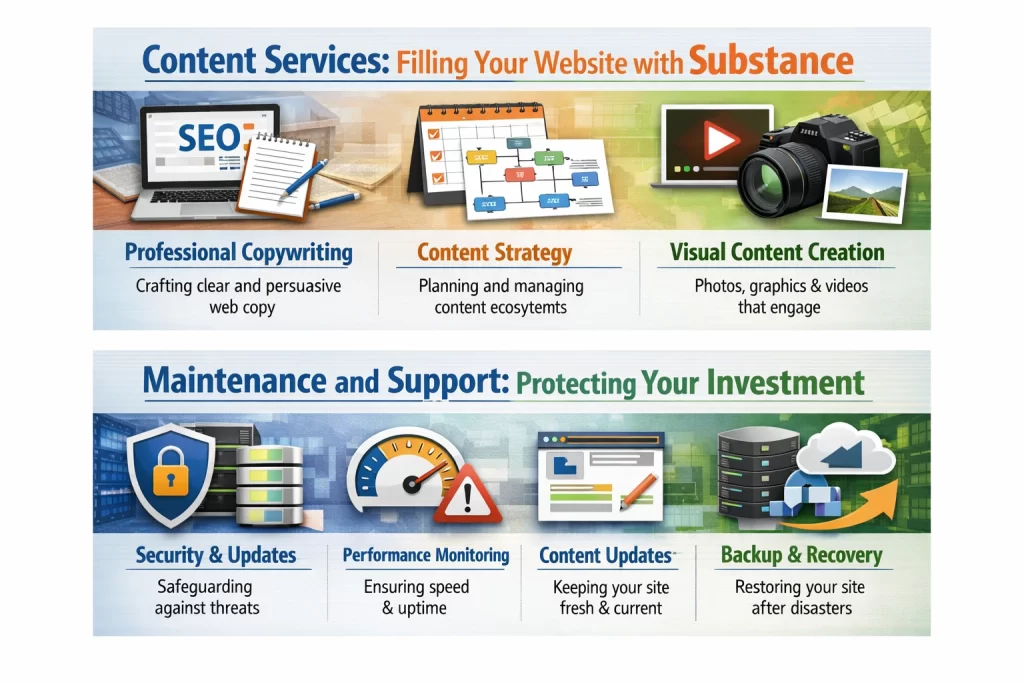
Design and development create the container, but content provides the substance that engages visitors and communicates your value proposition. Professional copywriting services help businesses articulate their offerings clearly and persuasively. This includes website copy that explains services, about pages that build trust and credibility, and product descriptions that highlight benefits and drive purchases.
Content strategy development goes beyond writing individual pages to planning comprehensive content ecosystems. This involves identifying content types that serve your audience, planning content calendars for ongoing publication, and developing messaging frameworks that maintain consistency across all communications. Companies offering content strategy help ensure your website continues generating value through regular updates rather than becoming stale after launch.
Visual content creation complements written content with photography, graphics, and video that enhance your message. Some companies maintain in-house photography capabilities or graphic design teams. Others partner with specialized content creators or assist clients in sourcing appropriate stock imagery. Video production for website integration has become increasingly important as audiences expect dynamic content experiences.
Maintenance and Support: Protecting Your Investment
Website launch marks the beginning of ongoing maintenance requirements, not a project conclusion. Security maintenance protects your website from evolving threats through regular software updates, security patches, and monitoring for suspicious activity. Companies should clearly explain their security protocols and response procedures for addressing vulnerabilities.
Performance monitoring identifies issues before they impact visitors. This includes uptime monitoring that alerts you to outages, speed testing that catches performance degradation, and error tracking that identifies broken functionality. Proactive monitoring prevents small issues from becoming major problems that damage user experience or search rankings.
Content updates and modifications represent ongoing needs for most websites. Whether changing pricing information, adding new products, or publishing blog posts, your partner should offer reasonable update services or train your team to handle routine changes independently. Understanding update costs and turnaround times helps budget for ongoing content management.
Backup and Disaster Recovery
Regular backups protect against data loss from technical failures, security breaches, or human error. Your web design partner should maintain systematic backup procedures and test recovery processes to ensure backups actually work when needed. Disaster recovery planning outlines procedures for restoring your website quickly if major problems occur, minimizing business disruption from technical incidents.
Hosting and Infrastructure Services
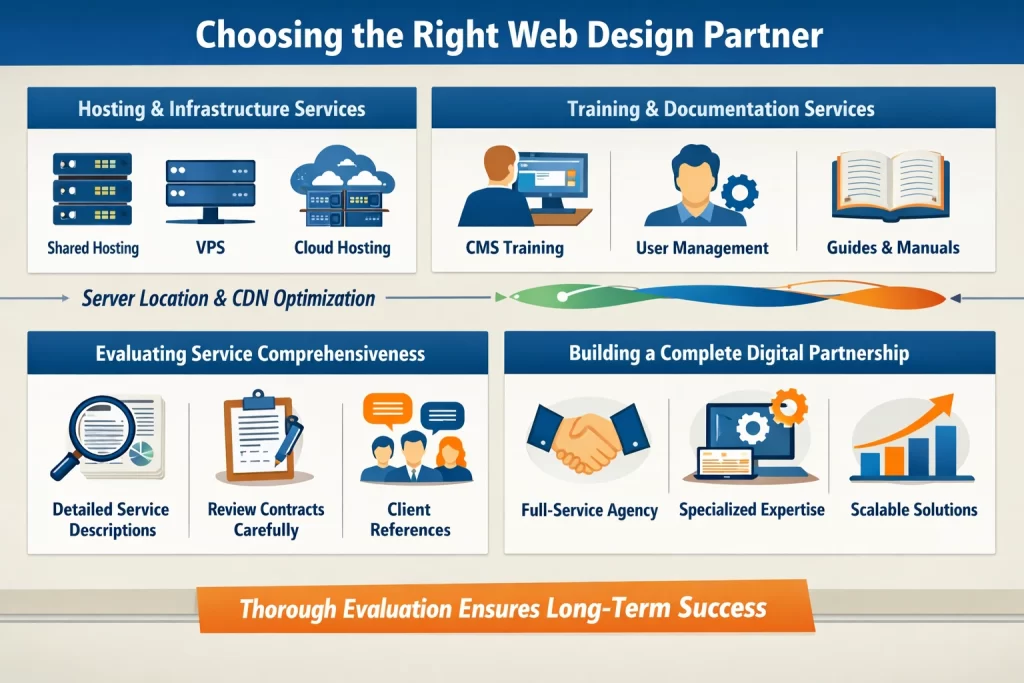
Many web design companies offer hosting services either through their own infrastructure or managed accounts with hosting providers. Managed hosting simplifies website operation by placing technical infrastructure responsibilities with your design partner. This typically includes server configuration, software updates, and basic troubleshooting.
Understanding hosting arrangements matters for performance and cost planning. Shared hosting provides economical solutions for smaller websites but may limit performance during traffic spikes. Virtual private servers offer more resources and control for growing businesses. Cloud hosting provides scalability for websites with variable traffic patterns or rapid growth expectations. Enterprise websites may require dedicated servers or complex multi-server configurations.
Server location affects website speed for your target audience. Sri Lankan businesses serving local customers benefit from locally-hosted websites that minimize latency. Those targeting international audiences may prefer servers positioned in major internet hubs. Content delivery networks can optimize performance across multiple regions by caching content on globally distributed servers.
Training and Documentation Services
Empowering your team to manage routine website tasks reduces ongoing costs and improves response times for updates. Training services should cover content management system operation, including adding pages, editing content, managing media, and publishing blog posts. User management training helps you control access permissions and maintain security as team members change.
Documentation provides reference materials your team can consult when questions arise. This includes system documentation explaining technical architecture, user guides covering common tasks, and troubleshooting guides for addressing frequent issues. Companies that provide comprehensive documentation demonstrate commitment to client independence rather than creating ongoing dependency.
How to Evaluate Service Comprehensiveness
When assessing potential partners, request detailed service descriptions rather than accepting vague capability claims. Ask about specific team members or partners who deliver each service. Companies claiming comprehensive capabilities through a tiny team may be overpromising or relying heavily on outsourcing that reduces quality control.
Review contracts carefully to understand what services are included in project pricing versus available as add-ons. Some companies advertise low project costs while charging substantially for services competitors include by default. Comparing total cost of ownership including ongoing services provides more accurate budget planning than focusing solely on initial development costs.
Request references specifically for services critical to your project. A company might excel at visual design while providing mediocre development or SEO services. Speaking with clients who received the specific services you need provides more relevant feedback than general testimonials.
Building a Complete Digital Partnership
The ideal web design partnership provides all services your business needs without requiring you to coordinate multiple vendors. This reduces communication overhead, ensures consistency across all website elements, and creates clear accountability when issues arise. However, specialized agencies may provide superior results for specific services compared to generalist companies attempting to offer everything.
Consider your internal capabilities when evaluating necessary services. Businesses with marketing teams might need less content support but require advanced development capabilities. E-commerce operations may prioritize payment integration and inventory management features. The right service mix depends on your specific situation rather than following generic recommendations.
Starting with a web design company that offers comprehensive services provides flexibility as your needs evolve. Even if you only require basic services initially, having a partner capable of supporting advanced requirements means you will not need to switch providers as your business grows. This continuity preserves institutional knowledge about your website and eliminates transition costs associated with moving to new vendors.
Take time to thoroughly evaluate service offerings before committing to a web design partnership. The services available determine not just what your initial website can accomplish, but what ongoing support and growth opportunities your partner can provide. Choosing a comprehensive partner positions your business for sustained digital success rather than immediate website launch followed by capability gaps and frustration.
Related Articles
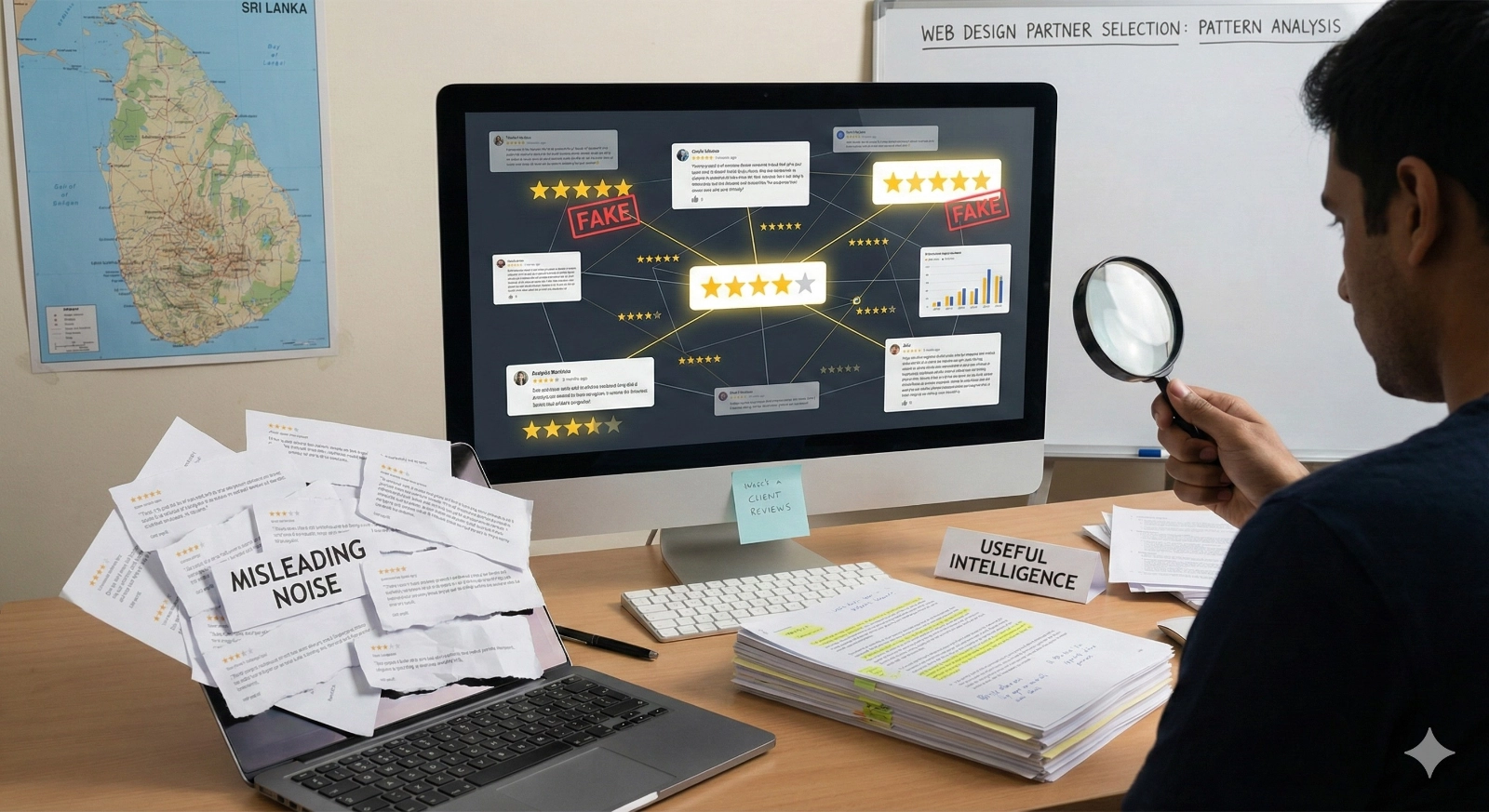
The Best Web Design Companies in Sri Lanka in 2026: Reviews, Ratings, and Real Client Feedback Analysis
Client reviews and ratings offer invaluable perspective when selecting a web design partner, revealing experiences that portfolios and capabilities presentations cannot convey. However, the review landscape has grown increasingly complex, with fake reviews, selective testimonials, and rating manipu...
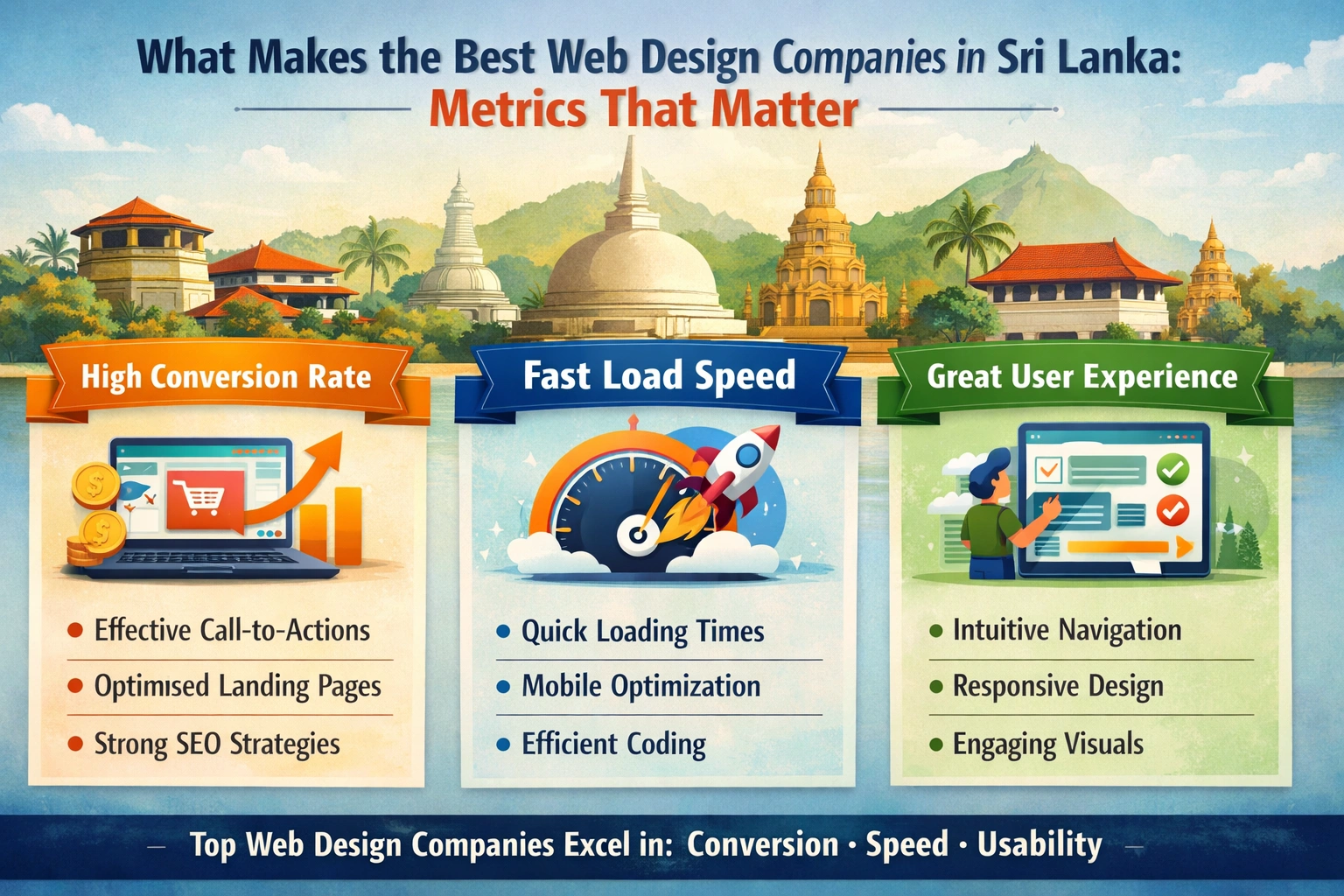
What Makes the Best Web Design Companies in Sri Lanka: Metrics That Matter (Conversion Rate, Load Speed, User Experience)
Subjective assessments of web design quality often lead businesses astray. A website might look stunning to your eyes yet fail to convert visitors into customers. Another site might seem plain but consistently outperform competitors in generating leads and sales. The best web design companies under...
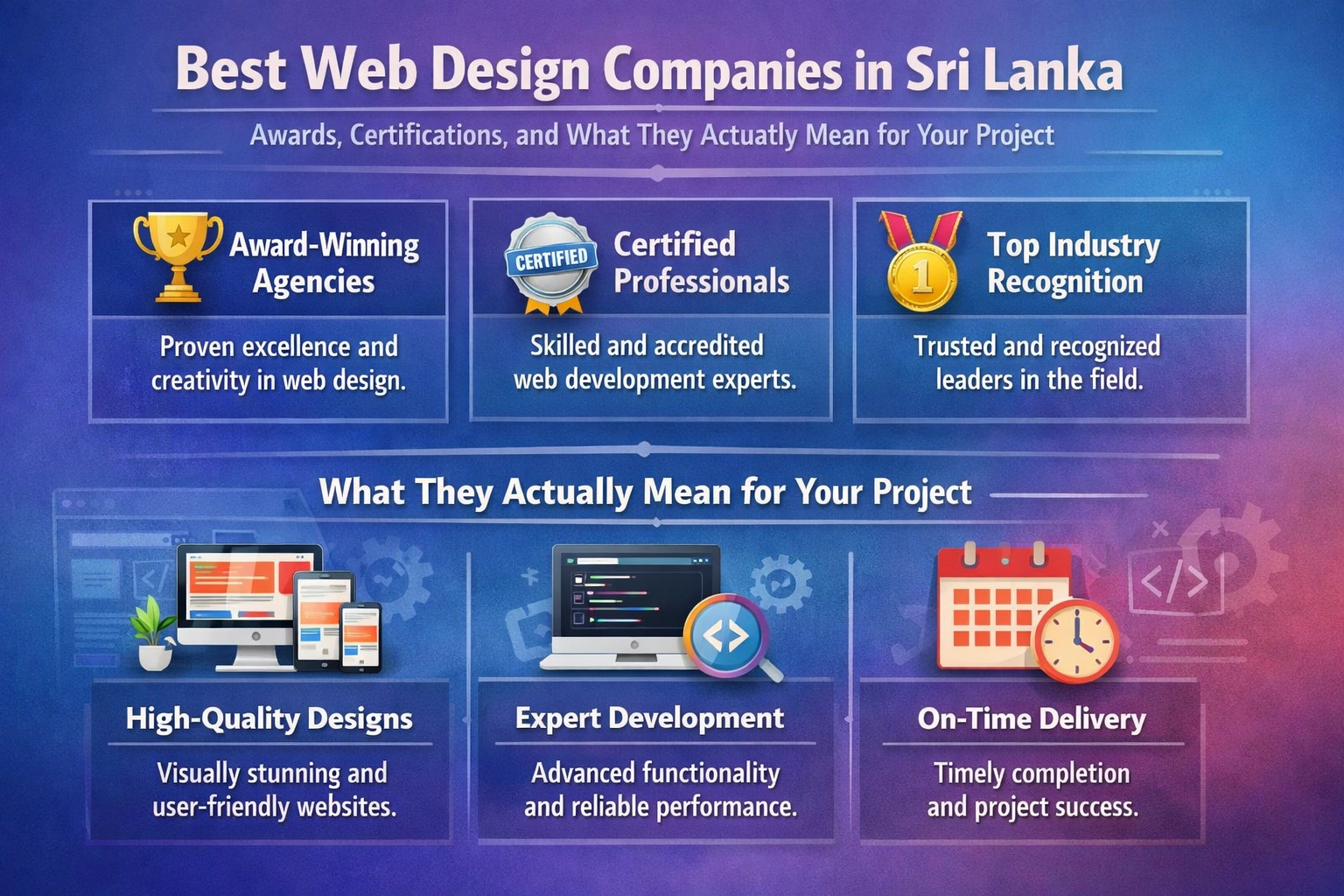
Best Web Design Companies in Sri Lanka: Awards, Certifications, and What They Actually Mean for Your Project
Web design companies frequently display awards, certifications, and recognition badges throughout their websites and proposals. These credentials promise quality assurance and industry standing, but their actual significance varies enormously. Some certifications indicate genuine expertise validate...
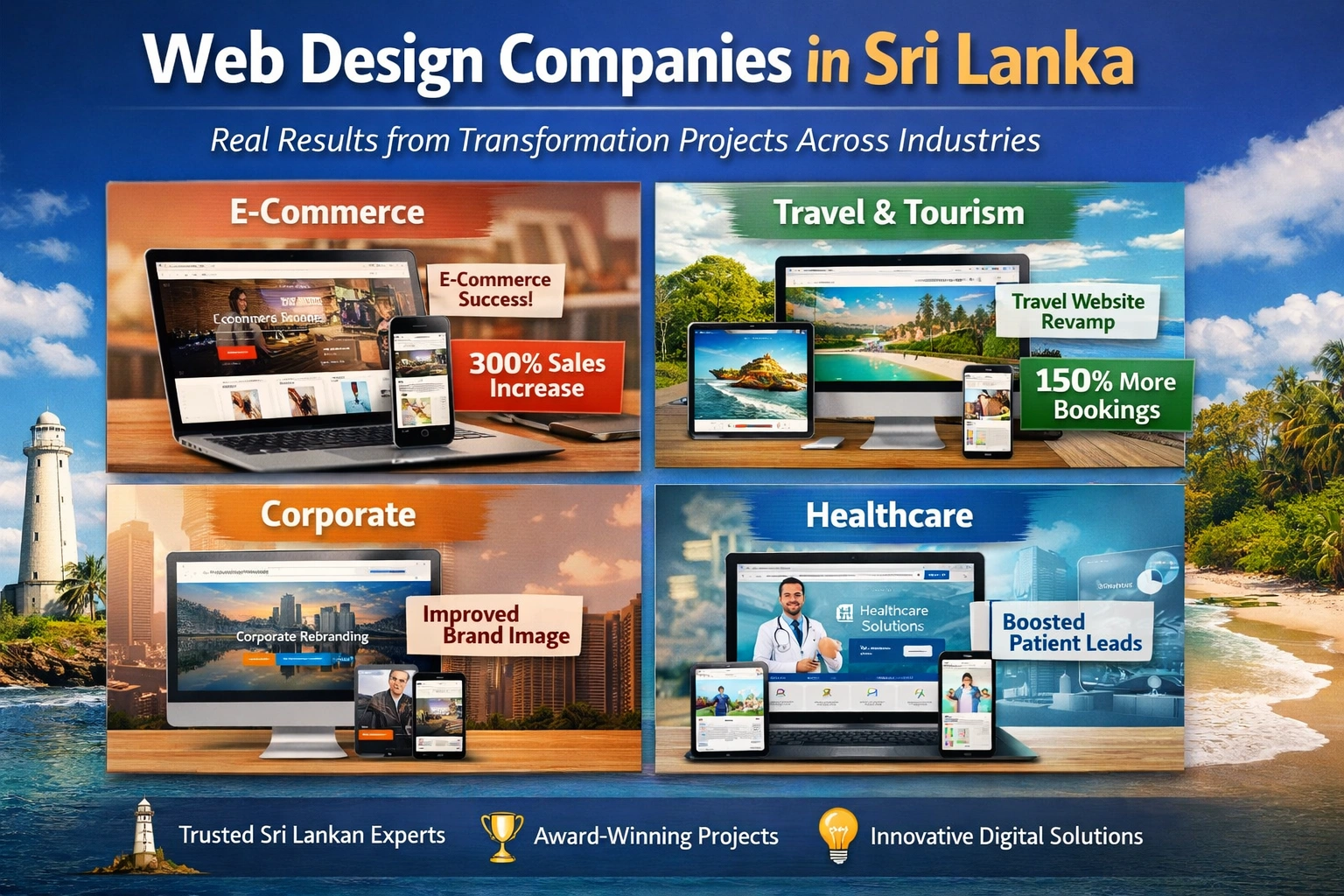
Web Design Companies in Sri Lanka: Real Results from Transformation Projects Across Industries
Portfolio galleries and capability claims only tell part of the story when evaluating web design companies. The real measure of a design partner's value lies in the business outcomes they help clients achieve. Transformation projects demonstrate how professional web design converts struggling onlin...