Web Designers in Sri Lanka: Getting High-Quality Design at Competitive Prices
There's a persistent myth in business: you can have it good, cheap, or fast—pick two. When it comes to web design in Sri Lanka, this isn't quite accurate. The local market has matured to a point where quality design at reasonable prices is genuinely achievable, provided you know how to find it...
There's a persistent myth in business: you can have it good, cheap, or fast—pick two. When it comes to web design in Sri Lanka, this isn't quite accurate. The local market has matured to a point where quality design at reasonable prices is genuinely achievable, provided you know how to find it and what to look for.
This isn't about cutting corners or compromising on quality. It's about understanding value, making smart decisions, and working with the right partners. Sri Lankan businesses can access professional web design that competes with international standards while paying rates that make business sense.
Understanding the Sri Lankan Web Design Market
Web design pricing in Sri Lanka exists on a spectrum. At one end, you'll find extremely cheap options that often deliver corresponding quality—template installations with minimal customisation, poor code quality, and limited ongoing support. At the other end, some agencies charge international rates that may be justified for certain projects but exceed what many local businesses require.
The sweet spot lies in the middle: experienced professionals and established companies who deliver quality work at prices reflecting local economic realities rather than artificially inflated international benchmarks.
Why Sri Lankan Rates Differ
Sri Lankan web designers can offer competitive prices for legitimate reasons. Lower cost of living means talented professionals can earn comfortable incomes at rates well below what their Western counterparts charge. This isn't about inferior quality—it's about economic reality.
Operating costs are similarly lower. Office space, utilities, and other business expenses cost less in Colombo than in London or New York. These savings can pass to clients without compromising the quality of work produced.
However, rock-bottom prices should raise red flags. When quotes seem impossibly low, there's usually a reason—cut corners, outsourced work to even cheaper markets, template-based "custom" designs, or unsustainable pricing that leads to abandoned projects when the designer realises they can't deliver profitably.
Defining Quality in Web Design
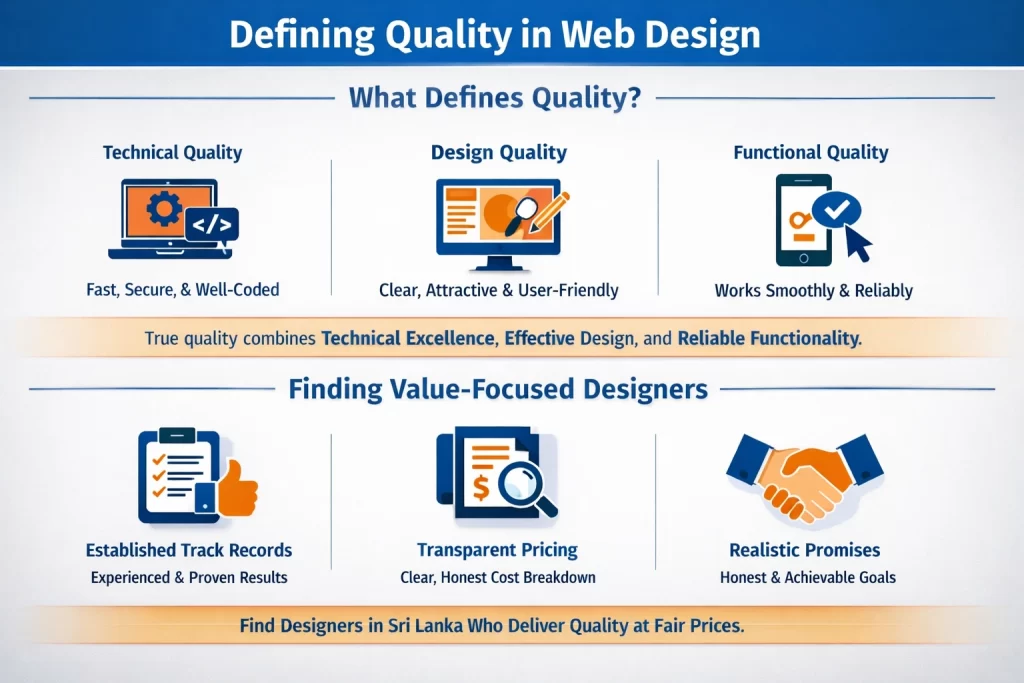
Before discussing prices, establish what quality actually means. This matters because "quality" is subjective without clear criteria, and ambiguity leads to disappointment.
Technical Quality
Quality websites are built on solid technical foundations. This means clean, well-organised code that follows current standards; fast loading times on both desktop and mobile; proper responsiveness across all device sizes; security best practices; and search engine-friendly structure.
These technical elements might be invisible to casual observers but significantly affect how your website performs over time. Poorly coded sites break more often, load slowly, rank poorly in search results, and become difficult to update.
Design Quality
Visual quality involves more than aesthetic appeal, though that matters too. Good design communicates your brand appropriately, guides users toward desired actions, organises information clearly, and creates positive impressions that build trust.
Design should serve your business goals. A visually stunning site that confuses visitors or fails to communicate your value proposition isn't actually good design—it's attractive failure.
Functional Quality
Everything should work as intended. Forms submit successfully. Links go where they should. Interactive elements respond appropriately. This seems obvious, but broken functionality is disappointingly common, especially at the cheaper end of the market.
Finding Value-Focused Designers
The goal is finding web designers in Sri Lanka who deliver quality work at fair prices. Here's how to identify them.
Established Track Records
Designers with years of experience and satisfied clients can deliver efficiency that keeps prices reasonable while maintaining quality. They've solved common problems before; they don't need to figure everything out from scratch on your project.
Established professionals also have reputations to protect. They're less likely to take on projects they can't deliver well or quote prices they can't sustain.
Transparent Pricing
Value-focused designers explain their pricing clearly. They can tell you what's included, what costs extra, and why prices fall where they do. Transparency suggests confidence in their rates and respect for your budget.
Be wary of vague pricing that becomes clear only after you're committed. "Starting from" prices without clear parameters often indicate quotes that will inflate significantly once work begins.
Realistic Promises
Designers offering quality at competitive prices are honest about what's achievable within budget constraints. They might suggest alternatives when your wish list exceeds your budget. They won't promise premium features at economy prices, knowing they can't actually deliver.
This honesty protects you from unpleasant surprises and helps build realistic expectations from the start.
Strategies for Getting Better Value
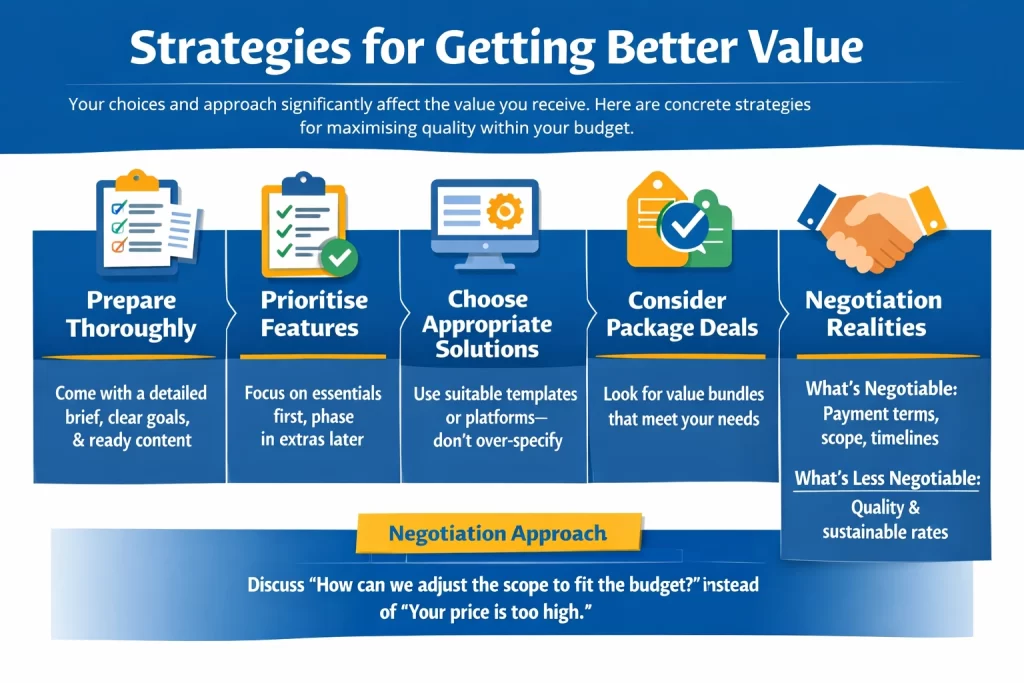
Your choices and approach significantly affect the value you receive. Here are concrete strategies for maximising quality within your budget.
Prepare Thoroughly
Come to designers with clear requirements, gathered content, and defined goals. Designer time spent extracting requirements, waiting for content, or helping you figure out what you want costs money. The more prepared you are, the more efficiently the project proceeds.
Create a detailed brief before requesting quotes. Document your goals, target audience, required features, examples of sites you like, and any existing assets (logos, content, images). This clarity helps designers quote accurately and work efficiently.
Prioritise Features
Distinguish between must-have features and nice-to-haves. When budgets are tight, focus on essentials first. A well-executed core site beats a mediocre site with every possible feature.
Consider phased development: launch with essential functionality, then add enhancements as budget allows. This approach gets you online sooner and spreads costs over time.
Choose Appropriate Solutions
Don't over-specify your needs. If a well-customised template suits your requirements, don't insist on fully custom design. If WordPress serves your needs, don't demand a custom-built CMS. Appropriate technology choices keep costs aligned with actual requirements.
A good web design company in Sri Lanka will advise on appropriate solutions rather than automatically upselling more expensive options. Listen to that advice.
Consider Package Deals
Many designers offer packages that bundle common requirements at lower total prices than individually quoted items. These packages often represent genuine value, as designers have optimised their processes for common combinations.
However, ensure packages match your actual needs. A cheap package that includes things you don't need while missing things you do isn't actually a bargain.
Negotiation Realities
There's room for negotiation in most web design projects, but understanding its limits matters.
What's Negotiable
Payment terms often have flexibility—deposits, milestone payments, extended payment schedules can sometimes be adjusted. Scope is negotiable—perhaps certain features can be simplified or deferred. Timeline pressure sometimes allows for discounts if you can work with a designer's quieter periods.
What's Less Negotiable
Quality shouldn't be negotiated. Asking designers to maintain their quality standards while significantly cutting prices puts them in an impossible position. Either they absorb losses (unsustainable) or they cut corners (bad for you).
Reasonable rates reflect real costs. Designers have expenses: software licenses, hosting for development, ongoing education, and their own living costs. Prices below sustainable levels indicate either inexperience, desperation, or plans to make up the difference somehow—none of which serve your interests.
Negotiation Approach
Frame negotiations around value, not just price reduction. "How can we adjust scope to better fit my budget?" works better than "Your price is too high." You're looking for creative solutions that serve both parties, not pressuring designers to work below their sustainable rates.
Hidden Costs to Anticipate
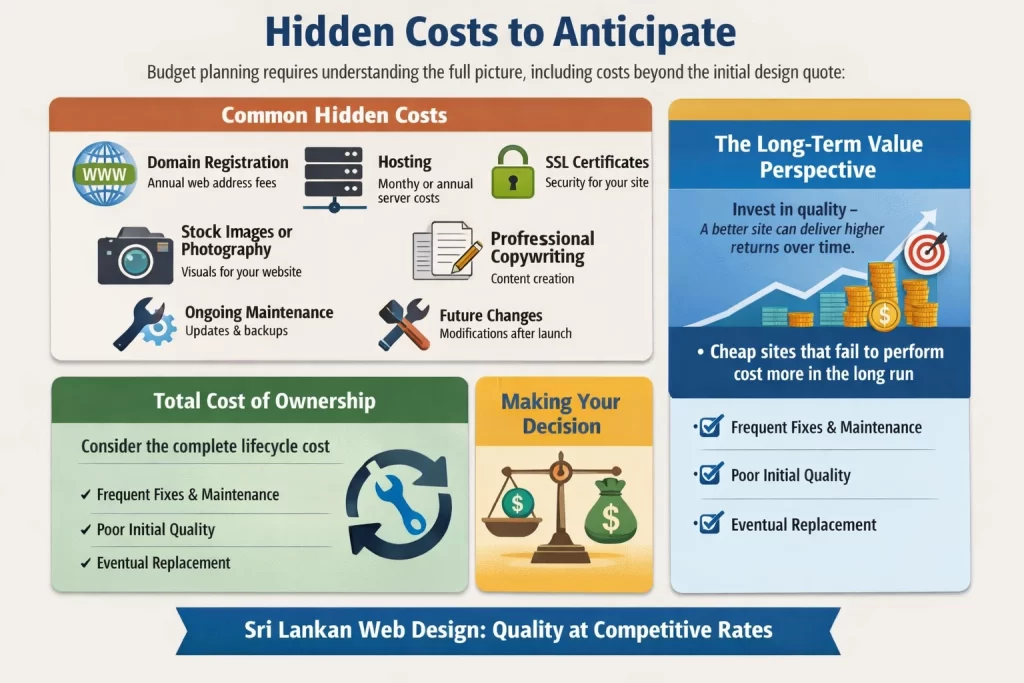
Budget planning requires understanding the full picture, including costs beyond the initial design quote:
- Domain registration: Annual cost of your web address
- Hosting: Monthly or annual server costs
- SSL certificates: Security certification (sometimes included with hosting)
- Stock images or custom photography: If your site needs visuals you don't have
- Professional copywriting: If you can't provide your own content
- Ongoing maintenance: Regular updates, security patches, backups
- Future changes: Modifications and additions after launch
Discuss all these elements upfront. Some designers include many of these in their quotes; others quote only design and development. Ensure you're comparing apples to apples when evaluating different proposals.
The Long-Term Value Perspective
Web design pricing should be evaluated as investment, not just cost. What returns will your website generate? How will it affect your business over the years it's in use?
A slightly more expensive site that converts visitors better, ranks higher in search results, or presents your brand more professionally can easily pay back its additional cost many times over. Conversely, a cheap site that embarrasses your business or fails to generate leads costs more than its low price tag suggests.
Total Cost of Ownership
Consider the complete lifecycle cost. A site requiring frequent fixes, constant maintenance, or eventual replacement due to poor initial quality isn't actually cheap. Quality work that lasts, functions reliably, and evolves smoothly represents better value even at higher initial cost.
This is why choosing experienced web development professionals often makes financial sense despite higher day rates. They work more efficiently, create more maintainable solutions, and produce fewer problems requiring future fixes.
Making Your Decision
Balancing quality and cost requires honest assessment of your actual needs, realistic understanding of market rates, and clear-eyed evaluation of different options.
Don't automatically choose the cheapest option—but don't assume most expensive equals best either. Look for value: quality that matches your genuine needs at prices that reflect fair exchange.
The Sri Lankan web design market offers genuine opportunity for businesses to access professional quality at competitive rates. Take advantage of this market reality while remaining savvy about what quality actually looks like and what sustainable pricing actually means. Your website is too important to your business to compromise on quality, but that doesn't mean you need to overpay either.
Related Articles
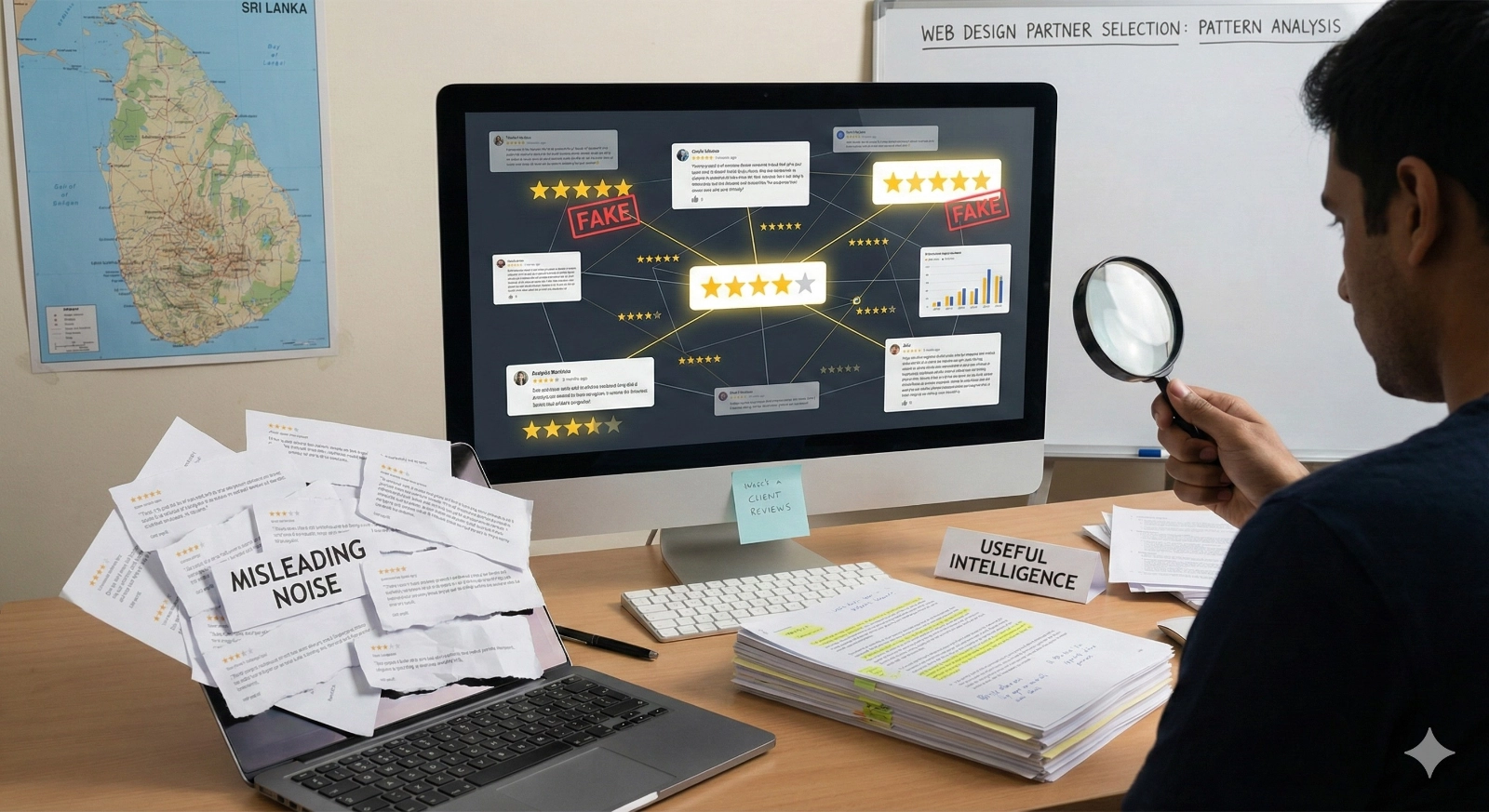
The Best Web Design Companies in Sri Lanka in 2026: Reviews, Ratings, and Real Client Feedback Analysis
Client reviews and ratings offer invaluable perspective when selecting a web design partner, revealing experiences that portfolios and capabilities presentations cannot convey. However, the review landscape has grown increasingly complex, with fake reviews, selective testimonials, and rating manipu...
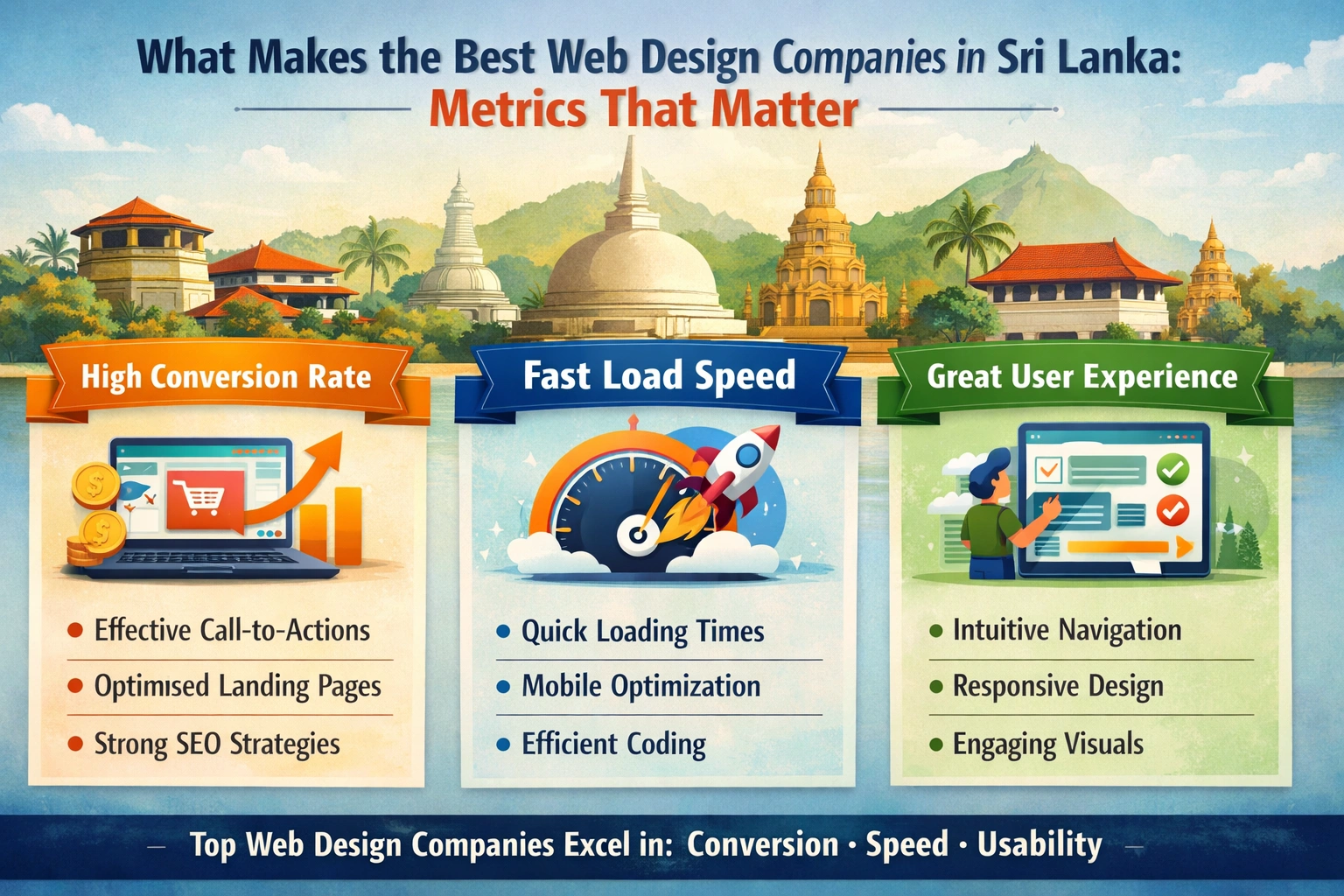
What Makes the Best Web Design Companies in Sri Lanka: Metrics That Matter (Conversion Rate, Load Speed, User Experience)
Subjective assessments of web design quality often lead businesses astray. A website might look stunning to your eyes yet fail to convert visitors into customers. Another site might seem plain but consistently outperform competitors in generating leads and sales. The best web design companies under...
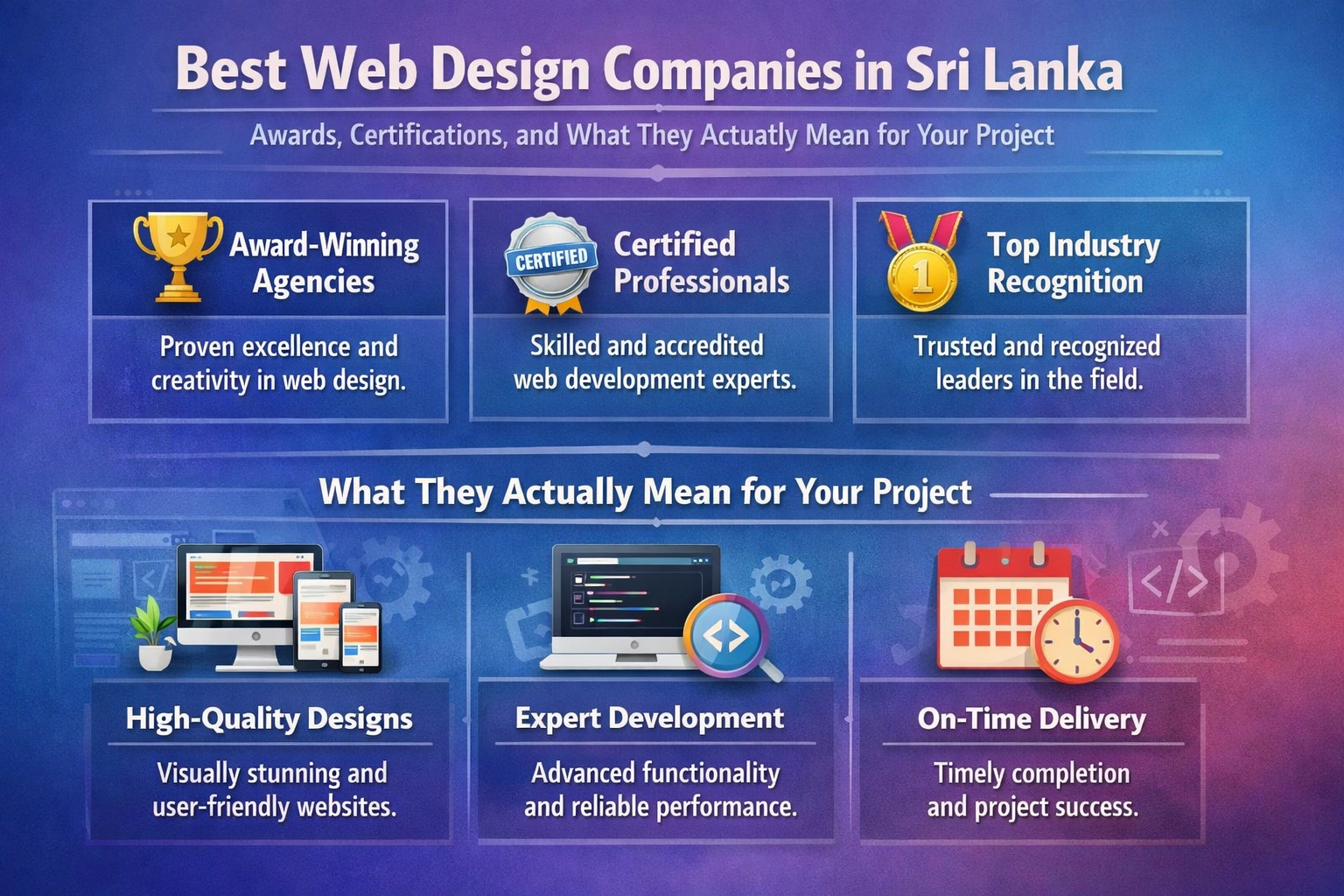
Best Web Design Companies in Sri Lanka: Awards, Certifications, and What They Actually Mean for Your Project
Web design companies frequently display awards, certifications, and recognition badges throughout their websites and proposals. These credentials promise quality assurance and industry standing, but their actual significance varies enormously. Some certifications indicate genuine expertise validate...

Web Design Companies in Sri Lanka: Real Results from Transformation Projects Across Industries
Portfolio galleries and capability claims only tell part of the story when evaluating web design companies. The real measure of a design partner's value lies in the business outcomes they help clients achieve. Transformation projects demonstrate how professional web design converts struggling onlin...