Web Designers in Sri Lanka: Specialists You Need for Your Industry (Tourism, Retail, Healthcare)
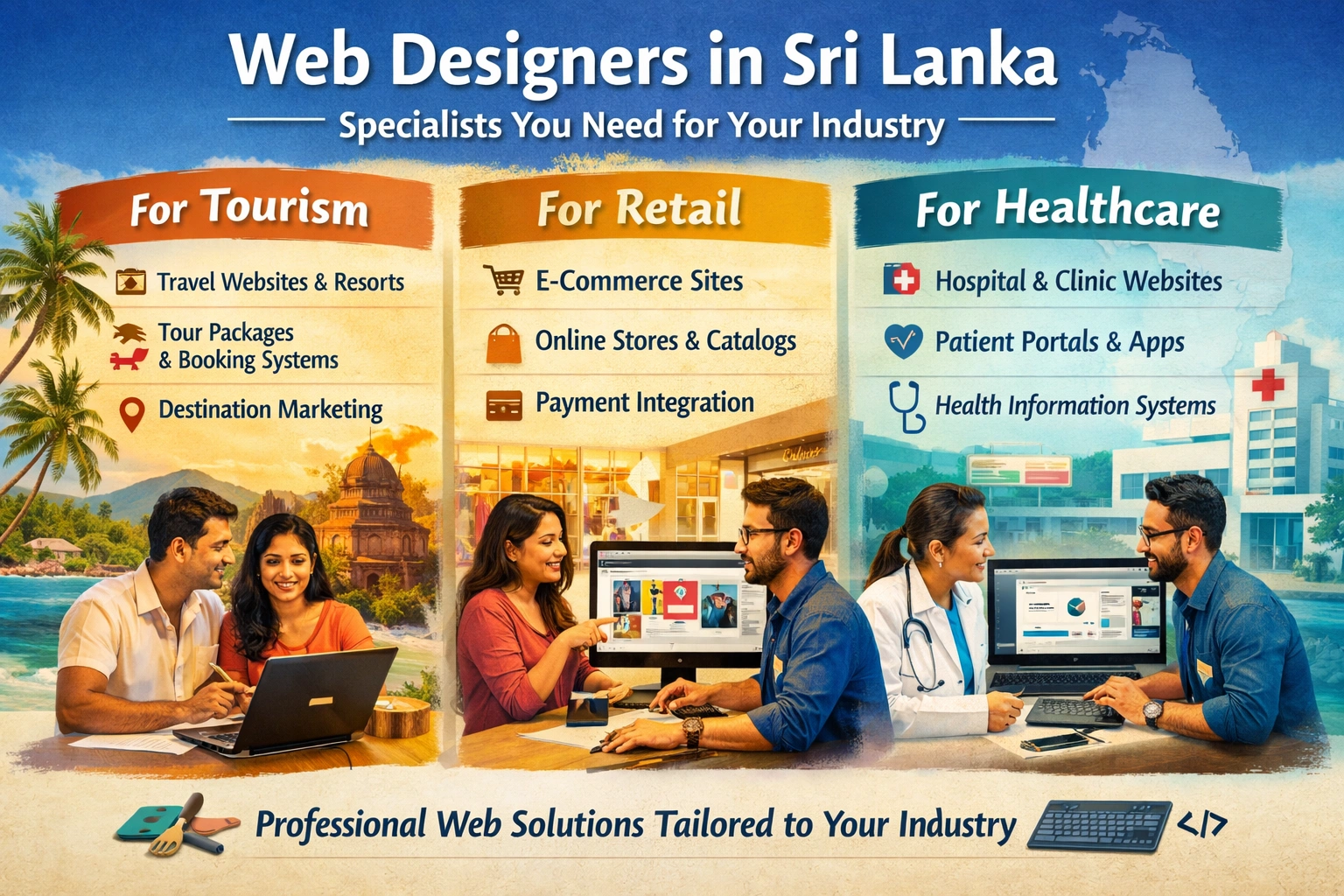
Here's something that might seem counterintuitive: a brilliant web designer with an impressive portfolio might still be the wrong choice for your project. The issue isn't talent—it's fit. Each industry has specific requirements, conventions, and user expectations that generalists often miss. Workin...
Here's something that might seem counterintuitive: a brilliant web designer with an impressive portfolio might still be the wrong choice for your project. The issue isn't talent—it's fit. Each industry has specific requirements, conventions, and user expectations that generalists often miss. Working with a web designer in Sri Lanka who understands your particular sector can mean the difference between a website that merely exists and one that actively drives business results.
Let's examine what industry specialisation actually means in practice, focusing on three major sectors where Sri Lankan businesses frequently need specialised web solutions.
Tourism and Hospitality: Selling Dreams Effectively
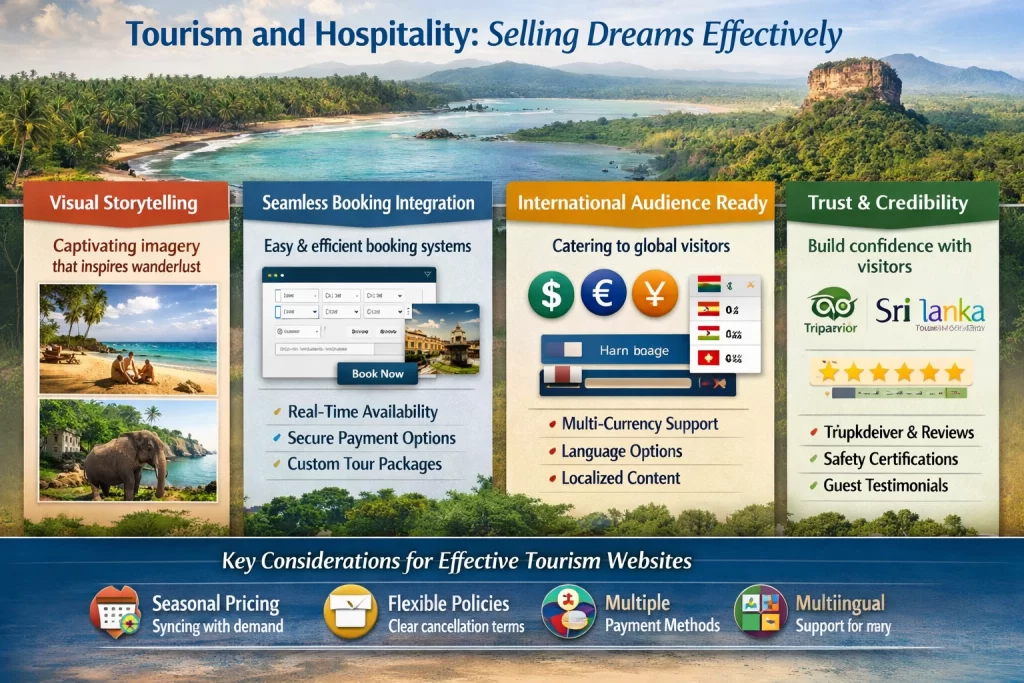
Sri Lanka's tourism industry ranges from luxury resorts to adventure tour operators, from boutique guesthouses to wildlife safari companies. Despite this diversity, tourism websites share common challenges that require specific design understanding.
Visual Storytelling Requirements
Tourism is inherently visual. Potential visitors need to see what they're buying—the beach they'll relax on, the mountains they'll hike, the rooms they'll sleep in. Generic stock photography won't cut it; authentic, compelling imagery is essential.
A tourism-specialised designer understands how to present this imagery effectively. They know that hero images need to be large and immersive but also fast-loading. They understand the psychology of travel imagery—what makes someone stop scrolling and start dreaming. They can create layouts that let visuals breathe while still communicating necessary information.
Booking Integration Complexity
Most tourism businesses need some form of booking functionality. This might mean integration with hotel channel managers, custom tour booking systems, or third-party reservation platforms. A designer experienced in tourism knows these systems—their capabilities, their limitations, how they integrate with websites, and how to present booking interfaces that don't frustrate potential customers.
Consider the complexity: seasonal pricing, room or tour availability that changes constantly, deposits and cancellation policies, special requests and add-ons, group bookings with different requirements than individual travellers. Tourism specialists have navigated these challenges before; generalists often underestimate them.
International Audience Considerations
Tourism websites often serve international audiences, which introduces considerations that local-only businesses don't face. Multiple currencies, various payment methods, time zone awareness for availability displays, and content that resonates across cultural differences all require attention.
Language is another factor. While English serves as the default for international tourism, sites targeting specific markets might benefit from German, Chinese, or other translations. A tourism-focused designer understands multilingual implementation properly—not just translated text, but culturally appropriate content and layouts that accommodate different text lengths.
Trust Signals That Matter
International visitors booking with unfamiliar Sri Lankan operators need reassurance. TripAdvisor integration, professional association memberships, certifications, and customer testimonials all help build trust. Designers who understand tourism know which trust signals matter most and how to display them effectively without cluttering pages.
Retail and E-commerce: Converting Browsers to Buyers
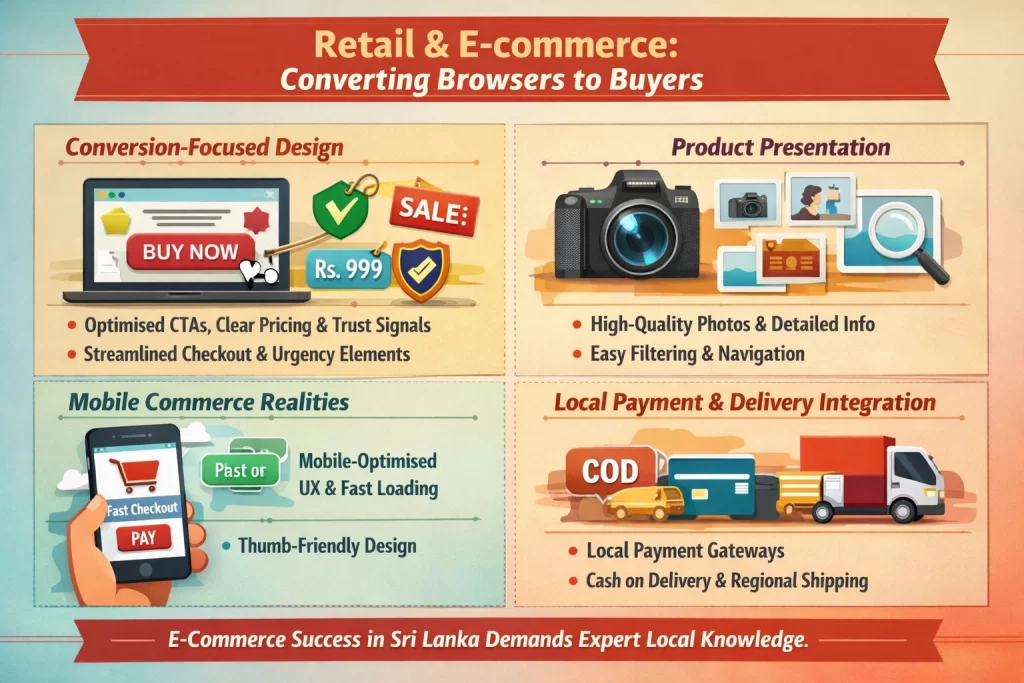
Retail websites have one primary job: sell products. Every design decision should support that goal, and designers experienced in e-commerce understand this deeply.
Conversion-Focused Design
E-commerce specialists think constantly about conversion. Where do users drop off? What friction points exist in the buying process? How can design encourage purchase completion?
This shows in details: prominent call-to-action buttons, clear pricing displays, trust badges near purchase decisions, streamlined checkout flows, and strategic placement of urgency elements. These aren't arbitrary choices—they're based on understanding what actually makes people buy.
Product Presentation
How products appear online dramatically affects whether they sell. Good e-commerce designers understand product photography requirements, zoom functionality, multiple angles, and how to display product information clearly without overwhelming.
They also understand the importance of product categorisation and filtering. In a store with hundreds or thousands of items, customers must find what they want easily. Navigation structure, filter options, and search functionality all require thoughtful implementation.
Mobile Commerce Realities
For Sri Lankan e-commerce, mobile is often the primary shopping device. E-commerce specialists prioritise mobile experiences—thumb-friendly button placement, simplified mobile checkout, click-to-call support options, and fast loading on mobile data connections.
Local Payment and Delivery Integration
Sri Lankan e-commerce faces specific challenges around payment processing and delivery that designers serving this market must understand. Integration with local payment gateways, handling cash on delivery orders, calculating shipping costs across different regions, and managing delivery partner integrations all require specific experience.
A designer who has built successful Sri Lankan e-commerce sites knows these integrations. They can advise on platform choices that support local requirements and implement solutions that work smoothly for both merchants and customers.
Healthcare: Trust, Clarity, and Compliance
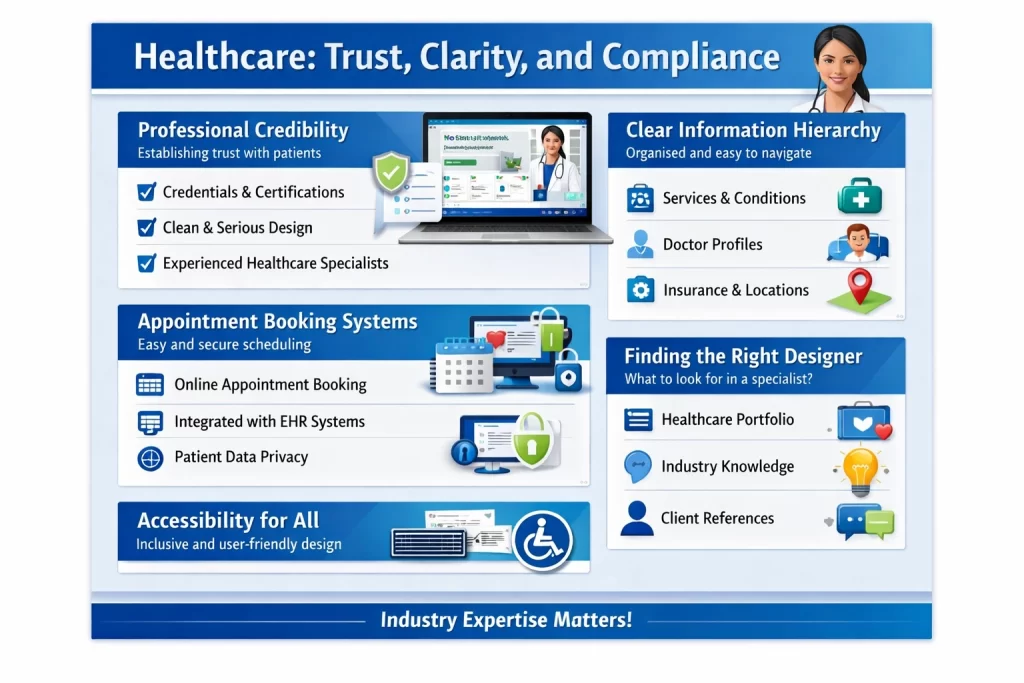
Healthcare websites—whether for hospitals, clinics, doctors, or health services—operate in a unique space where trust is paramount and clear communication can literally affect health outcomes.
Professional Credibility
Healthcare websites must communicate professionalism and trustworthiness immediately. Design choices that might seem fresh or trendy in other industries can feel inappropriate for healthcare. Patients and their families want to feel they're dealing with competent professionals, not cutting-edge designers.
Healthcare-experienced designers understand this balance—creating sites that feel current and well-designed while maintaining the professional seriousness the sector requires. They know how to present credentials, certifications, and affiliations that matter to healthcare consumers.
Information Hierarchy
Healthcare sites often need to convey complex information: services offered, conditions treated, team credentials, facility locations, insurance acceptance, and more. Organising this information clearly helps visitors find what they need without overwhelming them.
Specialists understand healthcare user journeys. Someone researching symptoms has different needs than someone looking for a second opinion or seeking routine care. The site structure should accommodate multiple pathways effectively.
Appointment Booking Systems
Online appointment scheduling has become expected in healthcare. But healthcare booking has unique requirements: different appointment types with different durations, practitioner-specific scheduling, integration with practice management systems, and patient information collection that respects privacy.
A web design company in Sri Lanka with healthcare experience knows these systems and can implement booking that works for both patients and administrative staff.
Accessibility Requirements
Healthcare websites serve users who may have various disabilities—vision impairment, motor difficulties, cognitive challenges. Accessibility isn't just good practice here; it's ethically essential. Healthcare specialists build accessibility into their designs from the start, ensuring all patients can access the information and services they need.
How to Find Industry-Specialised Designers
Knowing specialisation matters is one thing; finding the right specialist is another. Here's how to identify designers with genuine industry expertise.
Portfolio Depth
Look for portfolios showing multiple projects in your industry. One healthcare site doesn't make someone a healthcare specialist. Multiple successful projects over time demonstrate sustained expertise and understanding.
Examine those portfolio examples critically. Do they look like they understand the industry's specific needs? Do they solve the problems your industry faces? Or do they feel like generic templates with industry-specific content pasted in?
Industry-Specific Questions
When interviewing designers, ask about challenges specific to your industry:
- For tourism: "How do you typically handle booking system integration?" "What's your approach to image optimization for visual-heavy sites?"
- For retail: "Walk me through your checkout optimization process." "How do you handle product filtering for large catalogues?"
- For healthcare: "What patient scheduling systems have you integrated?" "How do you approach accessibility for healthcare sites?"
Specialists answer these questions confidently with specific examples. Generalists give vague responses or immediately pivot to generic design talk.
Client References
Ask for references specifically from your industry. Speaking with businesses similar to yours provides the most relevant insights into what working with this designer actually looks like.
Industry Knowledge Beyond Design
True specialists understand their industries beyond just website design. They know market trends, competitor landscapes, customer behaviours, and business models. This broader understanding informs better design decisions.
When Generalists Make Sense
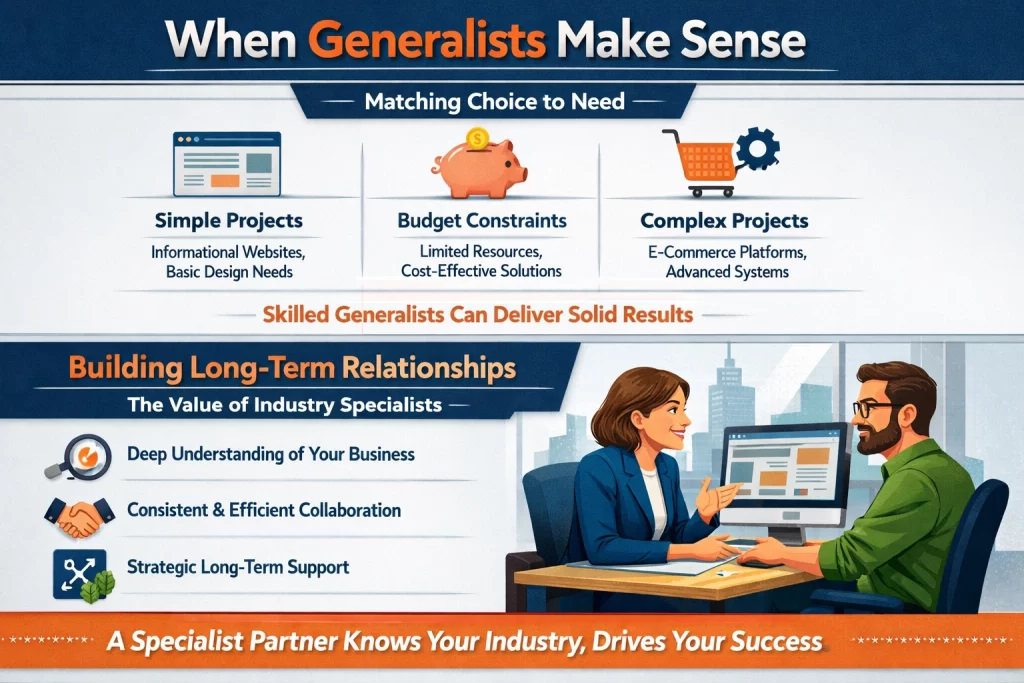
Despite the advantages of specialisation, generalists aren't always wrong choices. For businesses in less specialised sectors, for straightforward projects without complex industry requirements, or for budgets that can't support premium specialist rates, skilled generalists can deliver excellent results.
The key is matching choice to need. A simple informational website for a professional services firm doesn't require deep industry specialisation—good design fundamentals serve fine. A complex e-commerce platform or comprehensive tourism booking system benefits significantly from relevant experience.
Building Long-Term Relationships
Industry-specialised designers offer value beyond single projects. As they work with your business over time, they develop deeper understanding of your specific needs, competitors, and market position. This accumulated knowledge makes each subsequent project more efficient and effective.
When you find a web development partner who truly understands your industry, maintain that relationship. The search cost of finding specialists, combined with the ramp-up time for new partners to understand your sector, makes long-term partnerships valuable.
Your website represents your business in an increasingly digital marketplace. Entrusting it to someone who genuinely understands your industry, your customers, and your competitive environment isn't just about getting a better-looking site—it's about building an online presence that actually drives the business results you need.
Related Articles
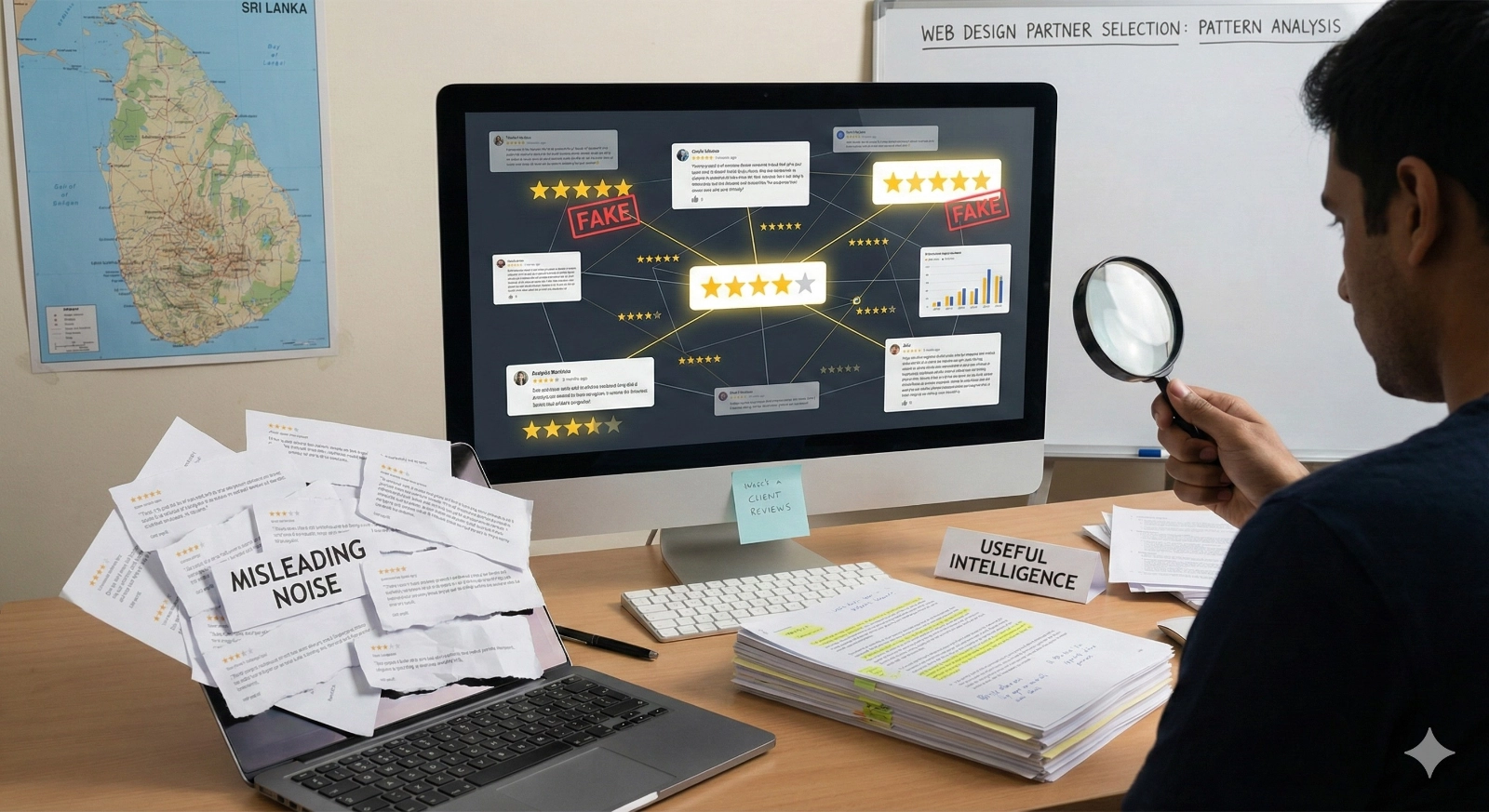
The Best Web Design Companies in Sri Lanka in 2026: Reviews, Ratings, and Real Client Feedback Analysis
Client reviews and ratings offer invaluable perspective when selecting a web design partner, revealing experiences that portfolios and capabilities presentations cannot convey. However, the review landscape has grown increasingly complex, with fake reviews, selective testimonials, and rating manipu...
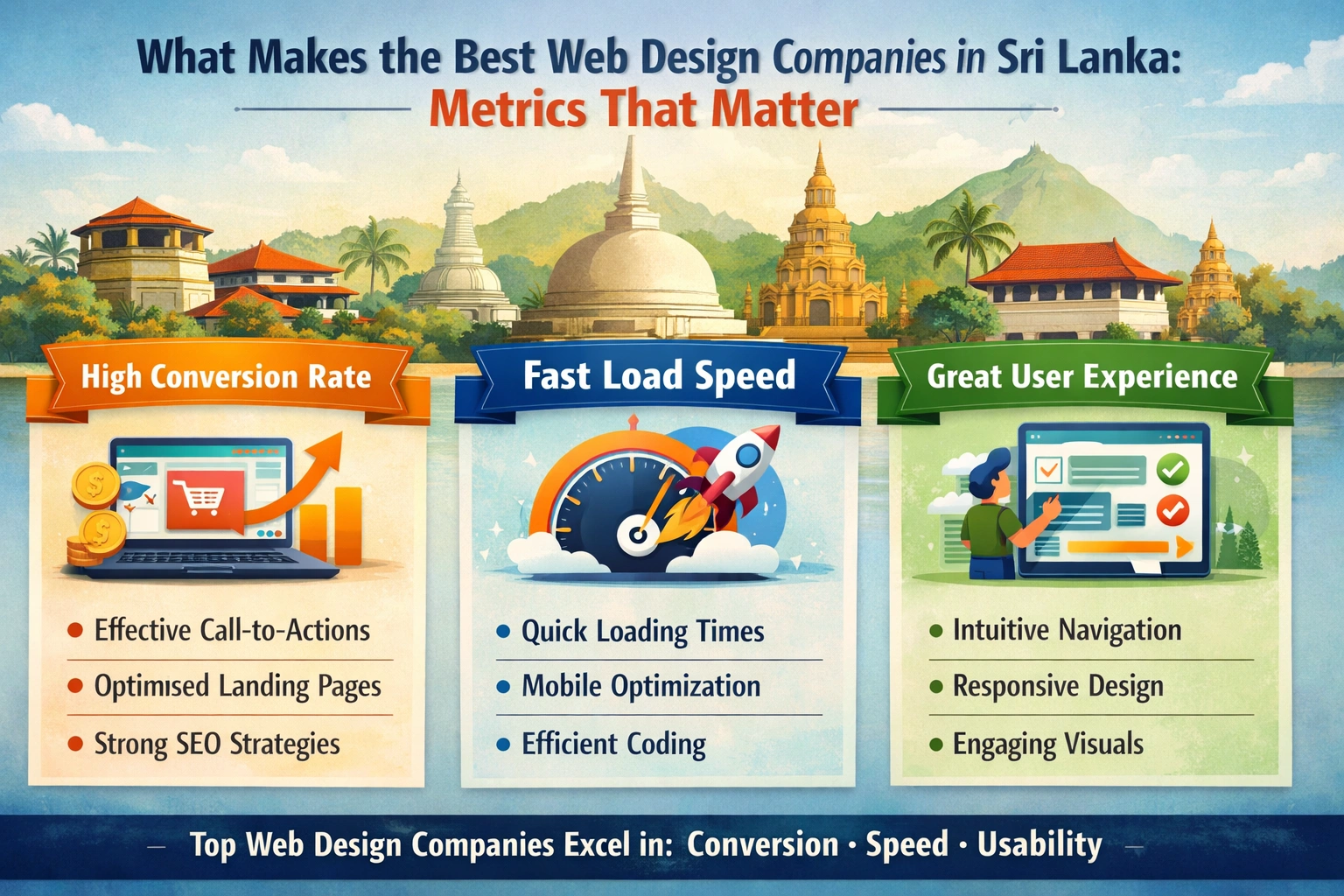
What Makes the Best Web Design Companies in Sri Lanka: Metrics That Matter (Conversion Rate, Load Speed, User Experience)
Subjective assessments of web design quality often lead businesses astray. A website might look stunning to your eyes yet fail to convert visitors into customers. Another site might seem plain but consistently outperform competitors in generating leads and sales. The best web design companies under...
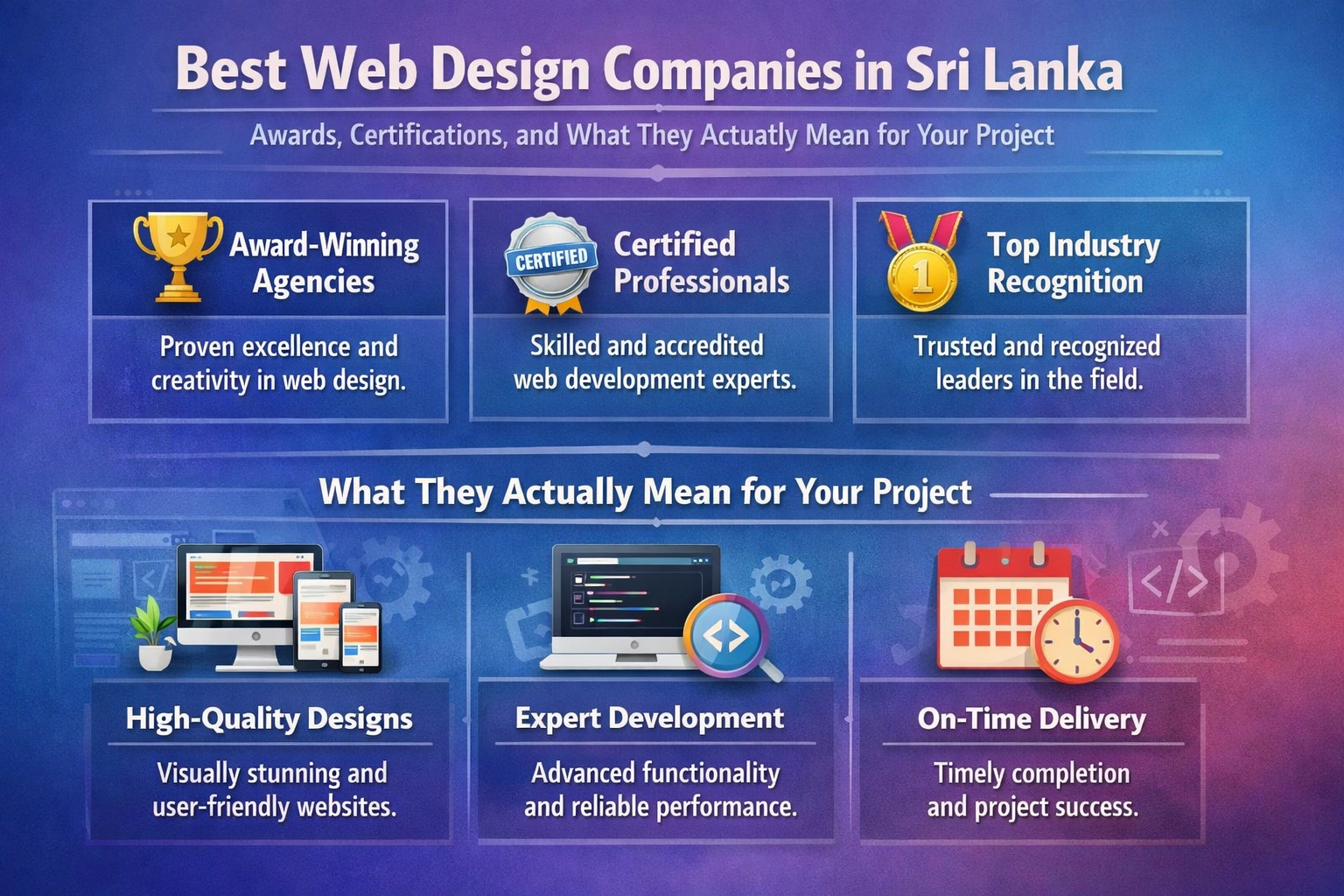
Best Web Design Companies in Sri Lanka: Awards, Certifications, and What They Actually Mean for Your Project
Web design companies frequently display awards, certifications, and recognition badges throughout their websites and proposals. These credentials promise quality assurance and industry standing, but their actual significance varies enormously. Some certifications indicate genuine expertise validate...
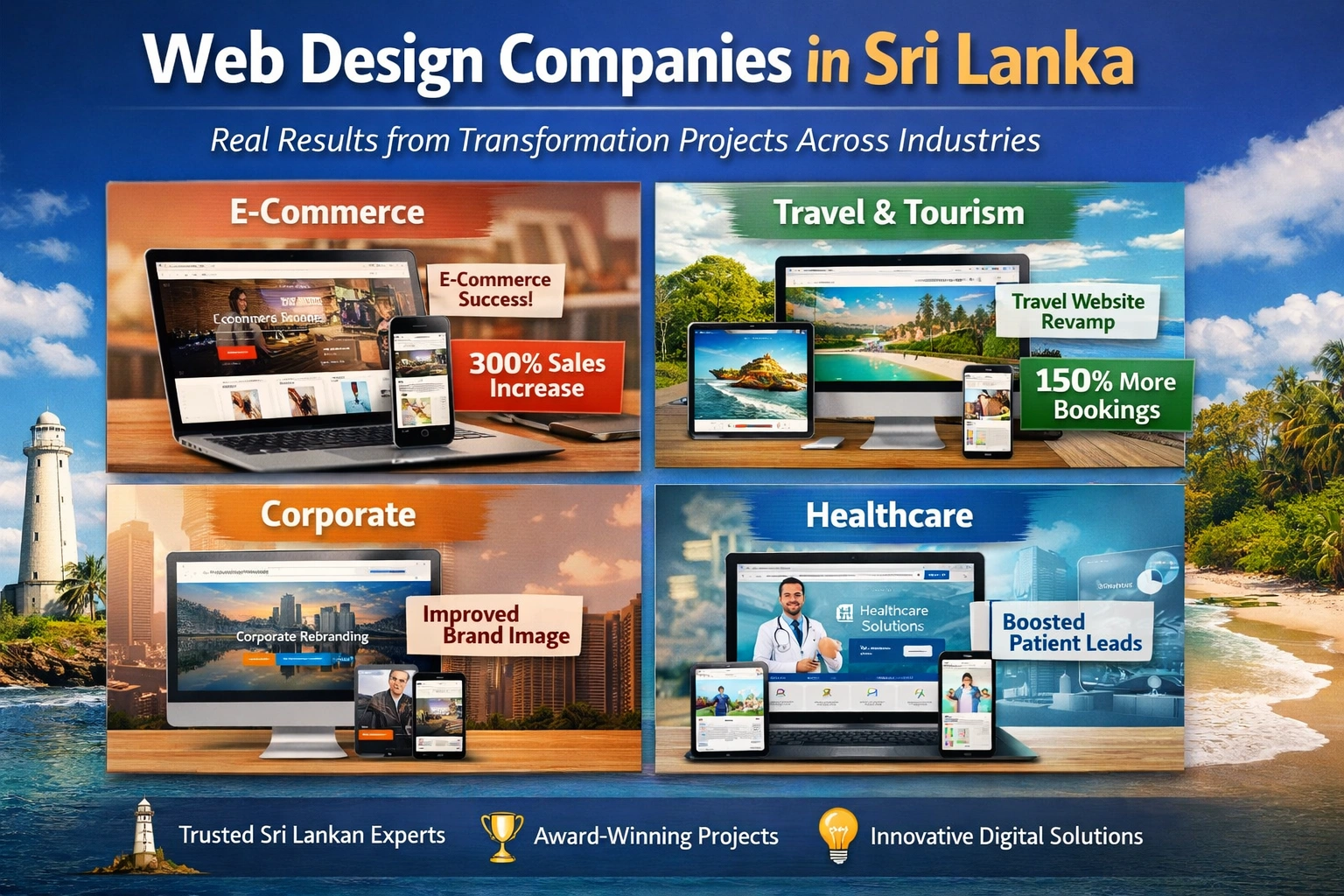
Web Design Companies in Sri Lanka: Real Results from Transformation Projects Across Industries
Portfolio galleries and capability claims only tell part of the story when evaluating web design companies. The real measure of a design partner's value lies in the business outcomes they help clients achieve. Transformation projects demonstrate how professional web design converts struggling onlin...