Web Development in Sri Lanka: Custom Solutions vs. Template-Based Websites—Which Is Right for Your Business?
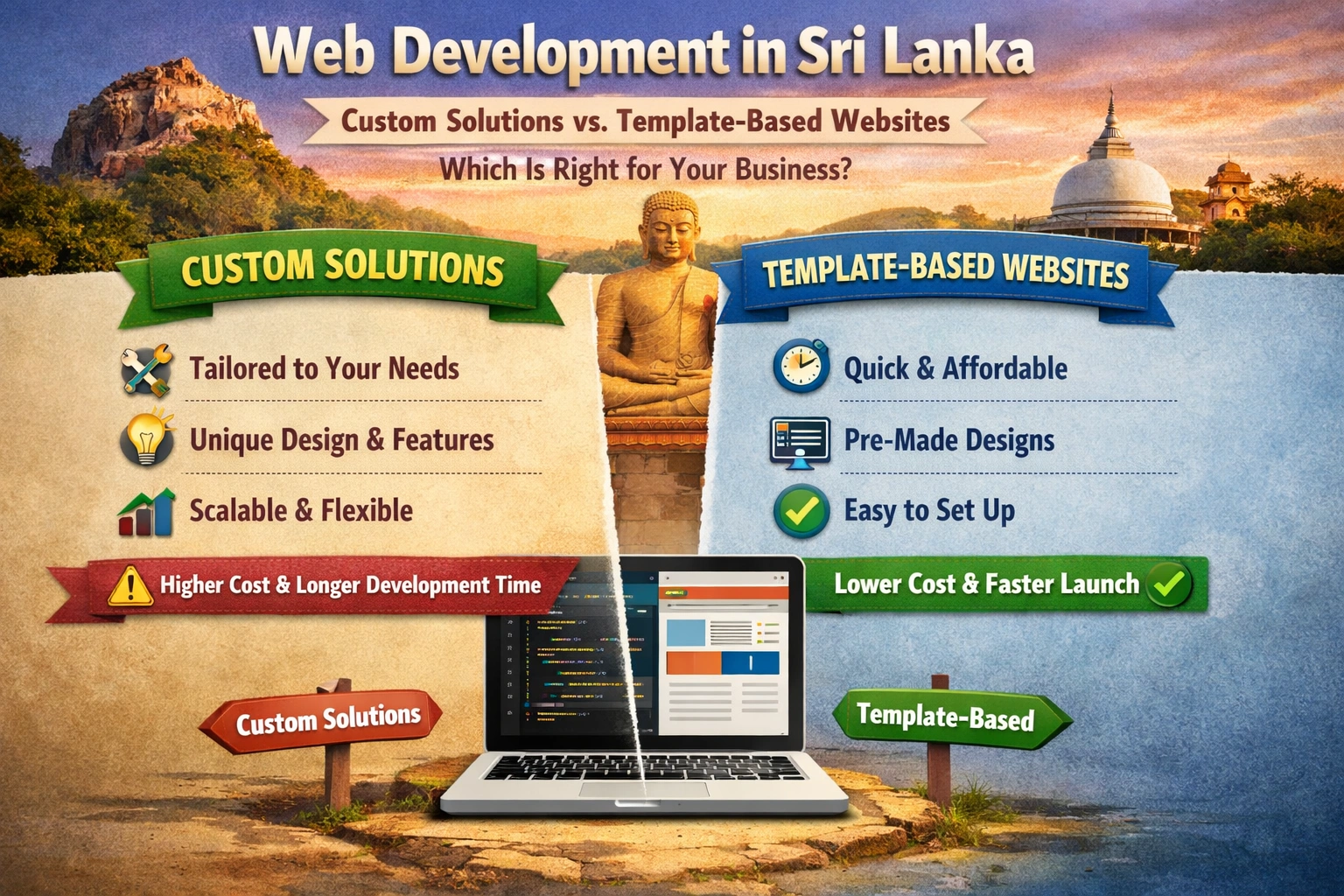
One of the first major decisions you'll face when building a website is whether to go with a custom-built solution or use a pre-made template. It's a choice that affects everything from your budget to your site's functionality to how easily you can grow in the future. And there's no universally cor...
One of the first major decisions you'll face when building a website is whether to go with a custom-built solution or use a pre-made template. It's a choice that affects everything from your budget to your site's functionality to how easily you can grow in the future. And there's no universally correct answer—the right choice depends entirely on your specific situation.
Having worked with businesses across Sri Lanka at various stages and scales, I've seen both approaches succeed brilliantly and fail spectacularly. The difference usually comes down to whether the choice matched the business's actual needs, rather than the inherent superiority of one approach over the other.
Let's examine both options thoroughly so you can make an informed decision for your web development project.
Understanding Template-Based Websites
Template-based websites start with pre-designed layouts and structures. Platforms like WordPress, Joomla, and various website builders offer thousands of templates covering virtually every industry and design style. Your developer then customises this template—adjusting colours, adding your content, perhaps modifying layouts—to create your final site.
This approach has become enormously popular for good reasons. When a quality template already exists that fits your needs, using it makes practical sense. Why reinvent a wheel that's already been designed, tested, and proven to work?
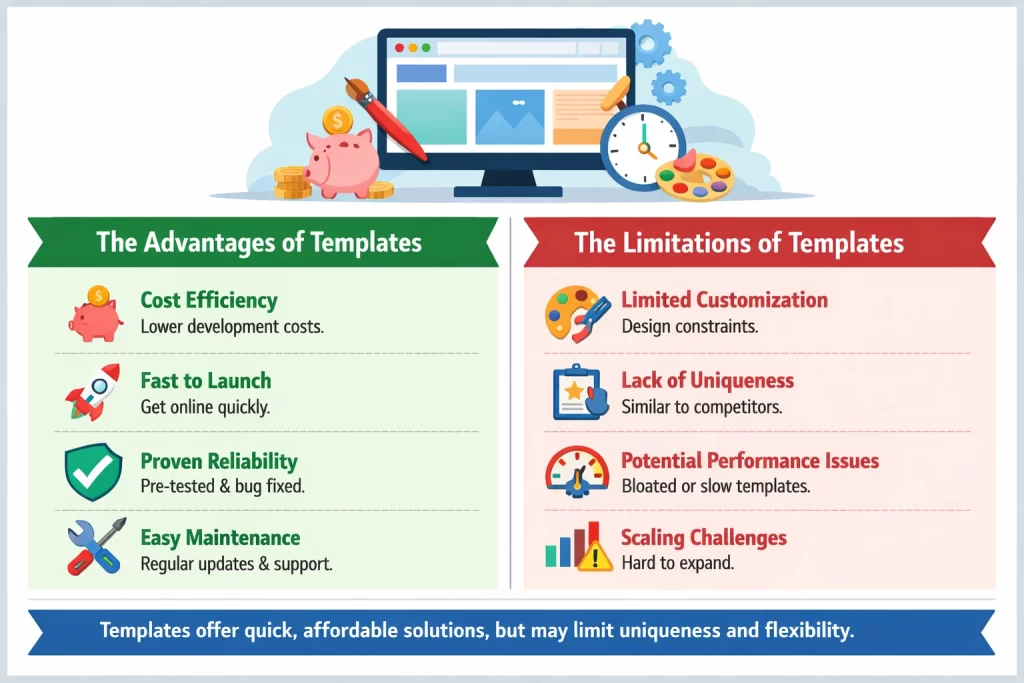
The Advantages of Templates
Cost efficiency stands as the most obvious benefit. Since much of the heavy lifting has already been done, your developer spends less time building from scratch. This translates directly into lower fees for you. For small businesses watching their budgets carefully, this difference can be significant.
Speed to launch is another major advantage. A template-based site can often go live in weeks rather than months. If you need an online presence quickly—perhaps you're launching a new business or responding to a market opportunity—this compressed timeline matters.
Templates also benefit from community testing. Popular templates have been used by thousands of sites, meaning bugs have been identified and fixed, compatibility issues have been resolved, and best practices have been refined. You're building on established foundations rather than untested ground.
Future maintenance tends to be more straightforward with templates, particularly those from major platforms. Updates roll out regularly, security patches arrive promptly, and you can usually find developers familiar with your specific template if you ever need to change providers.
The Limitations of Templates
Of course, templates come with constraints. The most fundamental is that you're working within someone else's design decisions. While customisation is possible, there are boundaries. You might find yourself wanting a specific feature or layout that the template simply doesn't support well.
Differentiation becomes challenging. Since templates are available to anyone, you might find competitors using similar or identical designs. For businesses where unique brand presentation matters significantly, this similarity can be problematic.
Performance can suffer with templates, particularly those bloated with features you don't need. A template designed to serve every possible use case often carries code for functionality you'll never use, potentially slowing your site unnecessarily.
Scalability may hit walls. A template perfectly suited for a five-page brochure site might struggle to accommodate your needs as you grow into e-commerce, multiple languages, or complex integrations.
Understanding Custom Web Development
Custom development means building your website from the ground up, with every element created specifically for your requirements. Your web development company in Sri Lanka designs and codes your site according to your exact specifications, without the constraints of an existing template.
This approach gives you maximum control and flexibility, though it requires greater investment in time and budget.
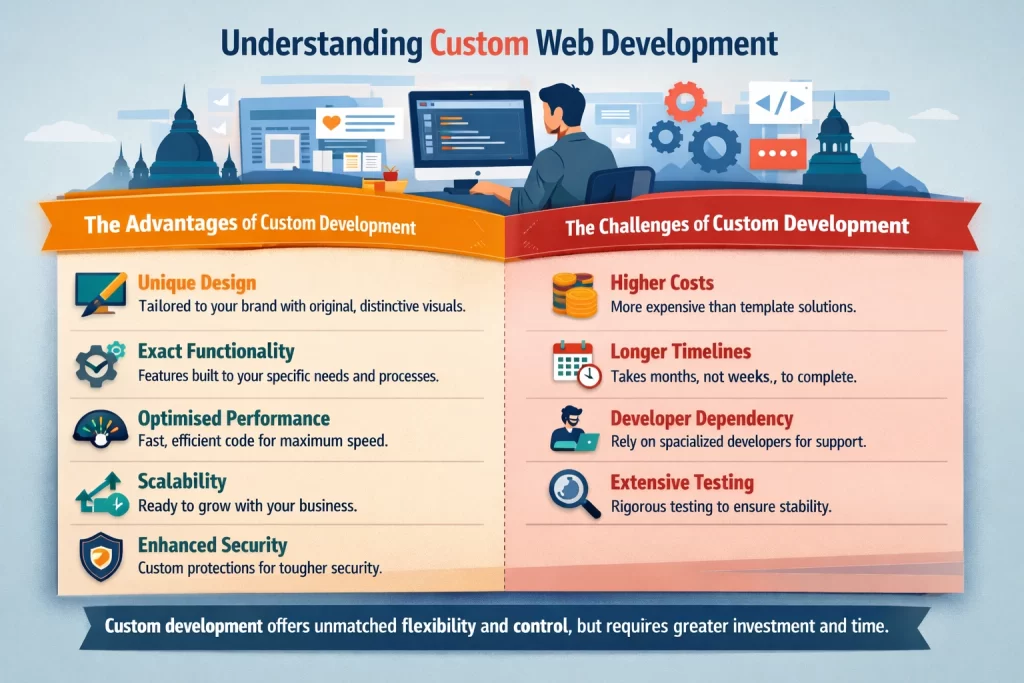
The Advantages of Custom Development
Unique design becomes possible—genuinely unique, not just a template with your colours. Your site can express your brand identity precisely, with custom graphics, animations, interactions, and layouts that no competitor will share.
Functionality matches your exact needs. If your business processes require specific features, custom development can accommodate them perfectly rather than forcing workarounds. Integrations with your existing systems, unusual user flows, or industry-specific requirements all become achievable.
Performance optimisation reaches its highest potential with custom development. Since every line of code serves a purpose for your specific site, there's no bloat. Pages can be crafted for maximum speed and efficiency.
Scalability is built into the architecture from the start. Your developers can plan for your growth trajectory, building foundations that support expansion rather than requiring reconstruction when you outgrow initial constraints.
Security can be implemented with greater precision. While popular templates are targeted by hackers who develop attacks that work across many sites, a custom-built site presents a unique attack surface that's harder to compromise through automated attacks.
The Challenges of Custom Development
Higher costs are unavoidable. Building from scratch simply takes more time and expertise than adapting existing work. Budget differences between template and custom projects can be substantial—sometimes several times more for the custom option.
Longer timelines accompany the greater scope of work. A custom project might take months where a template site could launch in weeks. For businesses needing speed to market, this delay can be problematic.
You're more dependent on your development team. With a custom codebase, not just any developer can jump in and make changes. Finding support or switching providers requires someone who can understand your specific architecture.
Testing burden increases. Template solutions have been stress-tested across thousands of implementations. Your custom site needs thorough testing for scenarios the development team might not anticipate.
How to Decide: Factors That Matter
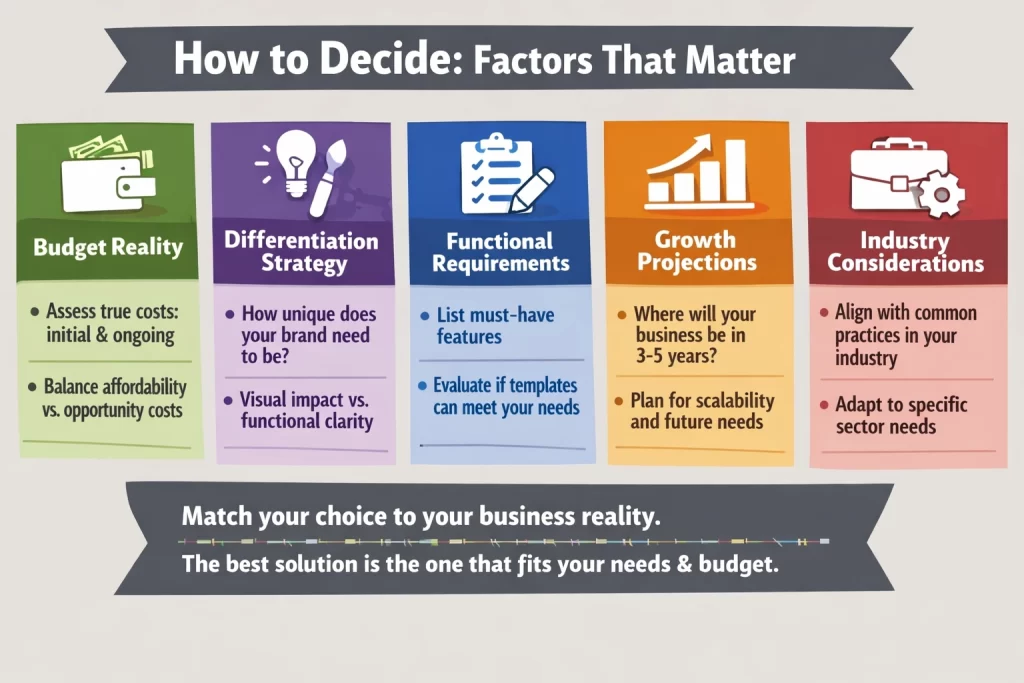
Neither approach is inherently better. The right choice depends on your particular circumstances. Consider these factors carefully:
Budget Reality
Be honest about what you can afford, not just for the initial build but for ongoing development. If custom development strains your finances, you're better off with a well-implemented template site that you can actually maintain and improve over time.
However, also consider opportunity costs. If a template's limitations prevent you from implementing features that would generate revenue, the apparent savings might actually cost you more in the long run.
Your Differentiation Strategy
How important is visual uniqueness to your brand positioning? For some businesses—creative agencies, luxury brands, innovative startups trying to signal their difference—a distinctive website is genuinely important. For others—professional services, local retail, B2B suppliers—function and clarity matter more than visual novelty.
Consider also whether your differentiation comes primarily from your website or from other factors like service quality, pricing, relationships, or physical presence.
Functional Requirements
List the specific features and capabilities your site needs. Then honestly assess whether templates can provide those features effectively. Many template-based platforms offer extensive functionality through plugins and extensions. Custom development becomes more justified when you need something genuinely unusual or when integration requirements are complex.
This assessment often reveals that businesses assuming they need custom development could actually achieve their goals with templates, while others thinking templates would suffice actually have requirements that demand custom work.
Growth Projections
Where will your business be in three years? In five? If significant growth or expansion is planned, consider how your website choice supports or constrains that trajectory.
Sometimes starting with a template and planning to migrate to custom development later makes sense—get something functional quickly, prove your business model, then invest in a more sophisticated solution when you've validated your direction and have resources to invest.
The Middle Ground: Customised Templates
In practice, many projects fall between the pure template and pure custom extremes. A skilled web designer in Sri Lanka can take a quality template and customise it extensively—modifying designs, adding custom features, integrating specific functionality—creating something that feels unique while still benefiting from the template foundation.
This hybrid approach often provides the best balance for Sri Lankan businesses. You get faster development and lower costs than full custom work, while achieving greater differentiation and functionality than an out-of-the-box template.
The key is working with developers experienced in the customisation depth you need. Light customisation—colours, content, minor layout tweaks—is straightforward. Deep customisation—structural changes, custom functionality, significant design modifications—requires genuine expertise to execute without creating maintenance headaches.
Industry Considerations
Certain industries have patterns that might guide your decision:
- Professional services (legal, accounting, consulting) often do well with professionally customised templates, focusing on clear communication and credibility rather than visual uniqueness
- Creative industries (design, photography, art) typically benefit from custom development that showcases their aesthetic capabilities
- E-commerce varies by scale—smaller shops work fine with template-based platforms, while larger operations often need custom solutions for specific operational requirements
- Tourism and hospitality benefit from visually rich, emotionally engaging designs that may justify custom investment
- B2B companies usually prioritise function over form, often making templates practical
- Technology startups frequently want custom development to signal innovation and capability
These are tendencies, not rules. Your specific situation matters more than industry generalisations.
Questions to Ask Your Development Partner
When discussing options with potential developers, ask these questions:
For template-based proposals: Which template are you recommending and why? How extensively can it be customised? What happens if I need features it doesn't support? How widely used is this template, and what does that mean for updates and security?
For custom development proposals: Why do you believe custom development is necessary for my requirements? How will you ensure the codebase remains maintainable? What documentation will you provide? How does pricing compare to a heavily customised template approach?
For any proposal: Can you show examples of similar projects you've completed? What specific functionality or design elements are included in this quote? What's excluded?
Making the Decision
After all this analysis, the decision often becomes clearer than it initially seemed. Most small to medium Sri Lankan businesses find that thoughtfully customised templates serve their needs well, providing professional results at accessible budgets with reasonable flexibility for growth.
Custom development makes most sense when you have genuine requirements that templates cannot satisfy, sufficient budget to invest in quality custom work, timeline flexibility to allow proper development, and a plan for ongoing development resources.
What matters most is matching your choice to your reality—not choosing based on what sounds more impressive or what other businesses have done, but on what will actually serve your specific business goals most effectively.
A great web design company in Sri Lanka will help you think through this decision honestly, even if it means recommending a simpler solution than you initially imagined. That honesty is actually a good sign—it suggests they're focused on your success rather than just maximising their invoice.
Your website is a business tool. Like any tool, the best one is the one that does the job you need, reliably, at a cost you can sustain. Whether that's a template, custom development, or something in between, the right choice is the one aligned with your business reality.
Related Articles
The Best Web Design Companies in Sri Lanka in 2026: Reviews, Ratings, and Real Client Feedback Analysis
Client reviews and ratings offer invaluable perspective when selecting a web design partner, revealing experiences that portfolios and capabilities presentations cannot convey. However, the review landscape has grown increasingly complex, with fake reviews, selective testimonials, and rating manipu...
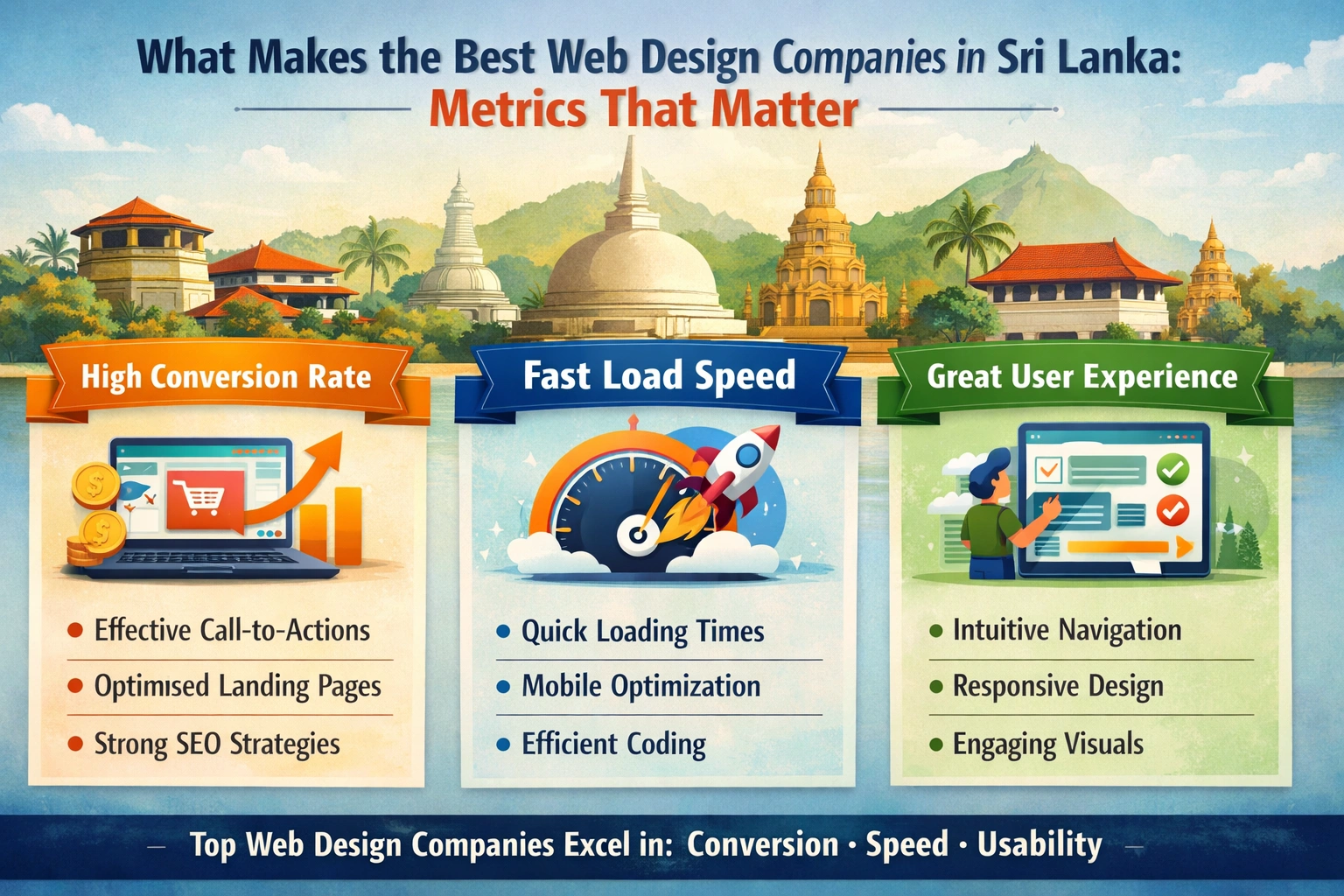
What Makes the Best Web Design Companies in Sri Lanka: Metrics That Matter (Conversion Rate, Load Speed, User Experience)
Subjective assessments of web design quality often lead businesses astray. A website might look stunning to your eyes yet fail to convert visitors into customers. Another site might seem plain but consistently outperform competitors in generating leads and sales. The best web design companies under...
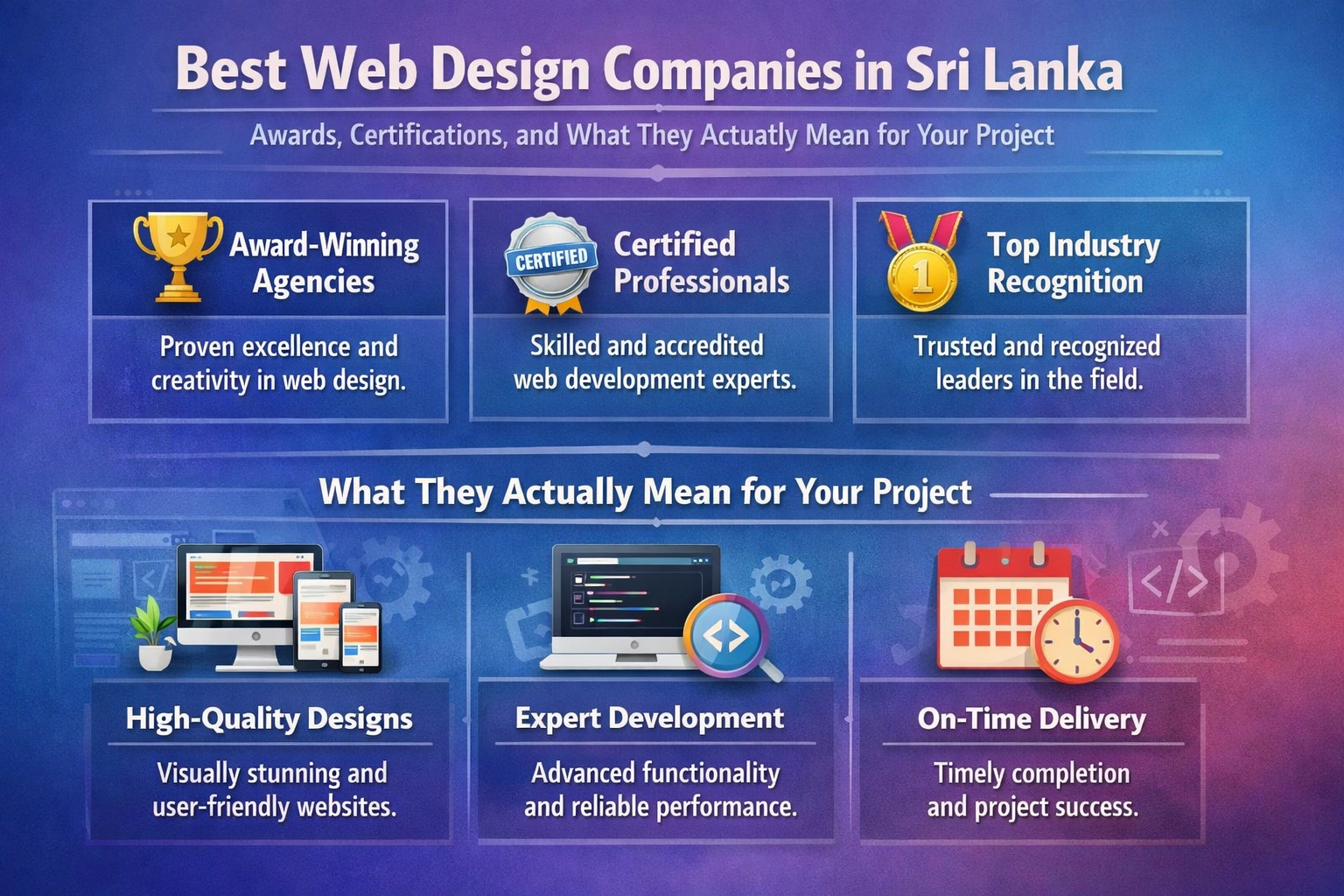
Best Web Design Companies in Sri Lanka: Awards, Certifications, and What They Actually Mean for Your Project
Web design companies frequently display awards, certifications, and recognition badges throughout their websites and proposals. These credentials promise quality assurance and industry standing, but their actual significance varies enormously. Some certifications indicate genuine expertise validate...
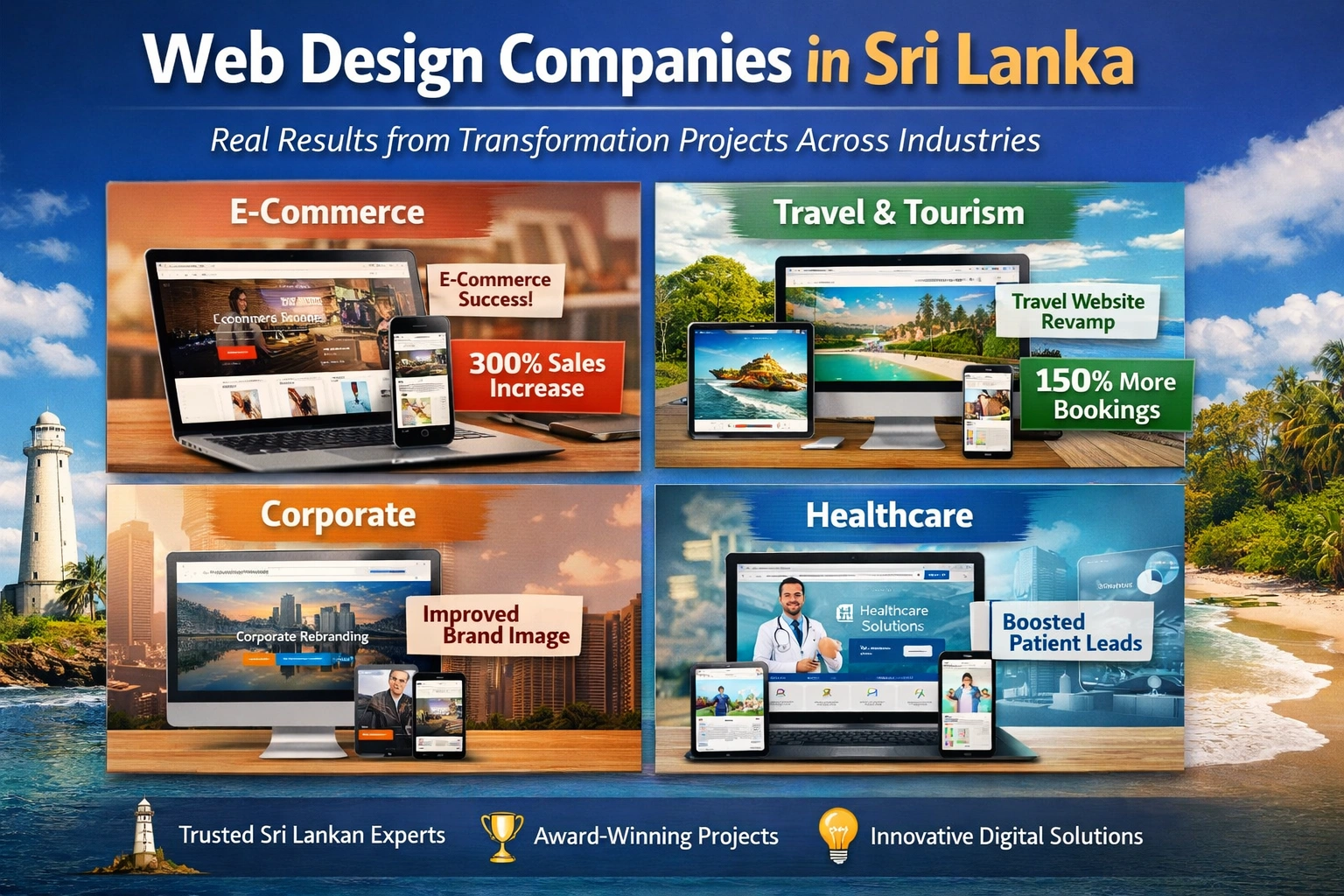
Web Design Companies in Sri Lanka: Real Results from Transformation Projects Across Industries
Portfolio galleries and capability claims only tell part of the story when evaluating web design companies. The real measure of a design partner's value lies in the business outcomes they help clients achieve. Transformation projects demonstrate how professional web design converts struggling onlin...