The Evolution of Web Design in Sri Lanka: From Static Websites to Modern Responsive Platforms
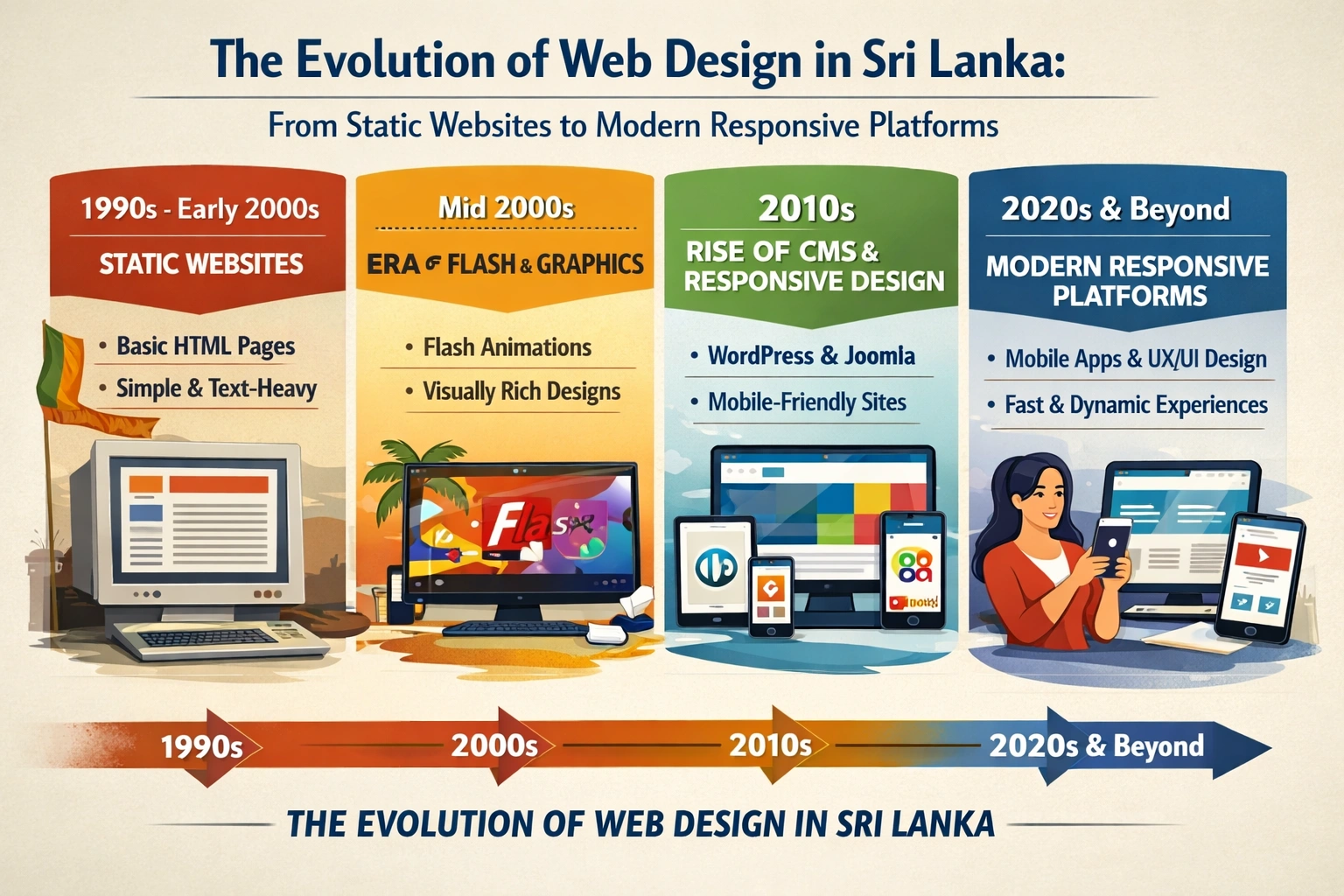
Cast your mind back to the late 1990s in Sri Lanka. The internet was a novelty, dial-up connections were the norm, and having a website was something only large corporations considered. Fast forward to today, and even the smallest corner shop might have an online presence. The transformation has be...
Cast your mind back to the late 1990s in Sri Lanka. The internet was a novelty, dial-up connections were the norm, and having a website was something only large corporations considered. Fast forward to today, and even the smallest corner shop might have an online presence. The transformation has been remarkable, and understanding this evolution helps us appreciate where web design in Sri Lanka stands today—and where it's heading.
This isn't just a story about technology changing. It's about how Sri Lankan designers, businesses, and users adapted together, each pushing the others forward in a fascinating dance of innovation and adoption.
The Early Days: Static HTML and Digital Brochures
The first websites built in Sri Lanka were, by today's standards, extraordinarily simple. We're talking about basic HTML pages—blocks of text, maybe a company logo, contact information, and perhaps a few photographs if the designer was feeling ambitious. These weren't interactive experiences; they were digital business cards, online brochures that existed mainly to show that a company was "on the internet."
Internet access was expensive and slow. Loading a single image could take minutes. Designers had to think carefully about file sizes, often sacrificing visual quality for reasonable loading times. The concept of user experience barely existed as we know it now—the mere existence of the website was achievement enough.
Most of these early sites were built by technically-minded individuals who had taught themselves HTML, often from books or early online tutorials. There wasn't really a distinct profession of "web designer" in Sri Lanka yet. You were either someone who knew how to code this new markup language, or you weren't.
The Limitations That Shaped Early Design
These constraints actually bred creativity in some ways. Designers learned to communicate effectively with minimal resources. They focused on clarity and information hierarchy because they couldn't rely on visual richness to guide users. Some of those fundamental principles—putting the most important information first, writing concisely, maintaining clear navigation—remain valuable even as our tools have transformed.
The Flash Era: When Websites Became Animated
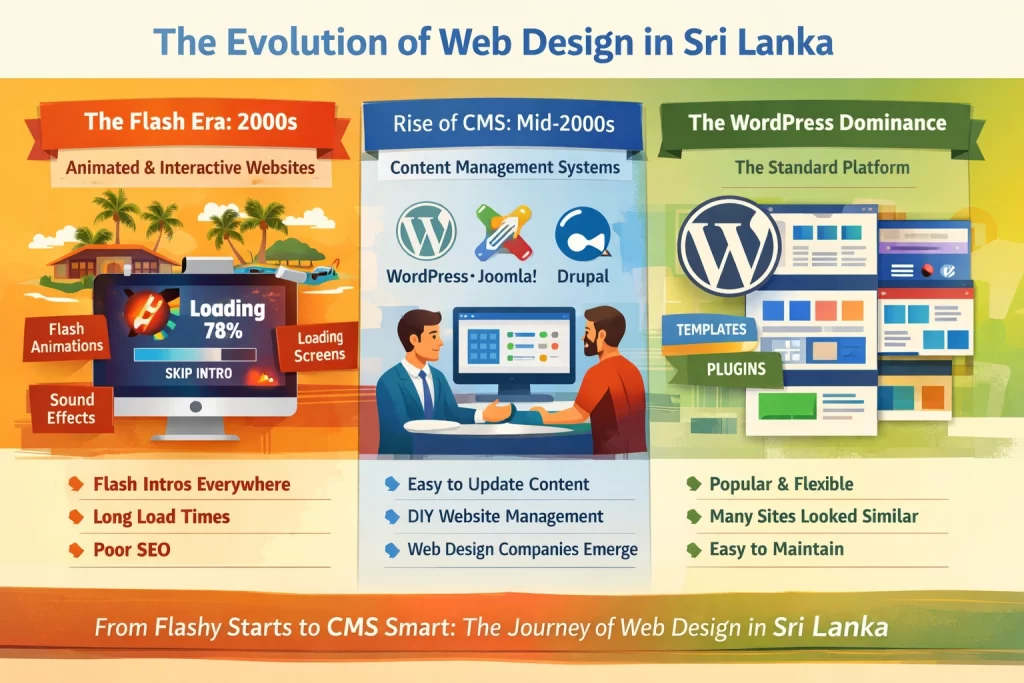
Around the early 2000s, Adobe Flash arrived in Sri Lanka's design scene and changed everything. Suddenly, websites could move. They could have animated intros, interactive elements, and sound. For designers who had been working with static HTML, it felt like magic.
Sri Lankan businesses loved it. Flash intros became almost mandatory for any company that wanted to seem modern and sophisticated. Websites would greet visitors with elaborate animations that often had little to do with the actual business but demonstrated technical capability and creative flair.
Looking back, we can see both the appeal and the problems with this era. Yes, Flash enabled creative expression that wasn't possible before. But it also led to websites that prioritised spectacle over usability. Users had to sit through lengthy animations before accessing actual content. Search engines couldn't read Flash content properly, making sites invisible to early search optimization efforts. And when smartphones arrived, Flash would become a liability—but we're getting ahead of ourselves.
Content Management Systems Change the Game
The mid-2000s brought a revolution that would democratise web presence in Sri Lanka: content management systems. WordPress, Joomla, and similar platforms meant that you no longer needed to understand code to update your website. Business owners could log in and change their own content, add new pages, or post blog articles.
For web designers, this shift was transformative. The role evolved from pure technical implementation to something more strategic. A web designer in Sri Lanka was no longer just building a site and handing it over—they were setting up systems that clients could maintain, training them on usage, and providing ongoing support.
This era also saw the emergence of proper web design companies in Sri Lanka. The market was maturing enough to support dedicated businesses focused entirely on web services. These companies began offering packages that included not just design but hosting, maintenance, and content updates.
The WordPress Dominance
WordPress, in particular, became enormously popular in Sri Lanka. Its flexibility, large plugin ecosystem, and relatively gentle learning curve made it accessible to designers at various skill levels. Today, a significant portion of Sri Lankan websites run on WordPress, from personal blogs to large corporate portals.
This standardisation had benefits—finding developers who understood the platform was easy, resources and tutorials were plentiful, and clients could move between service providers without completely rebuilding their sites. It also created challenges, as too many sites began looking similar, using the same templates with minimal customisation.
The Mobile Revolution: Responsive Design Becomes Essential
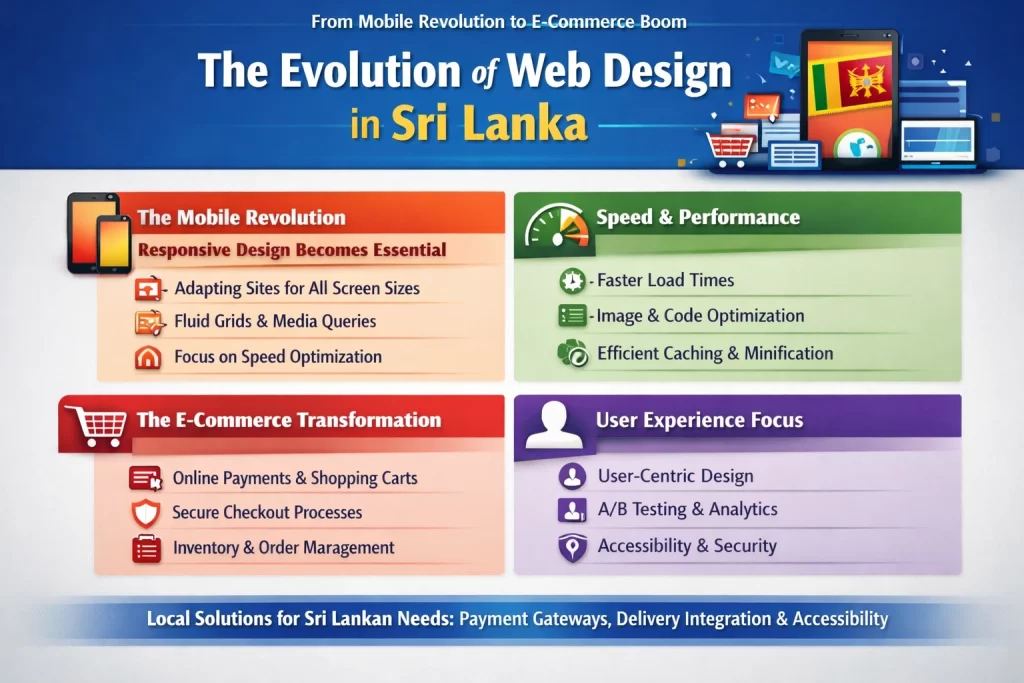
Perhaps no single development has shaped modern web design in Sri Lanka more than the smartphone revolution. When iPhones and then Android devices became widespread, they didn't just change how people accessed the internet—they forced a complete rethinking of how websites should be built.
Sri Lanka's mobile adoption has been remarkable. Today, for many Sri Lankans, a smartphone is their primary (and sometimes only) means of accessing the internet. This mobile-first user base demands websites that work beautifully on small screens, not desktop sites awkwardly crammed onto a phone display.
Responsive design—the approach where a single website automatically adapts to different screen sizes—became not optional but mandatory. Sri Lankan designers had to learn new techniques: fluid grids, flexible images, media queries. Sites that had worked perfectly fine for years suddenly seemed outdated and difficult to use.
Speed Becomes Critical
Mobile users also brought new expectations about speed. On desktop connections, a site that took five seconds to load might be acceptable. On mobile data, particularly outside major cities where connections might be slower, that same loading time could mean losing a visitor entirely.
This pushed Sri Lankan web developers to focus intensely on performance optimization. Image compression, code minification, caching strategies, and careful consideration of what resources to load became standard concerns. The bloated, feature-heavy sites of earlier eras gave way to leaner, faster experiences.
E-commerce Transforms Online Business
For years, Sri Lankan websites were primarily informational. You could learn about a business, find their address, maybe send an email inquiry. Actually purchasing products or services online was rare, limited by payment processing challenges and consumer trust issues.
The gradual development of local payment solutions and growing familiarity with online transactions changed this. E-commerce capabilities moved from luxury to expectation. Web development companies in Sri Lanka had to master shopping cart systems, payment gateway integrations, inventory management, and all the complexities of online retail.
This shift required new skills beyond traditional design. Understanding user psychology around purchasing decisions, optimising checkout flows to reduce abandonment, building trust through security features and clear policies—these became essential parts of the web designer's toolkit.
The Current Era: User Experience Takes Centre Stage
Today's web design in Sri Lanka has reached a level of sophistication that would have seemed impossible two decades ago. The focus has shifted definitively from "how does this look?" to "how does this work for the user?"
Modern designers think in terms of user journeys, conversion funnels, and interaction patterns. They use analytics to understand how visitors actually behave, then optimise based on real data rather than assumptions. A/B testing, heat maps, and user research have become standard tools.
Key characteristics of contemporary Sri Lankan web design include:
- Mobile-first approaches where the small screen experience is designed before the desktop version
- Performance optimization built into the design process from the start
- Integration with business systems including CRM, inventory, and accounting software
- Strong emphasis on security, particularly for sites handling customer data
- Accessibility considerations ensuring sites work for users with different abilities
- Local payment and delivery integrations that address Sri Lankan market specifics
Emerging Trends Shaping Tomorrow's Web Design
The evolution continues. Several trends are currently shaping where web development in Sri Lanka is heading.
Artificial Intelligence and Automation
AI tools are beginning to influence web design, from chatbots that handle customer inquiries to algorithms that personalise content for individual visitors. Sri Lankan designers are increasingly incorporating these technologies, though thoughtfully—understanding that automation should enhance rather than replace human connection.
Progressive Web Apps
The line between websites and mobile apps continues to blur. Progressive Web Apps offer app-like experiences through the browser, with features like offline access and push notifications. For Sri Lankan businesses wanting mobile functionality without the cost of separate app development, this approach is increasingly attractive.
Voice and Conversational Interfaces
As voice search and smart assistants become more prevalent, websites need to accommodate how people speak, not just how they type. This affects content strategy, site structure, and even the fundamental way we think about navigation.
Lessons From the Journey
Looking back at this evolution, several themes emerge that continue to guide effective web design in Sri Lanka today.
Adaptability matters more than any specific technology. The designers who thrived through each transition weren't necessarily the most technically brilliant—they were the ones willing to learn, unlearn, and relearn as the landscape shifted. The tools we use today will eventually be replaced; the ability to adapt will not.
User needs remain constant even as technology changes. Whether working with basic HTML or the latest JavaScript framework, the fundamental goal is the same: helping users accomplish what they came to do. Technologies are just means to that end.
Local context matters. At every stage of this evolution, the most successful Sri Lankan designers were those who understood their specific market. They knew which technologies would work given local infrastructure, which design patterns would resonate with local users, and which solutions would address local business challenges.
Where We Stand Now
The Sri Lankan web design industry has matured into a sophisticated sector capable of producing work that matches international standards while remaining attuned to local needs. The journey from static HTML pages to today's dynamic, responsive, user-centred platforms has been remarkable.
For businesses choosing a web design company in Sri Lanka today, this history provides context. You're not just hiring someone to build a website—you're engaging with an industry that has two decades of evolution behind it, with designers who have navigated multiple technological revolutions and emerged with hard-won wisdom about what actually works.
The evolution continues, and the designers who understand this history are best positioned to guide you into whatever comes next. That combination of experience and adaptability is what makes working with established local talent such a compelling choice for businesses serious about their online presence.
Related Articles
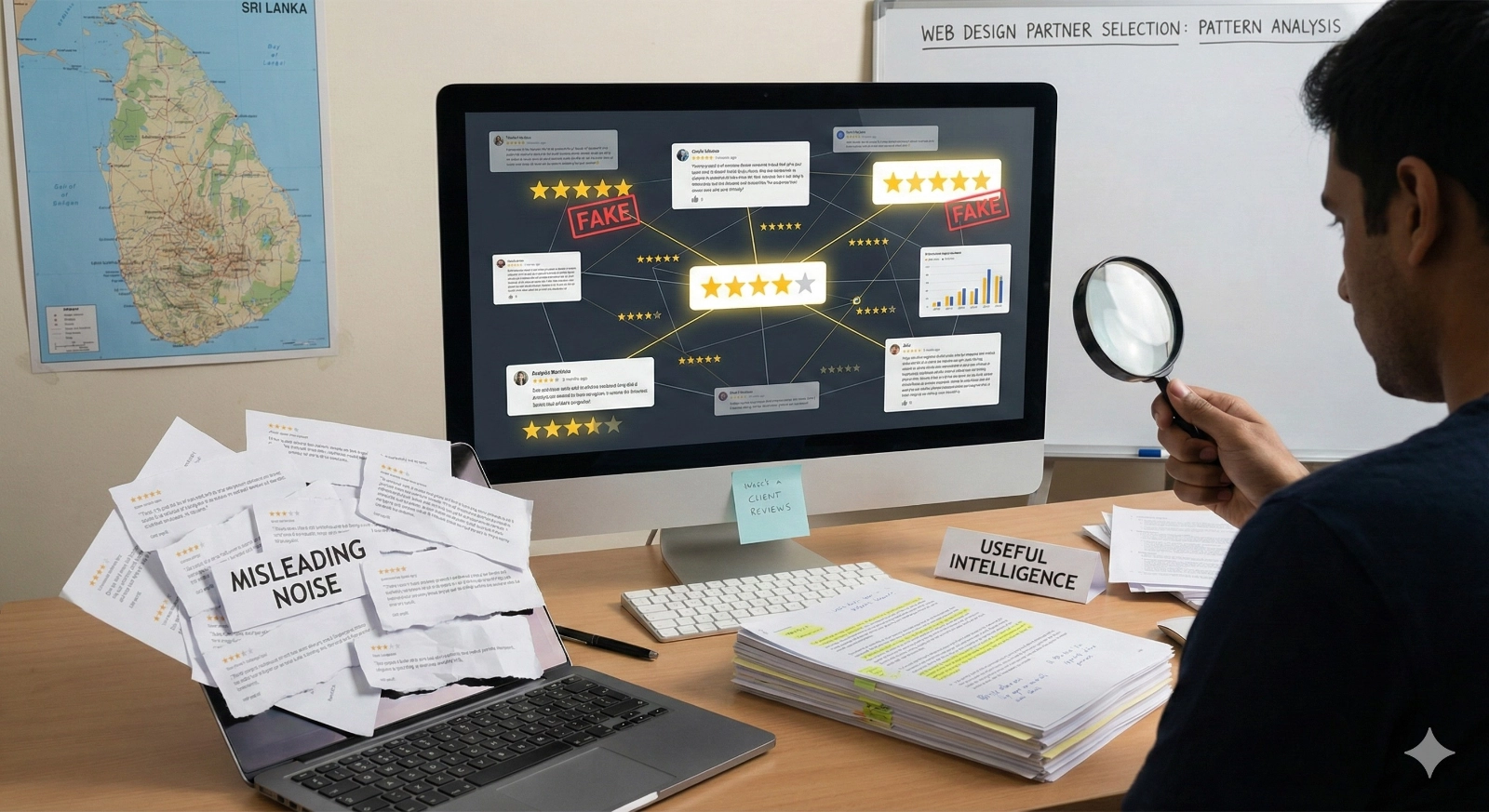
The Best Web Design Companies in Sri Lanka in 2026: Reviews, Ratings, and Real Client Feedback Analysis
Client reviews and ratings offer invaluable perspective when selecting a web design partner, revealing experiences that portfolios and capabilities presentations cannot convey. However, the review landscape has grown increasingly complex, with fake reviews, selective testimonials, and rating manipu...
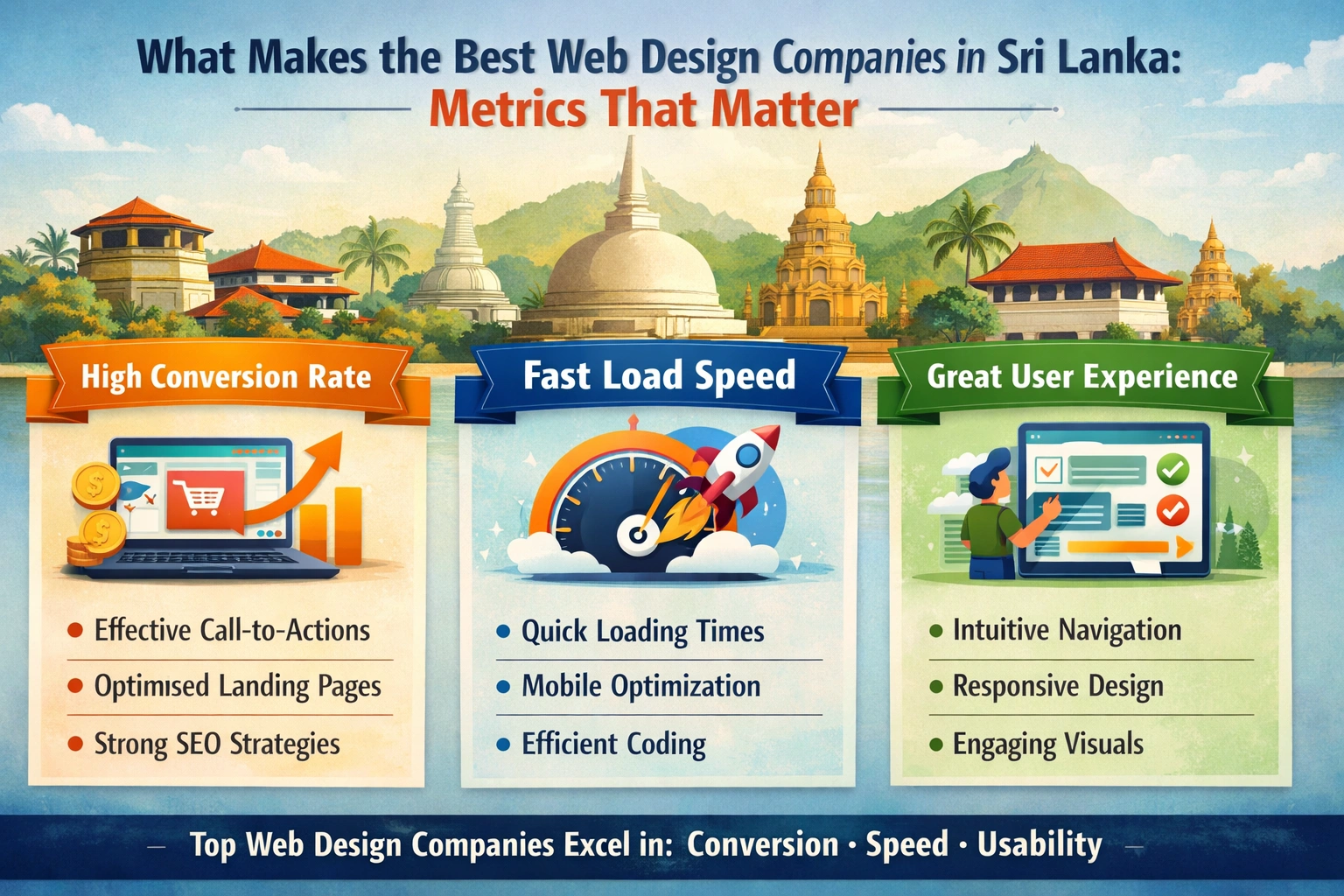
What Makes the Best Web Design Companies in Sri Lanka: Metrics That Matter (Conversion Rate, Load Speed, User Experience)
Subjective assessments of web design quality often lead businesses astray. A website might look stunning to your eyes yet fail to convert visitors into customers. Another site might seem plain but consistently outperform competitors in generating leads and sales. The best web design companies under...
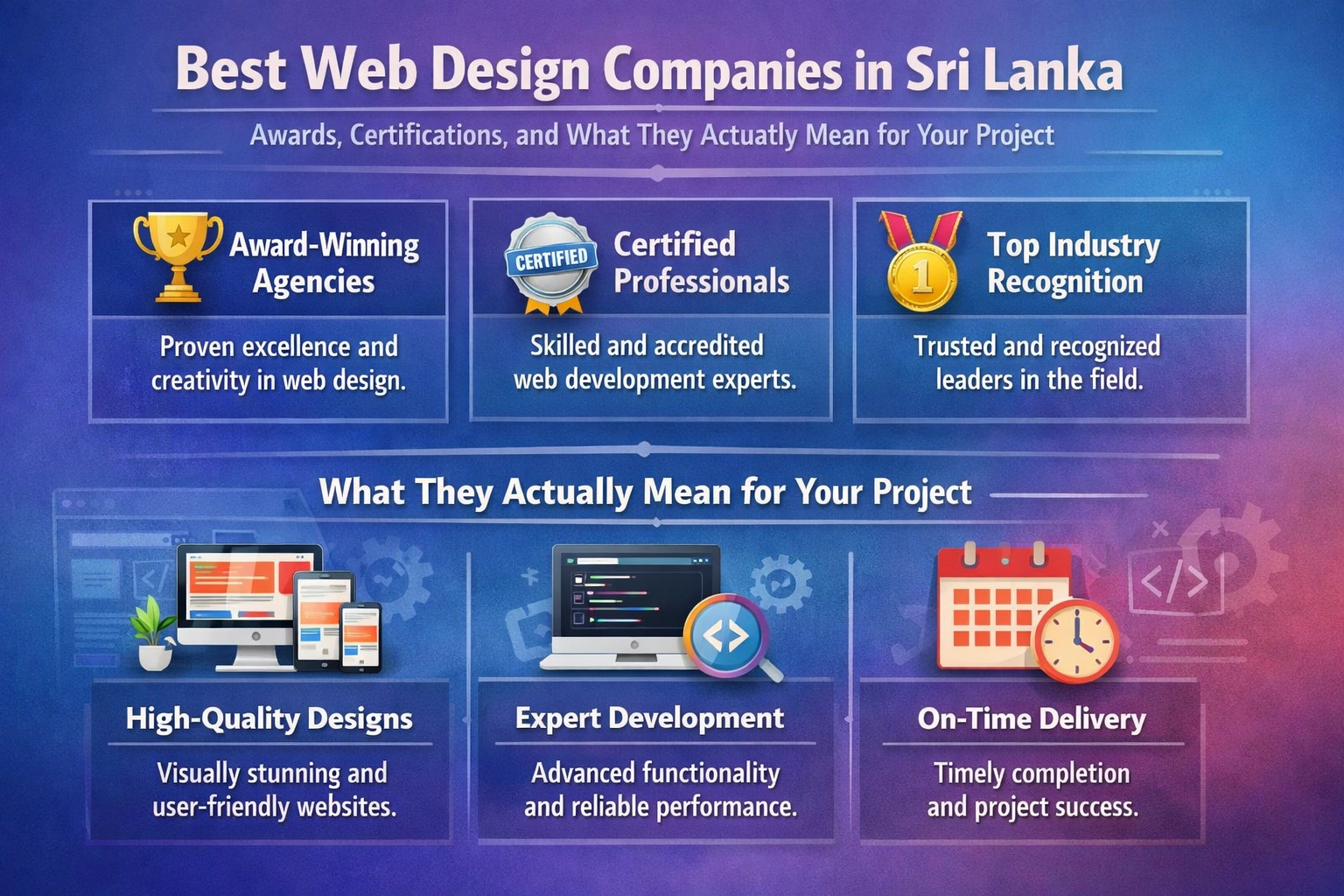
Best Web Design Companies in Sri Lanka: Awards, Certifications, and What They Actually Mean for Your Project
Web design companies frequently display awards, certifications, and recognition badges throughout their websites and proposals. These credentials promise quality assurance and industry standing, but their actual significance varies enormously. Some certifications indicate genuine expertise validate...
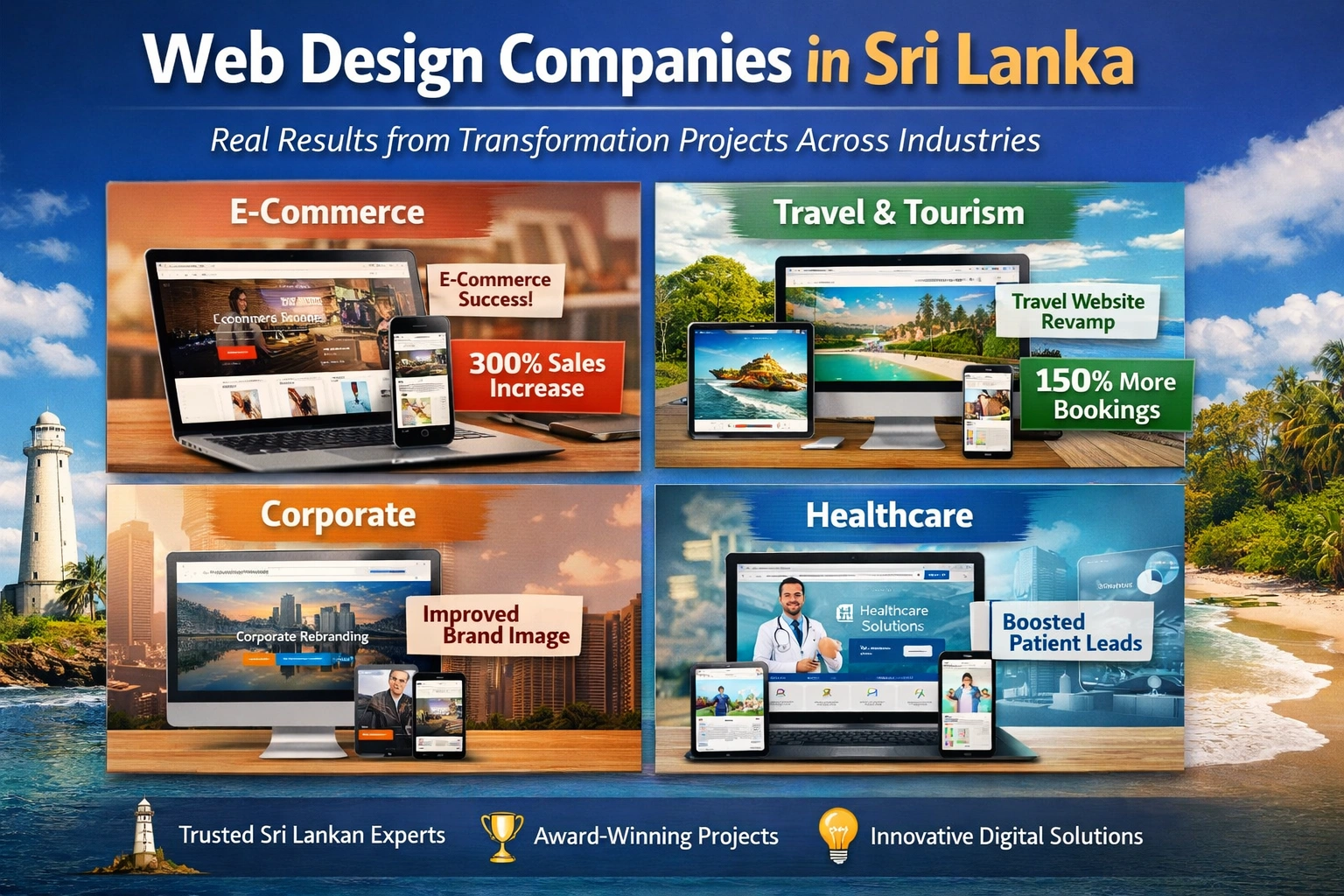
Web Design Companies in Sri Lanka: Real Results from Transformation Projects Across Industries
Portfolio galleries and capability claims only tell part of the story when evaluating web design companies. The real measure of a design partner's value lies in the business outcomes they help clients achieve. Transformation projects demonstrate how professional web design converts struggling onlin...