Web Design in Sri Lanka: What Small Businesses Need to Know Before Hiring a Designer

Starting a business is hard enough without having to become an expert in web design. Yet here you are, knowing you need a website, faced with designer portfolios, confusing terminology, and price quotes that seem to vary wildly for reasons you can't quite understand. If this sounds familiar, you're...
Starting a business is hard enough without having to become an expert in web design. Yet here you are, knowing you need a website, faced with designer portfolios, confusing terminology, and price quotes that seem to vary wildly for reasons you can't quite understand. If this sounds familiar, you're in exactly the right place.
As a small business owner in Sri Lanka, getting your website right matters enormously. It might be the first impression potential customers have of your company. It could be your primary sales channel or the foundation of your marketing efforts. Getting it wrong—whether that means overpaying, ending up with something that doesn't work, or spending months on a project that should have taken weeks—can seriously hurt your business.
Let's walk through everything you need to understand before you start talking to designers. This isn't about technical details you don't need to know. It's about the practical knowledge that will help you make smart decisions and get genuine value from your investment in web design in Sri Lanka.
Understanding What You Actually Need
Before you contact a single designer, spend time getting clear on what you need. This sounds obvious, but most problematic web projects start with vague requirements. "I need a website" isn't enough. "I need a five-page website that showcases my catering services, displays my menu, allows customers to request quotes, and helps me appear in local search results" is much better.
Start by answering these fundamental questions:
What is the primary purpose of your website? Is it to generate leads, sell products directly, provide information to existing customers, build credibility with potential partners, or something else? A website trying to do everything often does nothing well.
Who will visit your site? Understanding your audience shapes everything from design aesthetics to content tone to technical requirements. A site targeting young Colombo professionals will differ dramatically from one aimed at international tourists or B2B clients.
What actions do you want visitors to take? Every page should guide visitors toward something—making a purchase, filling out a contact form, calling your office, subscribing to a newsletter. Knowing these desired actions helps your designer create appropriate pathways.
Scope Definition Prevents Scope Creep
One of the most common sources of project frustration is scope creep—when a project gradually expands beyond its original boundaries. This typically happens when initial requirements weren't clear, and both parties have different assumptions about what's included.
Take time to list the specific features you need. Think about pages required, functionality desired, integrations with other systems, and any special requirements. Write these down. Having a documented scope protects both you and your designer.
Budgeting Realistically for Your Web Project

Let's have an honest conversation about money. Small business owners often come to web design projects with unrealistic expectations about costs—sometimes expecting to pay too little for what they want, occasionally prepared to spend more than necessary.
Web design pricing in Sri Lanka varies significantly based on several factors: the complexity of your project, the experience level of your designer, the timeframe required, and the ongoing services included. A simple informational website will cost far less than a full e-commerce platform with custom features.
Rather than fixating on finding the absolute cheapest option, think about value. What return will this investment generate for your business? A website that costs twice as much but brings in three times as many customers is clearly the better deal. Conversely, a cheap website that doesn't function properly or fails to convert visitors is expensive regardless of its price tag.
The True Cost of Ownership
The initial design and development cost isn't your only expense. Budget for ongoing costs including:
- Domain registration (annual renewal)
- Web hosting fees (monthly or annual)
- SSL certificate for security (often included with hosting, sometimes separate)
- Regular maintenance and updates
- Content additions and changes
- Security monitoring and backup services
A reputable web design company in Sri Lanka will be transparent about these ongoing costs. If someone quotes you only for the initial build without discussing long-term expenses, ask questions.
Evaluating Potential Designers and Agencies
Now comes the process of finding and evaluating the right partner for your project. This is where many small businesses go wrong, either making hasty decisions based on price alone or getting overwhelmed by options and making no decision at all.
Portfolio Assessment
Every designer will show you their best work. That's expected. Your job is to look beyond the surface aesthetics and evaluate whether their experience is relevant to your needs.
Look for projects similar to yours in scope and industry. A designer with extensive experience building restaurant websites might not be the best choice for a legal firm, and vice versa. The design sensibilities, user expectations, and functional requirements differ significantly between industries.
Don't just look at screenshots—actually visit the live websites. Test them on your phone. See how they load, how navigation works, whether the content is well-organized. A beautiful design mockup doesn't guarantee a functional website.
Client References and Reviews
Ask for references from previous clients, particularly businesses similar to yours. Any established designer should be happy to connect you with past clients who can speak to their experience.
When speaking with references, ask specific questions: Was the project completed on time and within budget? How was communication throughout the process? Were there any unexpected issues, and how were they handled? Would they work with this designer again?
Technical Competence
You don't need to understand technical details deeply, but you should ensure your designer has current skills. Ask what technologies they use and why. A good designer should be able to explain their technical choices in terms you can understand, relating them to benefits for your business.
Be cautious of designers still relying heavily on outdated technologies or those who can't clearly articulate their development approach. The web development field evolves constantly, and you want someone who has kept up.
The Proposal and Contract Process

Once you've identified potential designers, request detailed proposals. A professional proposal should include a clear scope of work, timeline with milestones, pricing breakdown, and terms and conditions.
Compare proposals carefully, but remember that the lowest price isn't automatically the best choice. Look at what's included, what's excluded, and how each designer has interpreted your requirements. Sometimes price differences reflect different understandings of the project scope.
Contract Essentials
Never start a web project without a written contract. This protects both parties and ensures everyone has the same expectations. Key elements your contract should address include:
Project scope and deliverables: Exactly what will be created and delivered. Payment terms: How much, when, and under what conditions. Timeline: When major milestones will be reached and the expected completion date. Revision policy: How many rounds of revisions are included and what constitutes additional work. Ownership: Who owns the final design, code, and content. Support: What happens after launch, including any warranty period or ongoing support arrangements.
Working Effectively With Your Designer
The relationship between client and designer significantly impacts project outcomes. Being a good client—yes, there's such a thing—helps ensure you get the best possible result.
Communication Practices
Establish clear communication channels and expectations from the start. Agree on how you'll communicate (email, phone, project management tools), how quickly responses are expected, and who the primary contacts are on both sides.
Provide feedback promptly. One of the biggest causes of project delays is clients who take weeks to review and respond to designer submissions. Your designer has likely scheduled other work around your project; delays on your end cascade into delays overall.
Giving Useful Feedback
Learning to give constructive feedback is a skill that will serve you throughout the project. Instead of vague reactions like "I don't like it" or "something feels off," try to articulate specifically what isn't working and why.
Reference your original goals. If a design choice doesn't seem to support your business objectives, explain that connection. "The call-to-action button doesn't stand out enough for what we discussed" is much more actionable than "can you make it pop more?"
Trust your designer's expertise while maintaining your business judgment. They know design principles; you know your business and customers. The best outcomes come from combining both perspectives.
Common Mistakes to Avoid
Let me share some patterns I've seen repeatedly that cause problems for small businesses in their web design projects.
Choosing based purely on price almost always leads to disappointment. The cheapest option typically means corners cut somewhere—quality, support, or functionality. This doesn't mean most expensive is best either, but value should trump price as your primary criterion.
Micromanaging design decisions wastes time and often produces worse results. You hired a professional for their expertise; let them apply it. Focus your input on business objectives and outcomes rather than specific pixel placements.
Neglecting mobile experience is increasingly unforgivable. Most Sri Lankan web users access sites primarily through smartphones. If your designer shows you desktop mockups first and treats mobile as an afterthought, that's a warning sign.
Ignoring SEO considerations until after launch means missing opportunities. Search optimization should inform design decisions from the beginning, not be bolted on afterward. Discuss SEO with your web designer in Sri Lanka early in the process.
Rushing the planning phase to start design faster usually backfires. Time invested in clear requirements saves multiples in avoiding revisions and rework later.
After Launch: What Comes Next
Your website launching isn't the end—it's really just the beginning. A website is a living business asset that needs ongoing attention.
Plan for regular content updates. Fresh, relevant content helps with search rankings and gives visitors reasons to return. If you can't commit to updates yourself, discuss content management services with your designer.
Monitor your analytics. Understanding how visitors find and use your site reveals opportunities for improvement. Most designers can help you set up basic tracking and teach you what metrics matter most for your goals.
Stay on top of technical maintenance. Software updates, security patches, and performance optimization require regular attention. Decide whether you'll handle this yourself or engage your web development partner for ongoing maintenance.
Making Your Decision
Choosing a web designer is ultimately about finding the right partner for your specific situation. Consider technical capability, yes, but also communication style, reliability, and whether you can envision working with this person or team over time.
The best designer for your project might not be the most awarded or the cheapest or the one with the flashiest portfolio. It's the one who understands your business goals, communicates clearly, delivers reliable work, and treats your project with the attention it deserves.
Take your time with this decision. A good website serves your business for years; a poor one costs time and money to fix or replace. The effort you invest in finding the right web design company in Sri Lanka pays dividends throughout the life of your website and your working relationship.
Armed with the knowledge in this guide, you're prepared to navigate the process confidently. Ask the right questions, set clear expectations, and choose a partner who will help your small business succeed online.
Related Articles
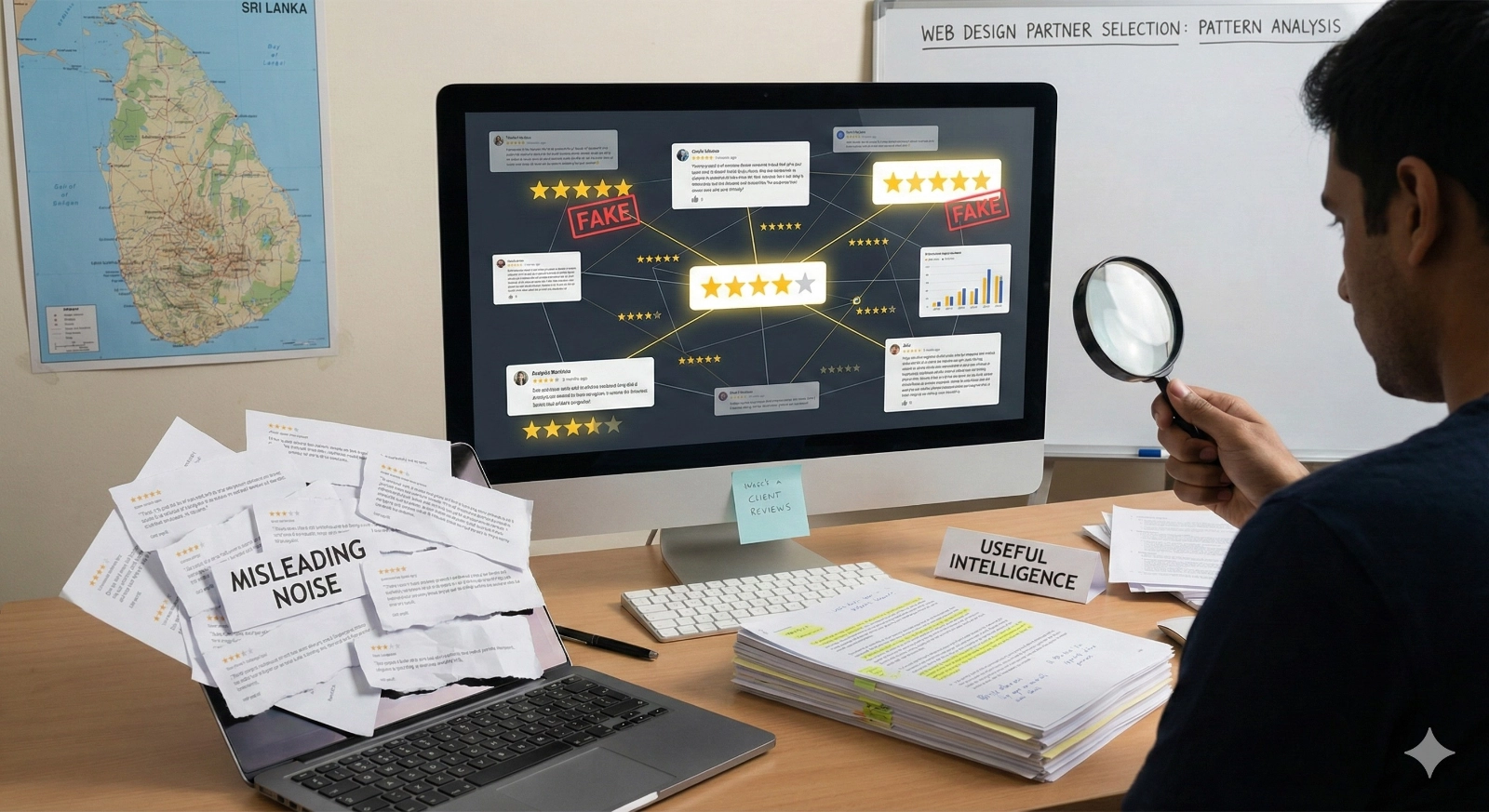
The Best Web Design Companies in Sri Lanka in 2026: Reviews, Ratings, and Real Client Feedback Analysis
Client reviews and ratings offer invaluable perspective when selecting a web design partner, revealing experiences that portfolios and capabilities presentations cannot convey. However, the review landscape has grown increasingly complex, with fake reviews, selective testimonials, and rating manipu...
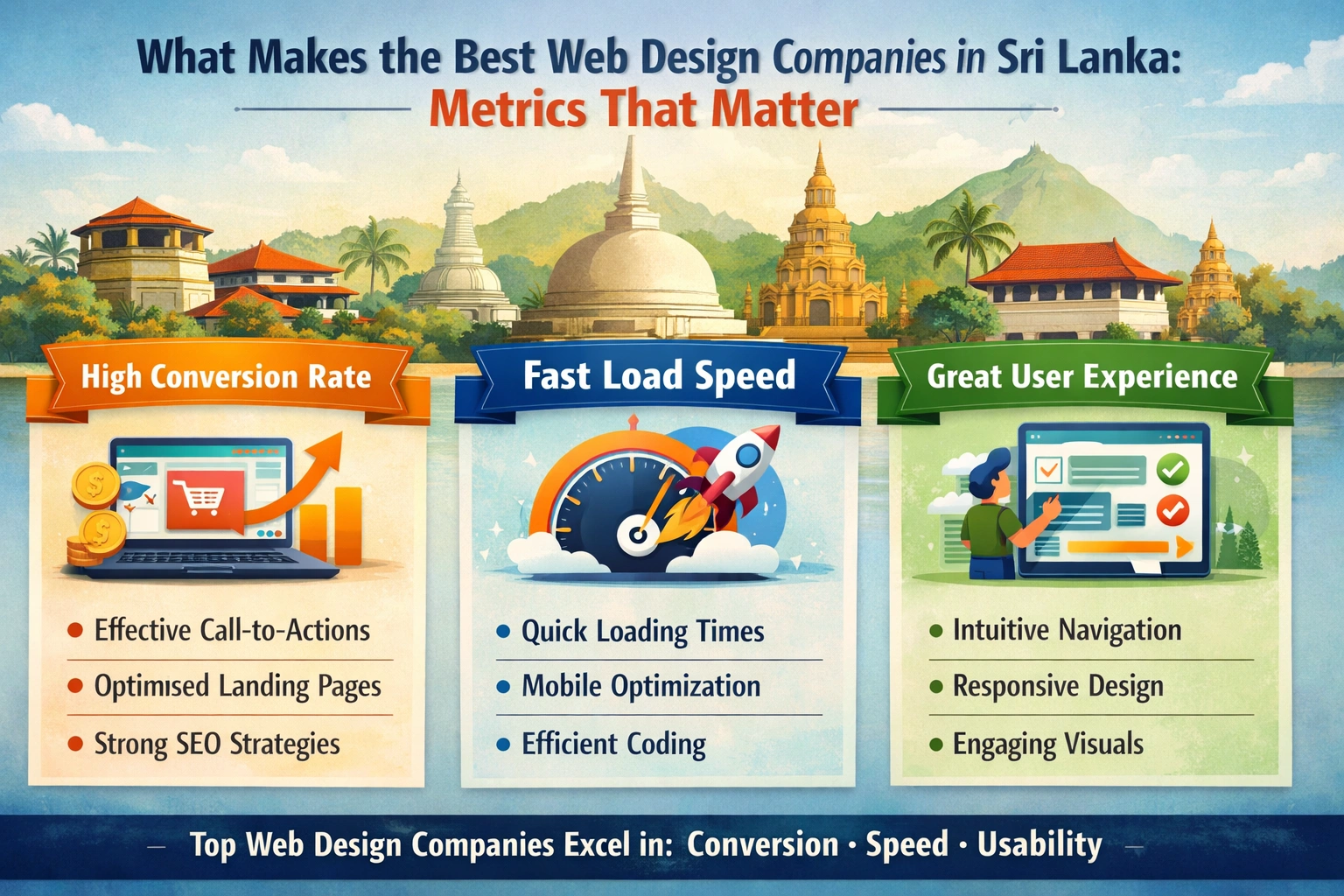
What Makes the Best Web Design Companies in Sri Lanka: Metrics That Matter (Conversion Rate, Load Speed, User Experience)
Subjective assessments of web design quality often lead businesses astray. A website might look stunning to your eyes yet fail to convert visitors into customers. Another site might seem plain but consistently outperform competitors in generating leads and sales. The best web design companies under...
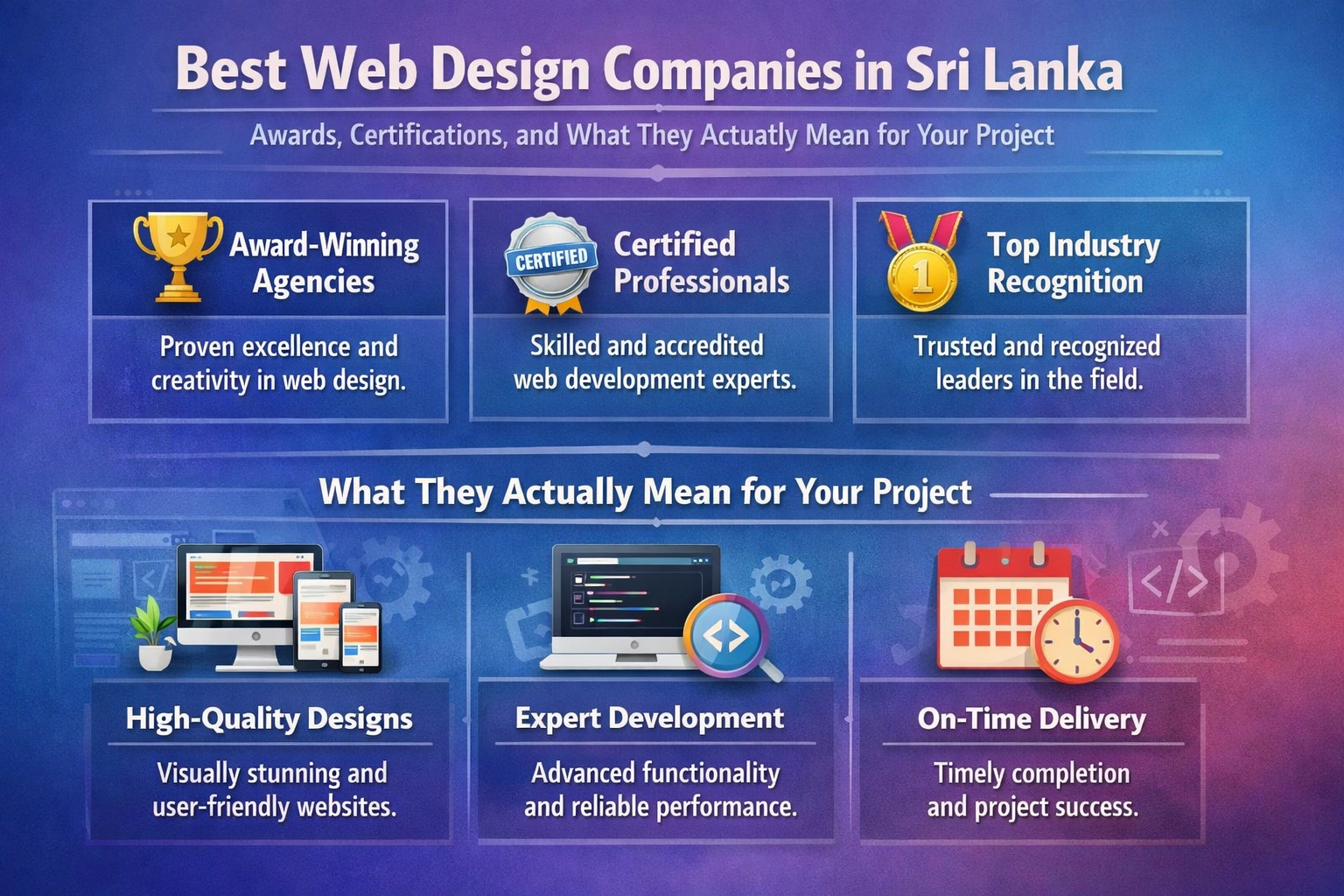
Best Web Design Companies in Sri Lanka: Awards, Certifications, and What They Actually Mean for Your Project
Web design companies frequently display awards, certifications, and recognition badges throughout their websites and proposals. These credentials promise quality assurance and industry standing, but their actual significance varies enormously. Some certifications indicate genuine expertise validate...

Web Design Companies in Sri Lanka: Real Results from Transformation Projects Across Industries
Portfolio galleries and capability claims only tell part of the story when evaluating web design companies. The real measure of a design partner's value lies in the business outcomes they help clients achieve. Transformation projects demonstrate how professional web design converts struggling onlin...