Web Development Solutions for Sri Lankan Businesses: E-commerce, Tourism, and Service Industries

Different industries have different web requirements. What works brilliantly for an online retailer might be entirely wrong for a tour operator, and both would differ dramatically from what a professional services firm needs. Understanding these differences helps you commission the right website fo...
Different industries have different web requirements. What works brilliantly for an online retailer might be entirely wrong for a tour operator, and both would differ dramatically from what a professional services firm needs. Understanding these differences helps you commission the right website for your specific business—and helps you recognise whether a developer truly understands your industry's needs.
Let's examine the specific web development requirements for three of Sri Lanka's most significant business sectors: e-commerce, tourism, and service industries. Each faces unique challenges and opportunities in the digital space.
E-commerce: Selling Products Online

E-commerce in Sri Lanka has grown remarkably, accelerated by recent years' events that pushed more consumers toward online shopping. But building a successful online store involves much more than listing products with prices. The technical and strategic considerations run deep.
Platform Selection
Your choice of e-commerce platform shapes everything that follows. WooCommerce (built on WordPress) offers flexibility and a huge ecosystem of plugins, making it popular for small to medium Sri Lankan retailers. Shopify provides a more managed experience with less technical overhead but also less customisation potential. Magento serves larger operations requiring enterprise-level features but demands more substantial investment and expertise.
The right choice depends on your product range, expected traffic, required integrations, and technical resources. A web development company in Sri Lanka with genuine e-commerce experience can guide this decision based on your specific circumstances.
Local Payment Integration
Payment processing in Sri Lanka presents unique challenges. International gateways like PayPal have historically had limitations for Sri Lankan businesses. Local solutions—bank integrations, iPay, PayHere, and similar services—become essential for serving the local market effectively.
Your development partner should understand these options thoroughly. They should know the fees, the technical integration requirements, the customer experience implications, and the reliability track record of each option. Cash on delivery remains popular in Sri Lanka; your system needs to handle it smoothly.
Delivery and Logistics Integration
E-commerce success depends heavily on fulfillment. Sri Lankan consumers have specific expectations about delivery times, tracking, and costs. Your website needs to integrate with courier services, calculate accurate shipping costs, provide tracking information, and handle the complexities of local delivery logistics.
Consider whether you'll use a single courier service or multiple options. How will you handle deliveries outside Colombo where logistics become more challenging? What about COD management and reconciliation? These questions need clear answers in your development planning.
Inventory Management
Unless you're dropshipping, you need robust inventory tracking. Out-of-stock situations frustrate customers; overselling creates operational nightmares. Your e-commerce system should maintain accurate inventory counts, ideally synchronised with any physical store operations.
For businesses selling across multiple channels—your website, social media marketplaces, physical retail—centralised inventory management becomes critical. The complexity of omnichannel retail demands thoughtful system architecture.
Mobile Commerce Optimization
Most Sri Lankan e-commerce traffic comes from mobile devices. Your store must not just function on phones—it must excel there. This means fast loading on mobile data, easy navigation with thumbs, streamlined checkout requiring minimal typing, and features like click-to-call for customer support.
Tourism: Inspiring and Facilitating Travel

Sri Lanka's tourism industry depends heavily on effective online presence. International visitors research and book online; the website often provides the first impression of a tour operator, hotel, or experience provider. The stakes are high, and the requirements are specific.
Visual Storytelling
Tourism websites sell experiences—often to people who've never visited Sri Lanka. High-quality imagery isn't optional; it's essential. But beautiful photos must load quickly, particularly for international visitors accessing the site from anywhere in the world.
Modern image optimization techniques, lazy loading, and appropriate compression allow stunning visuals without performance penalties. Video content, increasingly expected in tourism marketing, requires similar attention to delivery optimization.
Booking System Integration
Whether you're selling tours, accommodations, or experiences, booking functionality sits at the heart of tourism websites. This might mean integration with existing systems like channel managers for hotels, or custom booking systems for unique offerings.
Booking systems must handle availability checking, date selection, pricing variations (seasonal rates, promotional offers, group discounts), and secure payment processing. For tour operators, they might also need to manage capacity limits, required deposits, and cancellation policies.
Multi-currency and International Payments
Tourism businesses serve international markets, requiring support for multiple currencies and payment methods. Visitors from different countries prefer different payment options—credit cards, PayPal, bank transfers, and increasingly, alternative payment methods popular in specific regions.
Currency conversion, whether handled by the website or the payment processor, needs to be transparent and fair. International visitors are sensitive to hidden charges appearing during checkout.
Multilingual Considerations
While English serves as the lingua franca of international tourism, websites targeting specific markets benefit from local language versions. German visitors to Sri Lanka, for instance, might appreciate German-language content. Chinese tourists increasingly represent a significant market.
Multilingual implementation involves more than translation—it requires proper handling of character sets, cultural adaptation of content, and consideration of how different languages affect page layouts.
Review and Trust Signals
Tourism purchasing involves significant trust. International visitors need reassurance that a Sri Lankan tour operator or hotel is legitimate and delivers as promised. Integration with review platforms like TripAdvisor, display of certifications and memberships, and prominent customer testimonials all help build this trust.
Service Industries: Professional Services and B2B

Service businesses—from legal and accounting firms to marketing agencies and consultancies—have different web requirements than product-based companies. The website serves primarily as a credibility builder and lead generator rather than a direct sales channel.
Establishing Authority and Trust
Service providers sell expertise. Their websites must communicate competence, professionalism, and trustworthiness. This means clean, professional design (nothing that looks cheap or amateur), clear articulation of services and expertise, and credentials that demonstrate qualification.
Content plays a crucial role. Thought leadership articles, case studies, and valuable resources demonstrate knowledge while providing SEO benefits. A web designer in Sri Lanka working with service businesses should understand how content supports business development goals.
Lead Generation Focus
Most service businesses don't close sales directly on their websites. Instead, they capture leads that enter into sales processes—consultations, proposals, relationship building. Website design should optimise for lead capture through strategic contact forms, consultation booking systems, newsletter subscriptions, and downloadable resources.
Each page should offer a clear next step for interested visitors. What action do you want someone to take after reading your "About Us" page? After reviewing your services? After reading a case study? Those pathways should be explicit and easy to follow.
Portfolio and Case Studies
Demonstrating past work builds confidence in future delivery. Service websites need effective ways to showcase relevant experience—project portfolios for creative agencies, case studies for consultants, representative matters for law firms (within ethical constraints).
The presentation should match your target market. A creative agency's portfolio might be visually dramatic; a consulting firm's case studies might be more analytical, focusing on business outcomes achieved.
Team and Expertise Showcasing
Clients hire people, not just firms. Service websites often benefit from strong team presentation—professional photographs, credentials, backgrounds, and areas of specialisation. For smaller firms where personal relationships drive business, this individual emphasis becomes even more important.
Cross-Industry Essentials
Despite their differences, certain web development fundamentals apply across all industries:
- Mobile responsiveness is mandatory, not optional, regardless of industry
- Page speed affects both user experience and search rankings universally
- Security basics—SSL certificates, secure forms, protected customer data—apply everywhere
- Search engine optimization helps businesses be found regardless of what they sell
- Analytics setup enables understanding visitor behaviour and improving over time
- Clear calls to action drive desired outcomes in any business type
Choosing the Right Development Partner
When selecting a web design company in Sri Lanka for your project, industry experience matters significantly. A developer who has built successful e-commerce sites understands issues that someone new to the sector might overlook. Similarly, tourism-focused developers know what international visitors expect in ways that generalists might not.
Ask about relevant portfolio examples. Request references from similar businesses. Probe for understanding of your industry's specific challenges. A developer who asks intelligent questions about your business model demonstrates the thinking that leads to successful projects.
However, don't discount developers without exact industry matches if they demonstrate adaptability and genuine interest in understanding your sector. Sometimes fresh perspectives yield innovative solutions. The key is ensuring they invest the effort to learn your industry's requirements rather than applying generic approaches.
Integration Requirements
Modern businesses rarely operate websites in isolation. E-commerce sites connect to inventory and accounting systems. Tourism sites integrate with booking engines and channel managers. Service businesses link to CRM platforms and marketing automation tools.
When planning your project, map out these integration needs early. Which existing systems must the website connect with? What data needs to flow between systems? Are APIs available, or will custom integration work be required?
Integration complexity significantly affects project scope and cost. A website that appears simple might actually be complex if it must communicate with multiple backend systems. Conversely, what seems like a sophisticated site might be straightforward if it operates largely independently.
Future-Proofing Your Investment
Whatever industry you're in, your website should be built to evolve. Business needs change. Markets shift. Technologies advance. A website that serves perfectly today should be extensible for tomorrow's requirements.
Discuss scalability with your development partner. If your e-commerce business grows tenfold, can the platform handle it? If you expand from tours to accommodations, can your booking system adapt? If you add new service lines, can the website accommodate them without major reconstruction?
Good web development anticipates growth and change, building flexibility into the architecture even for features you don't need yet. This forward thinking distinguishes projects that serve businesses long-term from those that require expensive overhauls as circumstances evolve.
Related Articles
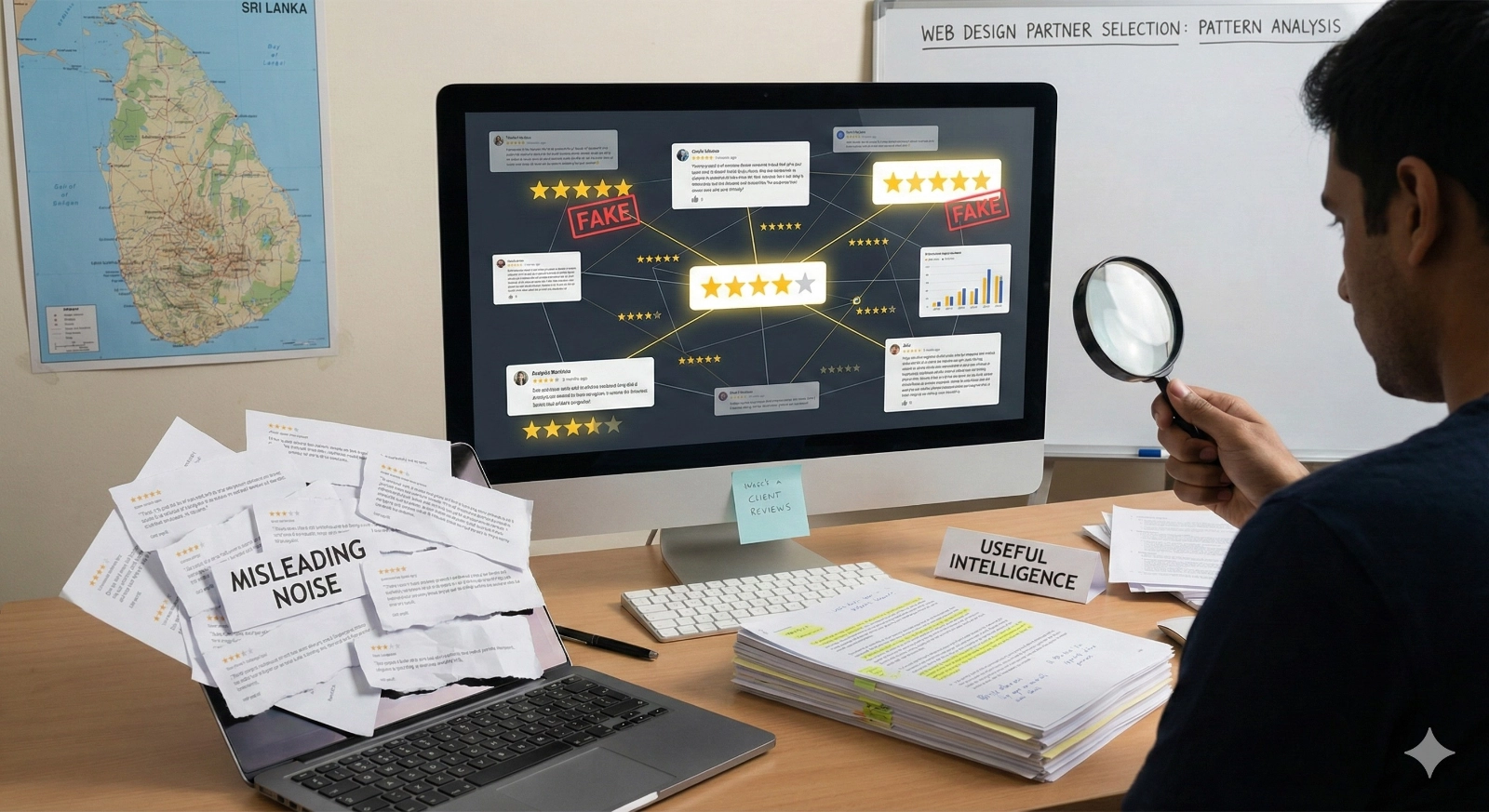
The Best Web Design Companies in Sri Lanka in 2026: Reviews, Ratings, and Real Client Feedback Analysis
Client reviews and ratings offer invaluable perspective when selecting a web design partner, revealing experiences that portfolios and capabilities presentations cannot convey. However, the review landscape has grown increasingly complex, with fake reviews, selective testimonials, and rating manipu...
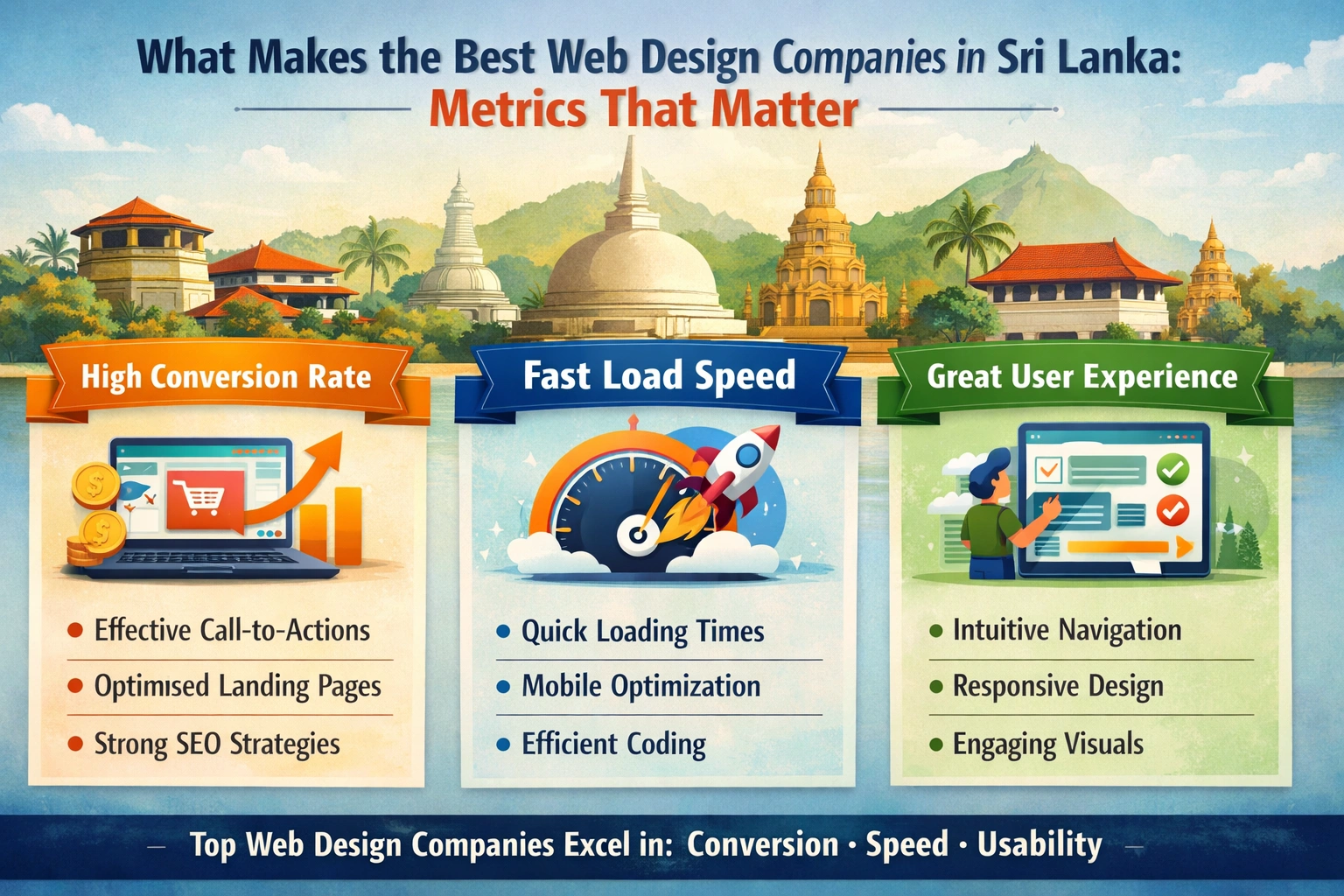
What Makes the Best Web Design Companies in Sri Lanka: Metrics That Matter (Conversion Rate, Load Speed, User Experience)
Subjective assessments of web design quality often lead businesses astray. A website might look stunning to your eyes yet fail to convert visitors into customers. Another site might seem plain but consistently outperform competitors in generating leads and sales. The best web design companies under...
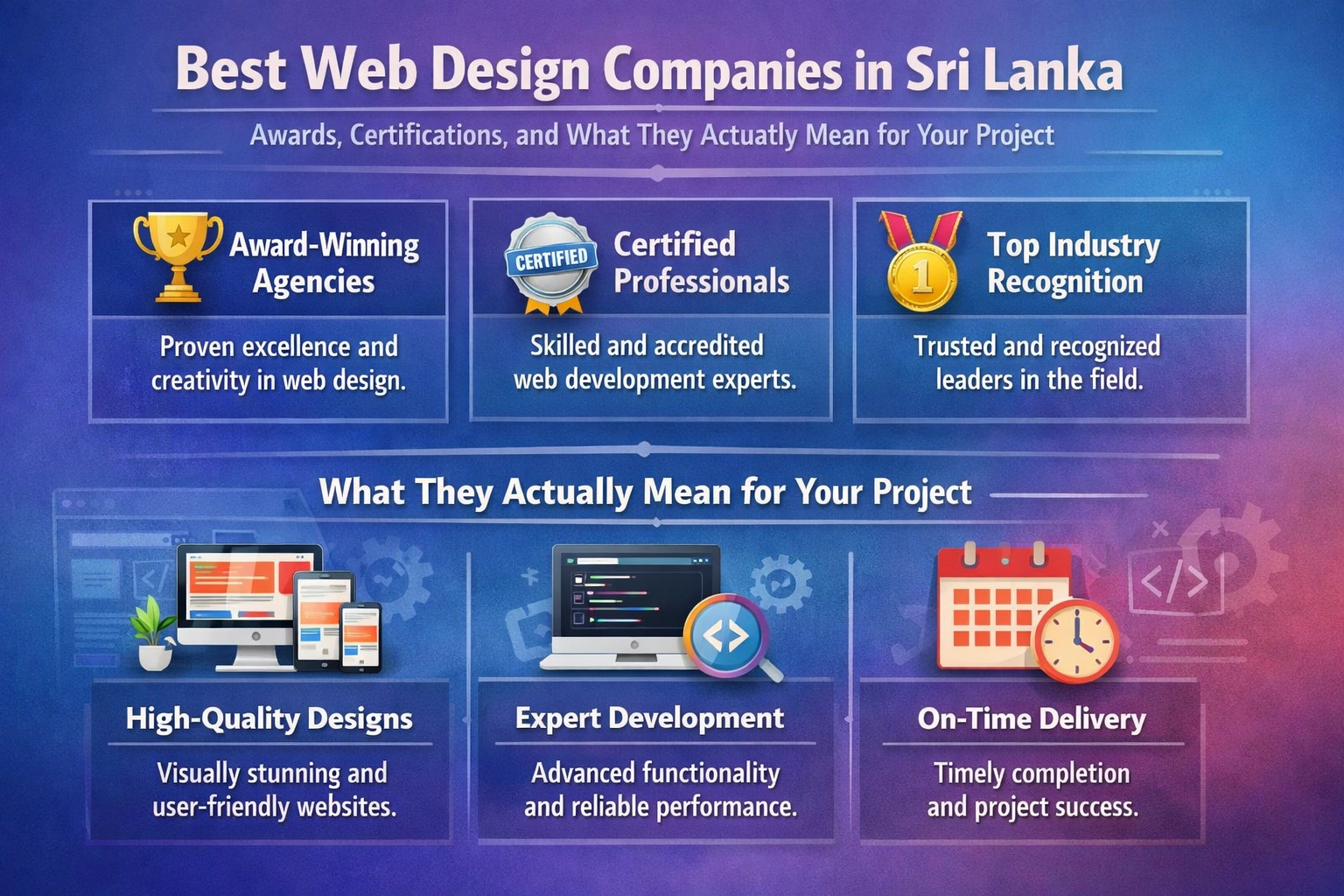
Best Web Design Companies in Sri Lanka: Awards, Certifications, and What They Actually Mean for Your Project
Web design companies frequently display awards, certifications, and recognition badges throughout their websites and proposals. These credentials promise quality assurance and industry standing, but their actual significance varies enormously. Some certifications indicate genuine expertise validate...
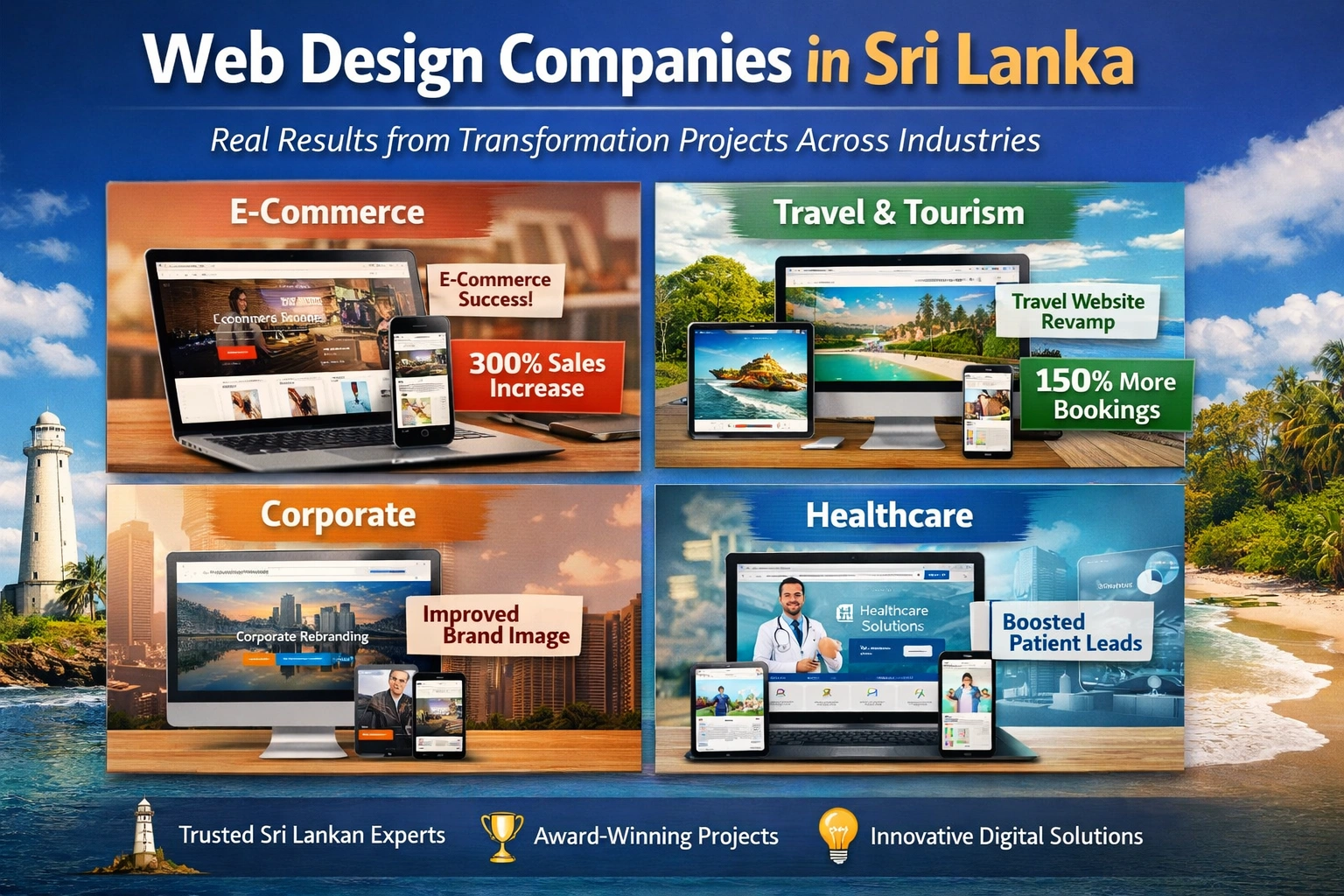
Web Design Companies in Sri Lanka: Real Results from Transformation Projects Across Industries
Portfolio galleries and capability claims only tell part of the story when evaluating web design companies. The real measure of a design partner's value lies in the business outcomes they help clients achieve. Transformation projects demonstrate how professional web design converts struggling onlin...